The Commercial Sanctuary of Hanifaru Bay
Valuing marine megafauna through revenue creates protection, but it binds survival to continuous consumption.
SINGAPORE
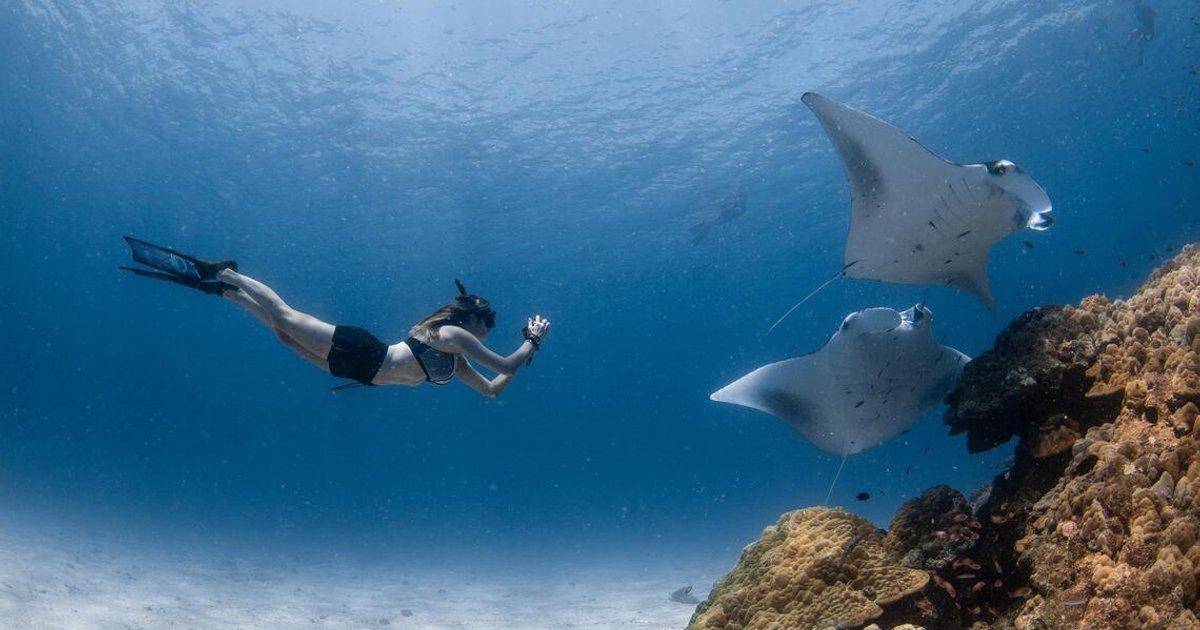
Snorkelers floating over the shallow waters of Hanifaru Bay in the Maldives watch an ancient aquatic choreography unfold beneath them. Hundreds of manta rays gather to strain plankton through gill plates, circling in dense feeding formations that rely on seasonal currents and undisturbed shallows. This biological routine endures because commercial fishing of the species remains prohibited under national law. Long before leisure boats navigated these channels, these pelagic animals moved through the archipelago following tidal rhythms that owed nothing to human presence. Yet the modern survival of this gathering now depends on an economy that brings thousands of visitors into the water alongside them.
Ecotourism built around megafauna operates on an explicit economic transaction. Coastal habitats frequently survive commercial destruction when living animals generate more revenue than dead quarry. In Hanifaru Bay, that utilitarian logic proved decisive when organized visitor interest helped prevent the waters from being surrendered to commercial development. By 2021, manta ray-watching tourism generated US$227.3 million across the Maldives, transforming a seasonal biological aggregation into a formidable balance sheet asset. The message delivered to regional policymakers was unmistakable: preservation could out-earn extraction.
The Price of Sanctuary
Attaching high financial yields to wildlife creates immediate administrative resolve. When living animals generate hundreds of millions of dollars, state planning authorities treat marine ecosystems as critical capital rather than vacant maritime space awaiting concrete. Strict regulations govern boat speeds and limit snorkeling excursions in Hanifaru Bay, designing an administrative apparatus intended to keep people and wildlife safe from physical harm. Conservationists frequently point to this institutional framework as proof that market incentives can effectively outbid destructive commercial exploitation.
Beneath that operational confidence rests an unresolved contradiction. Converting a wild creature into an experiential commodity demands perpetual human intrusion. Even strictly regulated boat traffic disturbs delicate coastal shallows, introducing noise and mechanical displacement into feeding grounds. Careless tourism, coastal damage and wider shifts brought by climate change continue to press against manta ray numbers. The protective perimeter established around the bay cannot fully insulate marine life from the ecological overhead required to transport affluent travelers across oceans.
Tourism once helped save the bay from development, and manta watching now brings in US$227.3 million a year.
This paradox touches a broader cultural assumption across the Asia-Pacific. Modern societies increasingly require natural environments to justify their spatial existence through leisure revenues and commercial yield. Wild habitats are no longer defended solely because their ecological integrity possesses intrinsic value. Instead, they are preserved because they can be monetized through masks, fins and hospitality concessions. When wildlife preservation relies entirely on cash yields, the right of a species to exist becomes contingent on customer demand.
Limits of the Balance Sheet
Equating wildlife survival with tourism receipts exposes fragile habitats to profound systemic volatility. If global consumer travel shifts or regional spending patterns contract, the revenue stream insulating sensitive bays can evaporate quickly. The underlying marine population receives protection only while it performs reliably for international audiences. If animal numbers drop or sightings grow erratic, the commercial justification that shields the bay from rival maritime development weakens immediately. An ecosystem valued as an entertainment asset must constantly compete against alternative land and water uses.
Local education and better maritime rules offer essential temporary buffers against localized degradation, reminding tour operators that proximity carries severe consequences. What remains untested is whether an ecosystem treated as a revenue engine can ever escape the cumulative pressures of its own promotional success. The dilemma facing Hanifaru Bay exposes a quiet ethical compromise: societies have learned to stop killing manta rays with nets, but only on the condition that they submit to perpetual spectatorship.
Sources
Newsletter
Pacific Daily
A curated briefing from Thailand, Asia-Pacific and the world.