The Silent Shift: Japan's Air Travel Record Redraws Asia's Cultural Map
A rise in international air passengers to Japan speaks to more than just numbers; it indicates a subtle, yet profound, redirection of regional movement and cultural gravity.
SINGAPORE
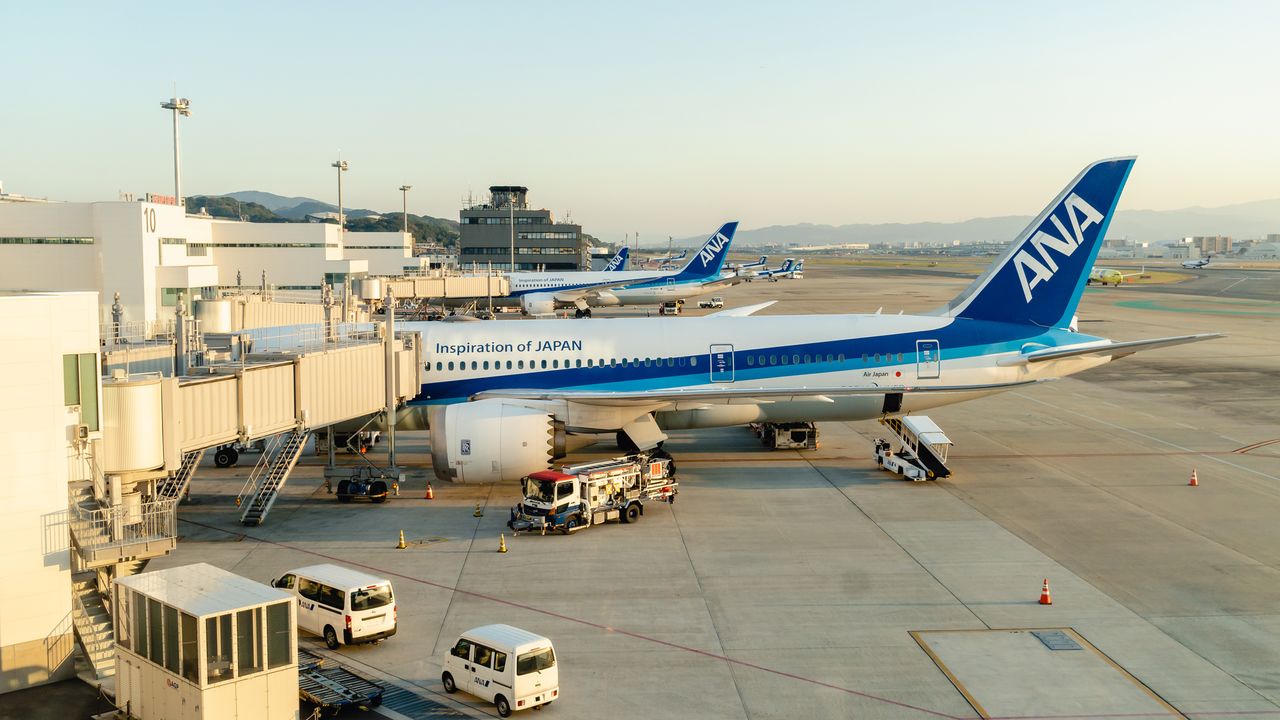
A specific, verifiable scene might once have depicted a bustling terminal in a different part of Asia, reflecting the flow of people and ideas. Now, the shift is becoming evident in Japan. The total number of passengers arriving or departing on international flights in Japan reached 114.4 million in 2025. This figure not only topped pre-pandemic levels but also surpassed the 2019 record of 103.3 million passengers, after a recovery to 100.1 million in 2024. This growth, alongside a 5% increase in international freight to 3.8 million tons in 2025, suggests a re-evaluation of Japan’s position within the regional network.
This movement is not merely a return to old patterns. The sustained climb past previous peaks indicates a deeper change in how Asia-Pacific travelers, and the systems that support them, are reorganizing. Narita, Kansai, Haneda, and Fukuoka airports collectively managed the bulk of international flight passengers in 2025, with Kansai surpassing Haneda for a second consecutive year, suggesting evolving internal dynamics within Japan's air travel infrastructure. These are not just logistical changes; they reflect altered preferences and emergent cultural pathways. The observation is that a habit has changed: where people are going, and perhaps more importantly, where they are now *choosing* to go at scale.
Yet, to interpret this as a singular, dominant ascendancy for Japan would overlook parallel developments. South Korea’s Incheon airport, for instance, was reported to be the busiest in the world for global traffic amidst an Iran war, and had served 1 billion passengers in record-breaking time as of July 2026. Another South Korean airport was reported as the world's second-best airport and served 39 million passengers in the first half of 2026. Malaysia Airports recorded 7.9 million passenger movements in May of 2026 alone. These figures from other nations demonstrate that high passenger volumes are not unique to Japan, nor does Japan’s record necessarily diminish the significance of other hubs. Instead, it illustrates a general increase in air travel across the region and globally, implying a broader expansion of networks rather than a zero-sum game.
What then does Japan’s particular surge signify? The sheer volume points to a re-calibration of cultural appeal and economic connectivity. While South Korea’s airports may lead in overall global traffic volume, Japan’s specific increase in international arrivals and departures suggests a concentrated draw for travelers within the Asia-Pacific sphere. It reflects a growing gravitational pull, signaling that Japan is increasingly perceived as a primary destination or transit point. This is visible in the way daily life unfolds: in the language overheard, the goods consumed, the local economies stimulated. The question is not simply about capacity or efficiency, but about where the collective attention of travelers is now focusing, and what cultural landscapes are being prioritized in this new configuration of movement. The air above Japan, filled with more planes than ever before, is a silent map of shifting desires.
Sources
Newsletter
Pacific Daily
A curated briefing from Thailand, Asia-Pacific and the world.