The unacknowledged cost of celebrity: Flight delay spotlights a regional habit
An incident involving a South Korean comedian reveals how status can quietly burden public systems.
SINGAPORE
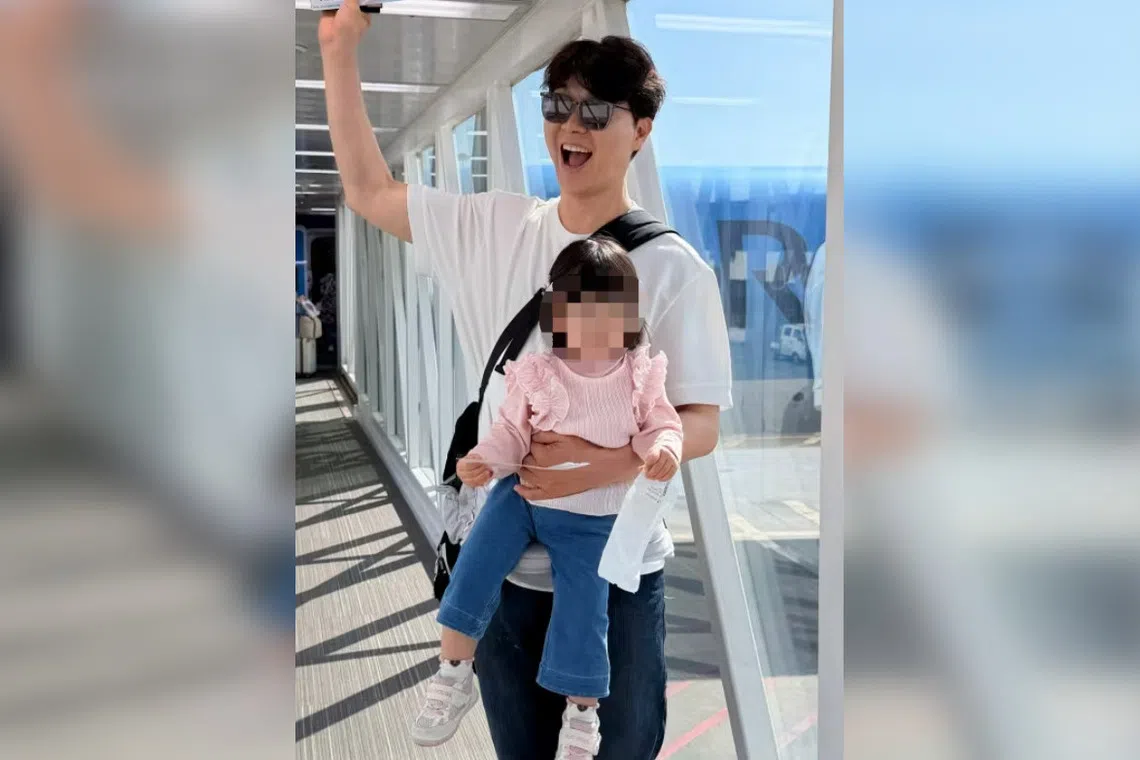
An international flight delay, involving South Korean comedian Park Soo-hong and his family, offers a precise observation into the societal implications of deference, a dynamic present across the Asia-Pacific. Park apologised on August 26 for his family delaying a Korean Air flight from Incheon Airport to Guam. His apology, issued via Instagram, acknowledged that his family had wasted other passengers’ valuable time and caused trouble for the airline staff. The delay, according to Park, stemmed from his family repeatedly changing their decision over whether to disembark after boarding the aircraft.
This incident, though specific to a single flight, raises questions about who bears the cost when special accommodation is extended based on perceived social standing. Park and his family were seated in business class when they boarded the flight. Park soon asked the crew to let his family get off, an action that preceded the reported delay. The Straits Times Life noted that critics questioned whether Park received preferential treatment as a celebrity. This public questioning is significant; it indicates a scrutiny of how status can disrupt collective schedules and public resources, even if this scrutiny is not always vocal.
The operational disruption caused by an individual’s indecision, especially when amplified by a public profile, carries tangible consequences. Airlines operate on precise schedules, and any delay incurs cumulative costs. These range from increased fuel consumption to missed connections for other travelers, creating a cascading impact on subsequent flight operations. While the specific financial impact of this particular delay has not been publicly stated, the disruption to both schedule and passenger experience is evident. This situation reflects a system where the perceived importance of some individuals may override the operational efficiencies designed for the collective.
This pattern is not confined to South Korea. Throughout the Asia-Pacific, individuals who hold positions of influence—whether through celebrity, political power, or accumulated wealth—can often receive levels of accommodation that deviate from standard procedures. The core question is not whether such deference occurs, but rather whether its costs are acknowledged and absorbed by those who benefit, or if these costs are instead quietly borne by public services and the collective experience of the general populace. When an airline accommodates repeated changes of mind from a celebrity’s family, it implies a calculation that the potential negative public relations of refusing the request outweighs the concrete costs associated with the delay. Such calculations, however, typically lack transparency.
The incident involving Park Soo-hong's family functions as an illustrative case study. It underscores the underlying tension between individual status and the orderly functioning of public systems. The criticisms that emerged suggest that while deference to status may remain a persistent social habit, its associated burdens on the collective are increasingly being observed and evaluated. This tension represents an unresolved aspect of social dynamics within the Asia-Pacific region.
Sources
Newsletter
Pacific Daily
A curated briefing from Thailand, Asia-Pacific and the world.