Capsule Toys and the Quiet Shift in Consumption
Japan's fascination with miniature collectables reflects a broader regional inclination towards contained experiences, suggesting a re-evaluation of value in the Asia-Pacific.
SINGAPORE
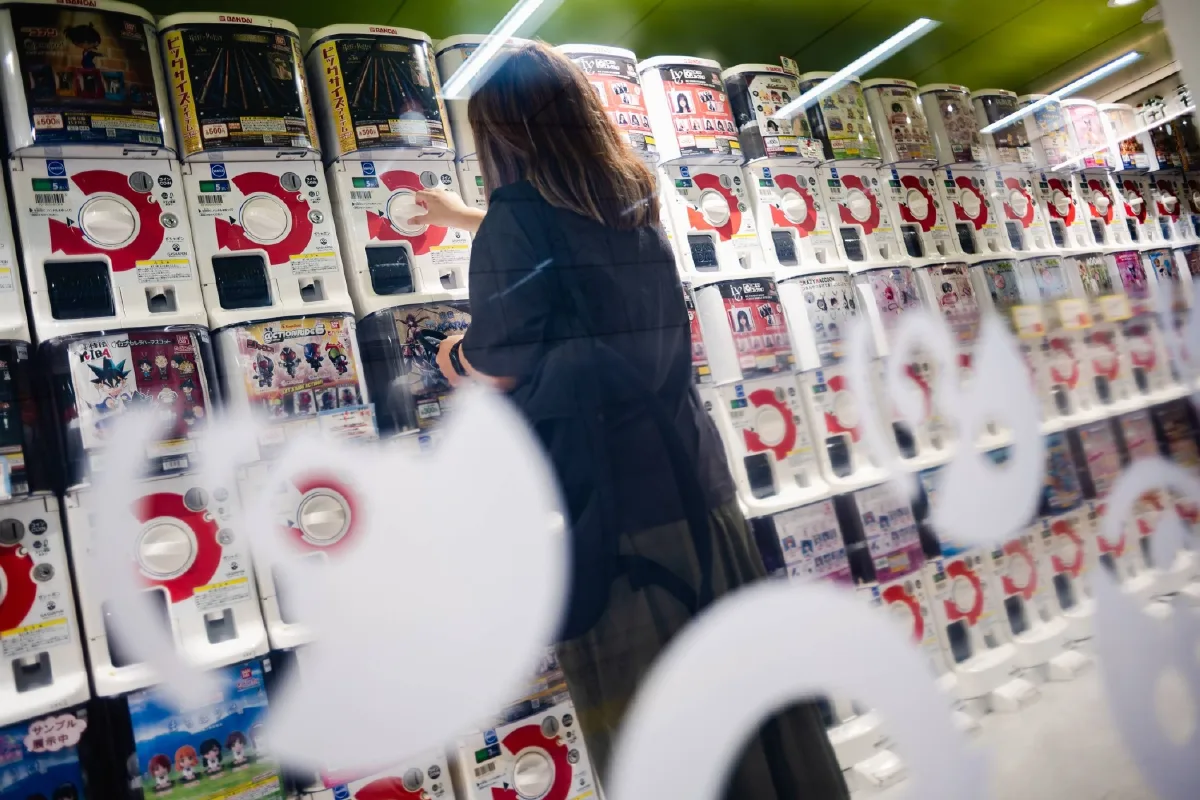
The language surrounding Japan’s capsule-toy phenomenon, as reported by The Japan Times in September 2026, describes a transition from casual interest to a devoted pursuit, employing terms like 'katsu' and 'numa'. This vocabulary signifies a specific kind of engagement, where the act of collecting becomes a ritual and a deep dive into a particular niche.
Historically, consumer habits in the region have often been characterised by a pursuit of larger, more substantial acquisitions, reflecting status or long-term utility. Yet, the dedicated embrace of these miniature, often ephemeral items points to a subtle, yet significant, evolution in how value is perceived and sought. These capsule toys, or 'gashapon', offer a complete, contained experience. The thrill of the unknown, the small cost, and the satisfaction of a tangible, if miniature, outcome are all part of their appeal. This contrasts with the broader, often more expensive, and less immediate gratifications of other consumer goods.
This shift is not necessarily about economic necessity, though the yen’s performance and joint interventions by Japan and the US were noted in August 2026. Instead, it suggests a cultural movement towards satisfaction derived from smaller, more predictable forms of consumption. The regional context, particularly in Southeast Asia, where similar trends in collecting and niche interests are emerging, lends weight to this interpretation. From Hanoi to Manila, Japan's updated 'Free and Open Indo-Pacific' strategy in July 2026, focused on broader regional partnerships, might imply a larger economic narrative, but the micro-trends in consumer behaviour also deserve observation.
A counterargument might suggest this is merely a niche hobby, easily dismissed as a passing fad. However, the development of a distinct vocabulary around it, as detailed by The Japan Times, indicates a more entrenched practice, moving beyond simple novelty. The commitment implied by terms like 'numa' — which translates to a swamp or bog, metaphorically meaning an inescapable obsession — suggests a depth of engagement that belies a temporary interest.
What is being preserved here is the traditional human impulse to collect and curate, but what is being quietly replaced is the scale at which that impulse is satisfied. The satisfaction derived from these small, deliberate acts of consumption offers a compact form of personal curation, reflecting a desire for control and immediate gratification in an increasingly complex world. This could presage a broader reorientation of consumer priorities across the Asia-Pacific, where the allure of the small and contained increasingly rivals the appeal of the grand and expansive.
Sources
Newsletter
Pacific Daily
A curated briefing from Thailand, Asia-Pacific and the world.