Gyotaku’s Digital Echoes: The Shifting Canvas of Cultural Preservation
An ancient practice from Japan, once a simple record, now reflects a contemporary dilemma: how to preserve the essence of a craft when its form is endlessly mutable.
SINGAPORE
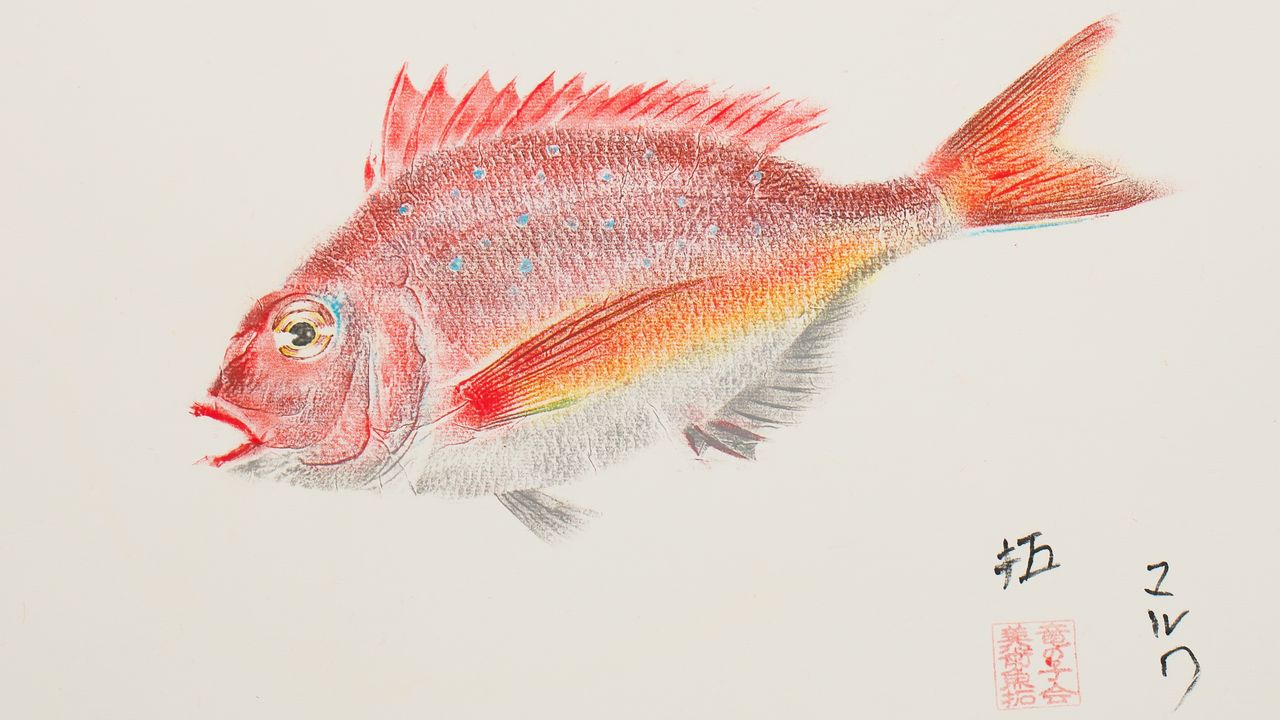
The earliest known gyotaku, titled Kinshibori no funa (Crucian Carp from the Kinshibori Canal) and dated to 1839, offers a glimpse into a practice born of utility. In the Shōnai region of Japan, particularly around Tsuruoka, this method of making ink prints of fish initially served as a record. During the Edo Period, samurai from the Shōnai domain, encouraged to fish for mental and physical training, would use these prints to document their catch. It was a precise, unadorned way to capture the physical form of a fish, a direct impression onto paper that spoke of immediate experience and tangible proof.
This method, historically linked to fishing lodges and seafood restaurants, has evolved. From monochrome prints, it has broadened into a more colourful art form. This progression from a functional ledger to an aesthetic expression is a pattern frequently observed in craft traditions. What begins as a practical necessity often gains layers of interpretive meaning over generations, sometimes shedding its original context as it moves into new spheres.
Today, the evolution continues at an accelerated pace. Digital services can now generate gyotaku from a photograph. This technological shift, where an impression can be made without direct contact with the fish itself, introduces a fundamental question about the nature of preservation. If the original act involved the physical transfer of ink from a specimen to a medium, what then is being preserved when the process is entirely mediated by a digital image? It suggests a movement from preservation of the physical trace to a preservation of the visual concept, a significant abstraction.
For regions like Thailand and the broader Asia-Pacific, grappling with the rapid integration of digital technologies into daily life, gyotaku's trajectory offers a compelling study. Many craft traditions across the region face similar pressures to adapt, modernise, and find new audiences. The Bangkok Post, in 2025, notes gyotaku’s shift from ‘catch to craft,’ indicating a conscious reframing of the practice. The Japan Times in the same year refers to fish prints becoming ‘fine art.’ These descriptions highlight a continuous effort to elevate and redefine the craft, moving it away from its utilitarian origins.
The convenience and accessibility of digital gyotaku might broaden its appeal, reaching new enthusiasts who might never handle a physical fish. This expansion could be seen as a way to ensure the concept of gyotaku endures, albeit in a transformed state. However, the counterargument is that in this digital permutation, the essence of the original craft—the direct, unmediated contact, the tactile impression, the physical interaction with the catch—is diminished or lost. What remains might be a visual echo rather than a direct lineage of practice. The skill required to prepare the fish, apply the ink with the right pressure, and capture its form accurately is a nuanced physical aptitude that digital replication sidesteps.
The shift poses limitations. While digital tools might democratise access to the aesthetic output, they do not inherently teach the physical discipline or the historical context that gave rise to the craft. The tactile experience of printing a fish, the subtle variations in pressure and ink, the physical act of documentation by early samurai – these elements are not translated into a digital file. The risk is that the aesthetic, unmoored from its physical roots, becomes a superficial reproduction, interchangeable with other digital art forms. The confidence level in this observation is high; the historical evidence clearly demonstrates the physical nature of the original practice.
Ultimately, gyotaku’s journey from a samurai’s record to a digital rendering serves as a quiet commentary on how culture adapts under the weight of technological change. What is preserved is the visual idea, while the corporeal tradition faces reinterpretation. The question for craft traditions across the Asia-Pacific is not merely how to survive, but what fundamental elements must be carried forward, and what can be allowed to dissipate into the digital ether, becoming a mere image of what once was.
Sources
Newsletter
Pacific Daily
A curated briefing from Thailand, Asia-Pacific and the world.