Taobao Targets Malaysia With Reverse Logistics and Algorithmic Fitting
Cross-border retail expansion relies on physical return infrastructure rather than digital novelty to capture Southeast Asian apparel demand.
SINGAPORE
A digital storefront costs almost nothing to replicate, but returning an ill-fitting garment across an international border incurs tangible freight charges. Taobao made that exposure explicit in Kuala Lumpur on Oct 17. Preparing for its annual 11.11 sale across Malaysia, the platform paired celebrity marketing featuring Zhang Linghe with free fashion shipping and AI-powered virtual fitting rooms. Most crucially, it anchored the consumer drive to a physical ground network of more than 1,400 local return points.
Consumer campaigns routinely headline famous faces to generate immediate shopping volume. What yield assumption holds the underlying arithmetic together? Cross-border apparel retail suffers from return rates that routinely undermine gross merchandise turnover. Providing unmetered outbound transit inflates initial checkout numbers. Yet rejected stock quickly erodes transaction margins unless domestic reverse logistics can aggregate freight efficiently. Subsidized outbound parcels represent unhedged liabilities until the buyer actually accepts the product.
Sizing Uncertainty and Physical Consolidation
Sizing mismatch creates direct operational friction in digital fashion distribution. When parcels travel across borders, processing an individual item exchange can easily exceed the original production value of the garment itself. The introduction of AI-powered virtual fitting rooms operates as an upstream filter. By mitigating sizing errors before merchandise clears international customs, the platform attempts to curb inventory churn at the point of order. In cross-border retail, digital prevention is vastly cheaper than physical recovery.
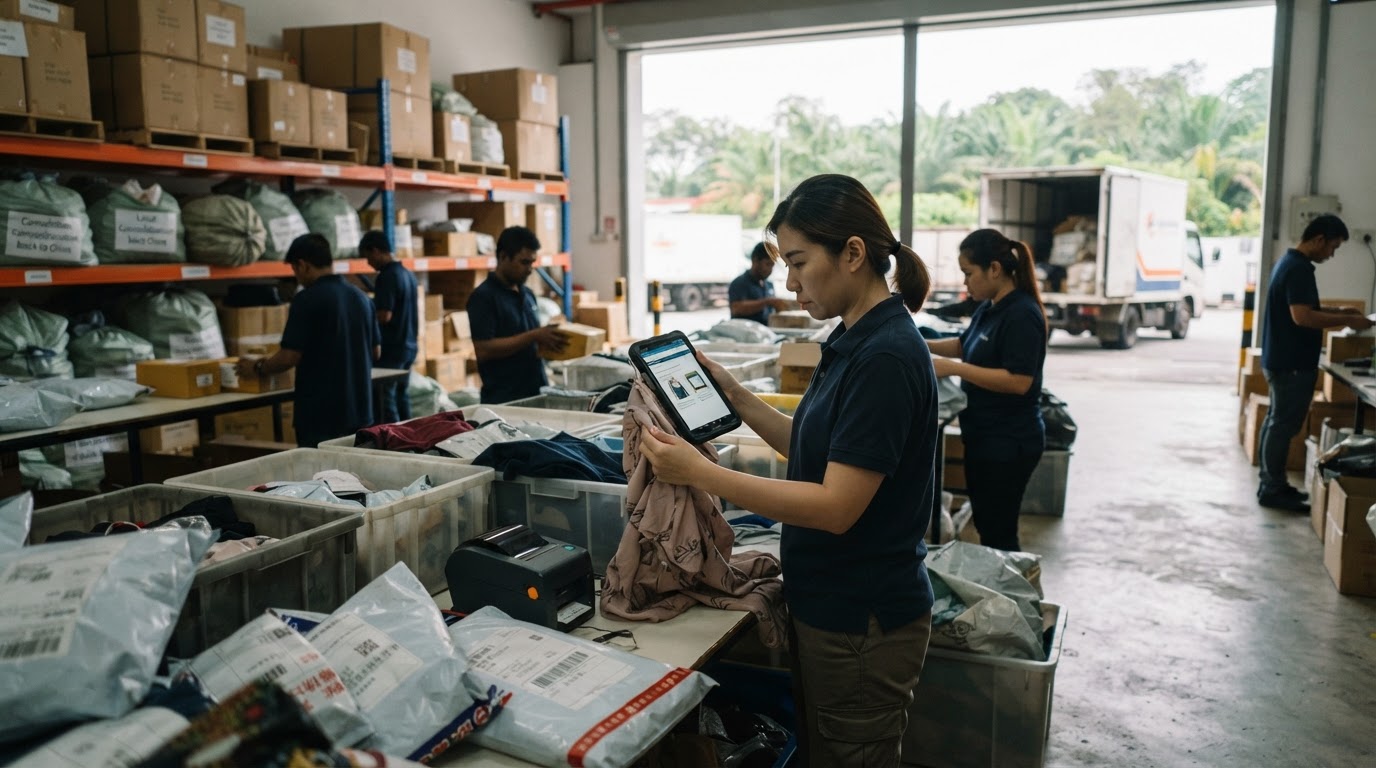
Yet algorithmic previews cannot alter fabric drape or individual tactile preference. Parcels will still be sent back. Shipping individual garments back to overseas origin facilities remains commercially unviable for buyers and sellers alike. Establishing more than 1,400 local return points across Malaysia shifts reverse logistics into domestic consolidation hubs. Batching returned stock at neighborhood collection counters preserves aggregate margins by converting fragmented return trips into predictable bulk freight.
Physical collection density determines whether cross-border retail promotions generate durable margins or cumulative operational losses.
Commercial property owners should monitor this structural shift with care. Traditional shopping malls and urban retail centers rely on apparel tenants to sign long leases and generate consistent consumer footfall. For decades, brick-and-mortar storefronts retained an unassailable defensive advantage: the fitting room mirror. If algorithmic sizing tools diminish fitting uncertainty while neighborhood parcel drop-offs erase return friction, physical retail real estate loses a core justification. Suburban malls cannot easily replace lost traffic if cross-border logistics effectively replicates the dressing room experience.
The Cost Floor of Reverse Logistics
Sceptics will reasonably counter that seasonal promotions distort baseline demand. High-volume discount events like the 11.11 sale rely on freight subsidies that mask fundamental operational friction. When promotional subsidies expire, collection networks must stand on their own unit economics. Sustaining consumer adoption without ongoing shipping subsidies has historically proven difficult across regional markets.
Furthermore, aggregated parcels still demand domestic sorting, human inspection, and local repackaging. Software cannot unfold a returned dress, inspect seams, or reclassify damaged inventory. In lower-density domestic postcodes, maintaining drop-off points incurs recurring facility overhead that thin apparel margins struggle to absorb. If parcel drop-offs decline once seasonal marketing recedes, fixed network commitments turn into an ongoing cash drag.
The cross-border expansion of digital platforms across Southeast Asia will not be settled by celebrity reach or promotional turnover tallies. Long-term commercial viability depends on a far less glamorous balance sheet reality: whether physical return aggregation can absorb consumer churn without consuming the razor-thin margins of overseas retail.
Sources
Newsletter
Pacific Daily
A curated briefing from Thailand, Asia-Pacific and the world.