Malaysia's economy grows, but everyday innovation faces hurdles
An engineering student's invention in Subang Jaya highlights the challenge of turning academic projects into practical applications for average budgets.
SINGAPORE
Malaysia’s economy recorded its fastest growth in three years in 2025, exceeding expectations, according to Reuters. This growth often prompts discussions about innovation and its role in national development. However, for an everyday economy writer, the question is how this translates to tangible benefits and practical applications for people on a monthly budget, especially when examining individual achievements like Hayley Nea Iauduray's kinetic invention.
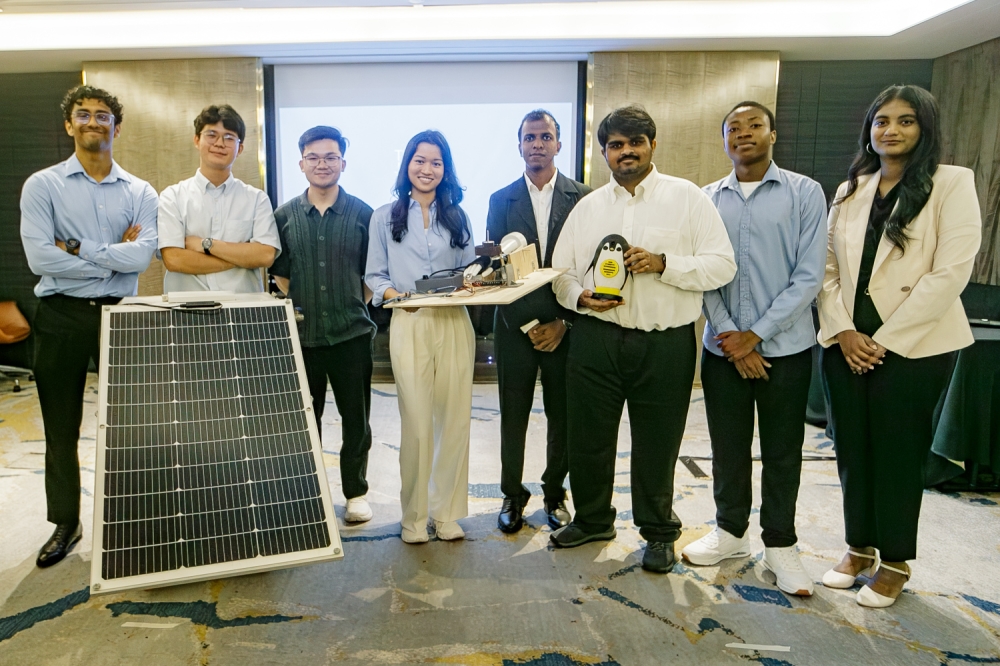
Iauduray, a 24-year-old engineering student from Subang Jaya, developed a kinetic device as her Final Year Project. While the Malay Mail Life reported her invention as “award-winning,” the description remains largely within academic and technical terms. The critical gap for the everyday economy is the path from an award-winning academic project to a widespread, affordable product or service.
The challenge is not the invention itself. Subang Jaya, for instance, hosts institutions like the Subang Jaya Medical Centre, recognized for innovation. The region has demonstrated capacity for technological advancements. Airbus Helicopters, as reported by The Star, also sees growth in Malaysia and the Asia-Pacific, driven by rising demand for emergency medical services, indicating a market for practical solutions. But the journey from a student's project to commercial viability often requires substantial investment in scaling production, navigating regulatory frameworks, and establishing distribution channels – all of which add to the final cost.
Consider the average household budget. A truly impactful innovation, from this perspective, is one that eventually becomes accessible and affordable. An example might be an improvement in energy efficiency that leads to lower utility bills, or a new method of waste management that reduces household expenses. Without specific details on the invention's application, cost-effectiveness, or target market, it is difficult to determine its potential impact on the average person's financial landscape.
While the Malay Mail Life’s report celebrates an individual’s success, it provides no information on the economic implications for consumers. Will this kinetic invention reduce energy costs, offer a new form of affordable transport, or solve another common budgetary concern? The current information does not allow for such an inference. The success of such a project, from a consumer's financial viewpoint, will ultimately depend on its ability to transition from an academic achievement into a cost-effective, widely available solution.
This gap between academic recognition and market accessibility is a recurring theme in many growing economies. The focus on celebrated inventions, while encouraging, sometimes overshadows the practical steps needed to integrate these innovations into the daily lives and budgets of the general population. For an award-winning student project to genuinely influence the everyday economy, its creators must overcome not just technical hurdles, but also significant commercial and logistical ones to make it a cost-beneficial option for households and small businesses.
The outcome now depends on whether this invention can move beyond its academic origins and navigate the complex process of commercialization without becoming cost-prohibitive. What it says about the wider habit is that while the capacity for innovation is present, the economic pathway for these innovations to reach the average monthly budget remains a significant and often unaddressed challenge.
Sources
Newsletter
Pacific Daily
A curated briefing from Thailand, Asia-Pacific and the world.