Sticky Prices, Stagnant Incomes: Johor's 'Apam Balik' and the Erosion of Affordability
Persistent low pricing for a local delicacy in Malaysia highlights a wider economic challenge in Asia-Pacific where fixed incomes struggle against rising costs.
BALI
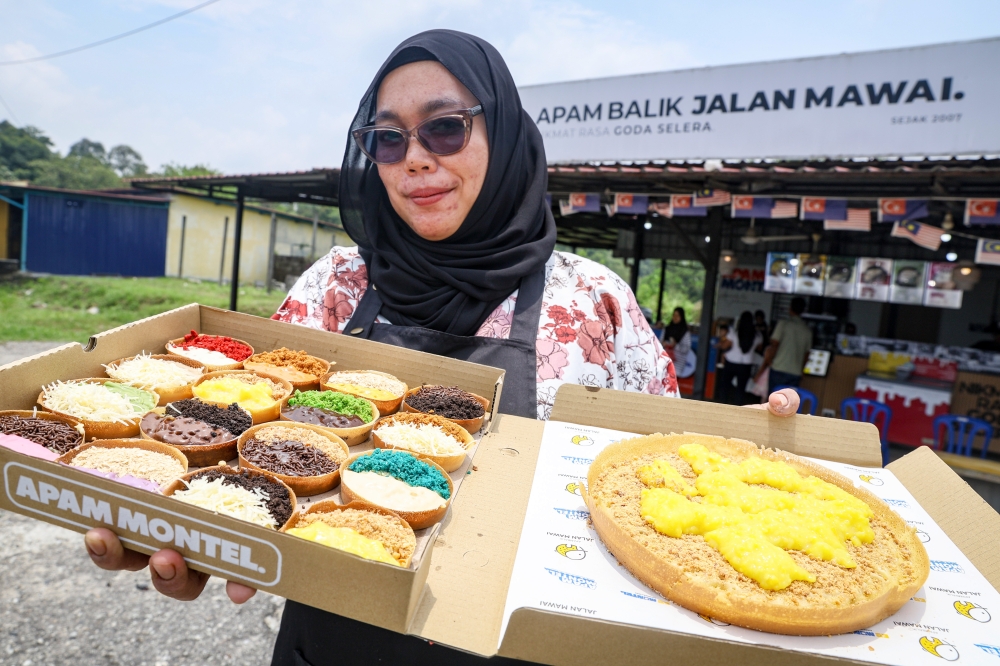
For 19 years, a food stall in Johor's Jalan Mawai has maintained its ‘apam balik’ price at RM4. This steadfast pricing, reported by Malay Mail Life on October 1, 2026, positions the dessert as an outlier in an economy where the cost of living has steadily climbed. While a singular food item might seem minor, its unchanged price over nearly two decades reflects a market tension: the expectation of affordability against the reality of inflation for other essentials.
This phenomenon of sticky prices for certain consumer goods, while appealing to a loyal customer base, often signals broader pressures on household budgets. When a vendor chooses to absorb rising input costs to maintain a price point, it implies a sensitivity to consumer purchasing power. This sensitivity is particularly relevant in the Asia-Pacific region, where economic growth has not always translated into equitable income gains, leaving segments of the population vulnerable to price shifts in critical sectors like housing, healthcare, and education.
Evidence from the region suggests a divergence in financial stability. While reports indicate that Asia-Pacific hotels are considered a “most compelling” investment sector, according to CBRE, reflecting confidence among large capital holders, the experience for everyday consumers can be different. The ability of a business to hold a price for 19 years, despite a reported family recipe driving customer loyalty, suggests either exceptionally low and stable input costs for that specific product or a deliberate strategy to retain customers at the expense of profit margins. The former is increasingly unlikely in a region grappling with supply chain disruptions and volatile commodity prices; the latter implies a constrained market where price increases risk losing customers.
Contrastingly, property values and other critical assets continue to appreciate. The investment appeal of sectors like hospitality indicates that capital inflows are still strong, often targeting higher-yield opportunities. This creates a widening gap between asset owners and those reliant on fixed incomes or wages. The individual choosing the RM4 ‘apam balik’ likely faces rising costs in other areas, making that fixed price a necessary constant in a volatile personal economy.
This situation underscores a key challenge across the Asia-Pacific. While aggregate economic indicators may show growth, the distribution of that prosperity is uneven. The rich in Asia, according to a CNBC survey from May 2026, fear losing family fortunes but often lack succession plans, indicating a focus on wealth preservation and growth. Meanwhile, the general population grapples with daily expenditure. The commitment of the Jalan Mawai vendor to a RM4 price point, while commendable from a customer retention perspective, may also reflect the economic ceiling for many consumers. If a business cannot raise its prices over two decades without alienating its customer base, it implies a limit to income growth among those customers.
What happens next depends on several factors. Will the vendor eventually be forced to raise prices as input costs become untenable, potentially eroding the loyalty built over two decades? Or will sustained consumer demand at this price point limit profit growth, forcing the business to rely on volume rather than margin? For the wider economy, the ‘apam balik’ situation is a micro-example of a macro-challenge: how to ensure that economic development benefits all segments of society, not just those positioned to capitalize on rising asset values. The ongoing tension between consumer affordability and producer profitability in essential and discretionary goods will continue to shape economic realities for many.
Sources
Newsletter
Pacific Daily
A curated briefing from Thailand, Asia-Pacific and the world.