Mobile Healthcare Flags Asia-Pacific's Uneven Development Landscape
Assam's floating clinics underscore how geographic constraints limit investment and shape property trajectories across the region.
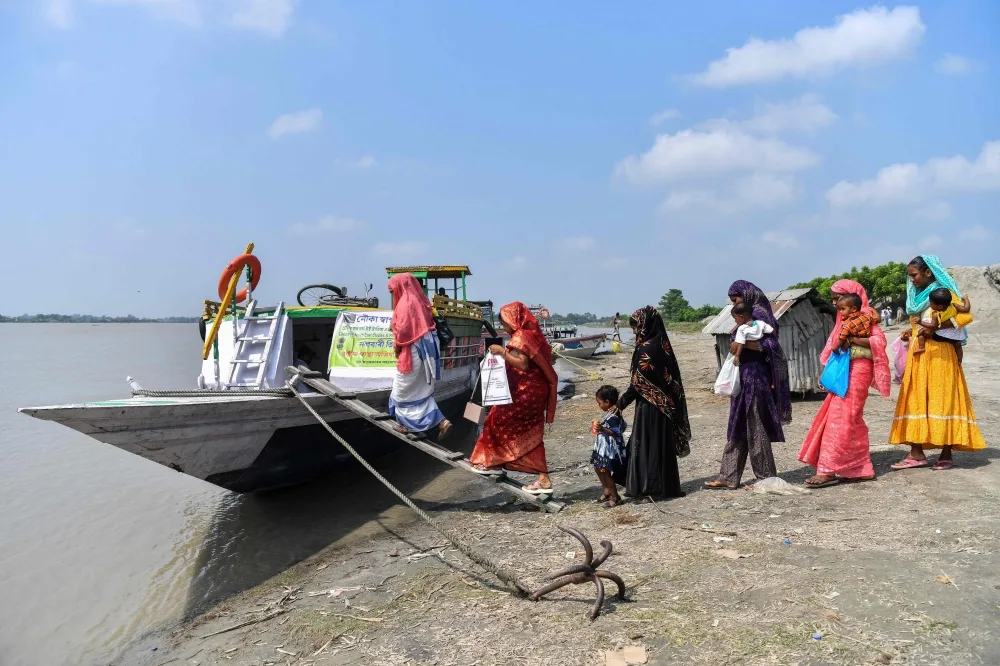
SINGAPORE
The reported use of mobile healthcare units in Assam, India, to serve populations on shifting river islands highlights a fundamental challenge in parts of the Asia-Pacific. While a doctor administering an injection aboard a boat addresses an immediate need (Malay Mail Life, 2026-09-22), the operational necessity stems from geographic isolation and the inherent difficulties in delivering consistent services to transient or remote communities. This model, forced by unstable terrain, illustrates a broader issue for property and development: where fixed infrastructure is impractical or too costly, populations become underserved.
The shifting islands of Assam are a specific, yet instructive, example of how environmental factors directly impact the viability of permanent settlements and, consequently, the economic value of land. The absence of stable access to essential services, like healthcare, limits land’s development potential and suppresses property values. This effectively prices out conventional real estate investment, leaving these areas dependent on adaptive, often temporary, solutions.
For Thailand and the wider Asia-Pacific, the implications are substantial. While Assam’s conditions are distinct, the region contains numerous remote, island, or flood-prone communities facing similar barriers to service provision. These barriers create segments of the population effectively priced out of standard services due to their location, which contributes to diminished human capital and constrained local economies. JPMorgan’s stated intention to add 10% to its Asia-Pacific staff (South China Morning Post, 2026-03-23) suggests an expectation of regional economic growth. However, this growth frequently bypasses areas lacking basic, permanent infrastructure.
The adoption of mobile solutions, while innovative in addressing immediate service gaps, does not resolve structural access issues. For property markets, this translates into a divergence: areas with robust, fixed infrastructure attract investment and appreciate in value, while those reliant on mobile or temporary solutions struggle to establish long-term economic stability. The UNESCO-reported gathering for action among Asia-Pacific biosphere reserves (UNESCO, 2025-10-16) highlights regional focus on environmental sustainability, often in areas where infrastructure adaptation is critical.
A counterargument posits that mobile solutions offer a cost-effective alternative to expensive fixed infrastructure, enabling service delivery without the burden of permanent construction in challenging environments. This perspective suggests such approaches could unlock value in previously undeveloped areas by making them more habitable and functional. However, reliance on a mobile approach typically indicates an absence of long-term government or private sector commitment to permanent infrastructure, which is generally a prerequisite for sustained property appreciation and robust economic development. The presence of a mobile clinic, while vital for residents, often signals a market's inherent instability rather than its maturity or investment readiness.
The unresolved constraint remains the economic incentive for building permanent infrastructure in areas where the return on investment is marginal or environmental risks are high. Until these fundamental access issues are addressed, sections of the Asia-Pacific population will continue to rely on stopgap measures. The property market in these regions will continue to reflect this inherent instability, with long-term outlooks hinging on whether fixed infrastructure development is prioritized over continued reliance on mobile alternatives.
Sources
Newsletter
Pacific Daily
A curated briefing from Thailand, Asia-Pacific and the world.