Turner Painting Auction Reveals Shifting Art Market Landscape
A rare JMW Turner painting on display in Rome underscores how global art market movements affect local cultural value, even for pieces not directly tied to Asia.
SINGAPORE
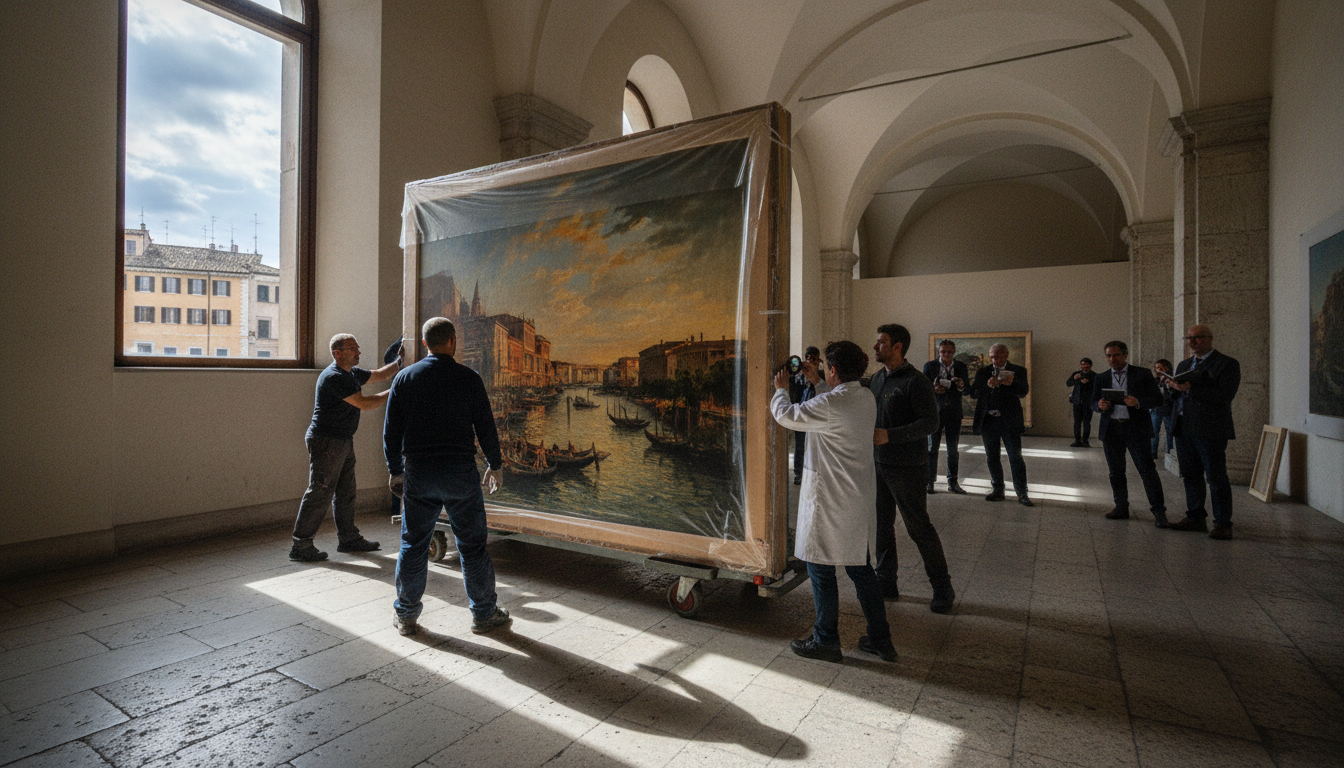
The upcoming auction of JMW Turner’s “Rome, From Mount Aventine” in December, following its recent display in Rome, highlights a shift in how significant cultural assets are valued and circulated globally. This specific painting, first exhibited in 1836, has been sold only twice before, retaining the artist’s fingerprints and brush hairs.
Sotheby’s senior specialist Julian Gascoigne described the paint as “as fresh and as three-dimensional and as rich as it was the day that he applied it to the canvas,” calling it an “exceptional painting.” It has never been re-lined, preserving its original condition. While this particular piece has no direct historical connection to Asia, its re-emergence for sale illuminates broader trends within the international art market that can influence regional cultural landscapes.
For residents in Thailand and the wider Asia-Pacific, this event demonstrates the increasingly globalised nature of high-value cultural trade. The availability of such works on the open market, regardless of their origin, means that cultural institutions or private collectors in Asia can theoretically compete for them. This participation is part of a larger trend where investment in art is seen as a tangible asset, potentially driving up prices and making original masterworks less accessible to public institutions worldwide that lack substantial acquisition budgets.
One might argue that a 19th-century British painting auctioned in Europe has little practical impact on daily life in Bangkok or Jakarta. The counterargument is that the global flow of such cultural capital influences the perceived value of all art. When iconic pieces achieve high prices, it reinforces the narrative of art as an investment, potentially diverting funds from other cultural endeavours or making local historical art comparatively undervalued if it does not attract similar international attention. This can affect local artists' market visibility or the funding available for regional art preservation.
While the direct impact on local Thai cultural policy is not immediate, the global art market’s mechanics, exemplified by this Turner sale, shape conversations about cultural heritage and its commercialisation. The display of an “exceptional” work before its sale, detailed by the Bangkok Post Life, positions it within a luxury economy. The outcome of the December auction will provide further insight into the market’s current strength for masterworks, implicitly setting benchmarks that resonate across all regions, including the Asia-Pacific.
Ultimately, the accessibility of globally significant art, whether through public display or private collection, depends on financial dynamics and market interest. The sale of “Rome, From Mount Aventine” will indicate not just its individual value, but also the broader trajectory of cultural assets in a world where provenance and condition meet global capital. Its future accessibility now depends on the buyer and the evolving landscape of art acquisition.
Sources
Newsletter
Pacific Daily
A curated briefing from Thailand, Asia-Pacific and the world.