A Nordic King's Farewell, and Asia's Future Tombs
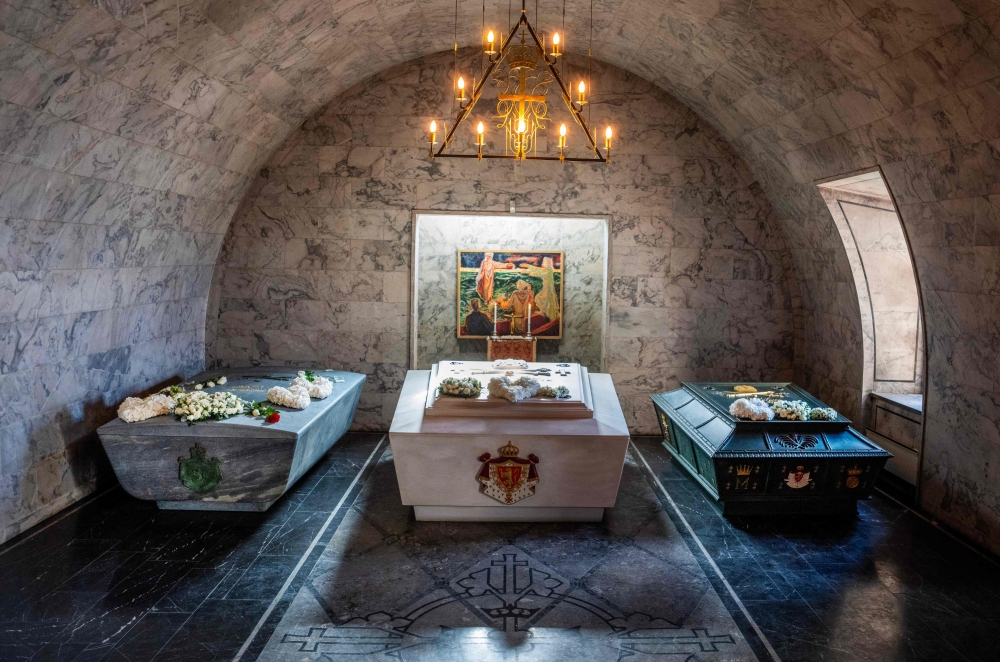
The carbon-absorbing sarcophagus of King Harald V offers a glimpse into how permanence might be rethought across a region wrestling with environmental impact.
SINGAPORE
The final resting place of Norway’s King Harald V, a ship-shaped sarcophagus crafted from carbon-absorbing material, presents a curious tableau. Entomed on September 19, 2026, the monarch’s burial is more than a state funeral; it is an object lesson in how a society, even one rooted in deep tradition, can integrate contemporary concerns into its most ancient rituals. The Malay Mail Life reported this specific detail, highlighting a choice that extends beyond mere aesthetics or royal prerogative.
This deliberate act of environmental consideration in a royal burial, particularly the use of a CO2-absorbing sarcophagus, stands in stark contrast to the more conventional approaches to mortality observed across much of Asia. Here, reverence for ancestors often manifests in elaborate, sometimes resource-intensive, ceremonies and memorials. The question this Nordic innovation implicitly poses is whether the region can reconcile its deeply embedded cultural practices surrounding death with the urgent demands of ecological sustainability. Who benefits from such a shift, and who might find their established roles, traditions, or even industries challenged?
Consider the urban sprawl of Bangkok, or the coastal communities of the Philippines, where the very ground beneath graveyards is increasingly precarious. Traditional burial grounds, often expansive and permanent, present a long-term land-use challenge in densely populated and climate-vulnerable areas. While cremation is widely practiced in many Asian cultures, reducing land footprint, the environmental impact of such processes, including emissions, remains a subject of ongoing debate. The Norwegian example, though specific to one royal’s passing, suggests a path where finality need not preclude responsibility.
The idea of a permanent memorial, yet one that actively mitigates environmental harm, challenges the established notion that honoring the dead must always consume resources without contributing to ecological balance. This is not to say that every head of state or private citizen in the Asia-Pacific will adopt carbon-absorbing coffins. That would be an unsupportable inference based on a single instance. However, the conceptual shift is significant. It hints at a future where even the most solemn and fixed aspects of human culture could become sites for environmental contribution, rather than inert symbols of consumption. It suggests a future where the act of remembrance might extend to caring for the earth that will hold those memories.
The adoption of such practices would certainly involve complex negotiations between cultural sensitivities and scientific innovation. It asks of the living a reconsideration of what 'eternal rest' truly entails, and whether that includes a proactive role in the planet's continued health. The scene of a ship-shaped sarcophagus, absorbing carbon in a distant land, becomes a quiet prompt for reflection across an ocean, questioning how Asia might redefine its own traditions of permanence.
Sources
Newsletter
Pacific Daily
A curated briefing from Thailand, Asia-Pacific and the world.