Viral Delivery Rooms Turn Childbirth Into Public Performance
A Cairo physician draws millions of online views with an unbothered infant, exposing how medical authority bends toward social entertainment.
SINGAPORE
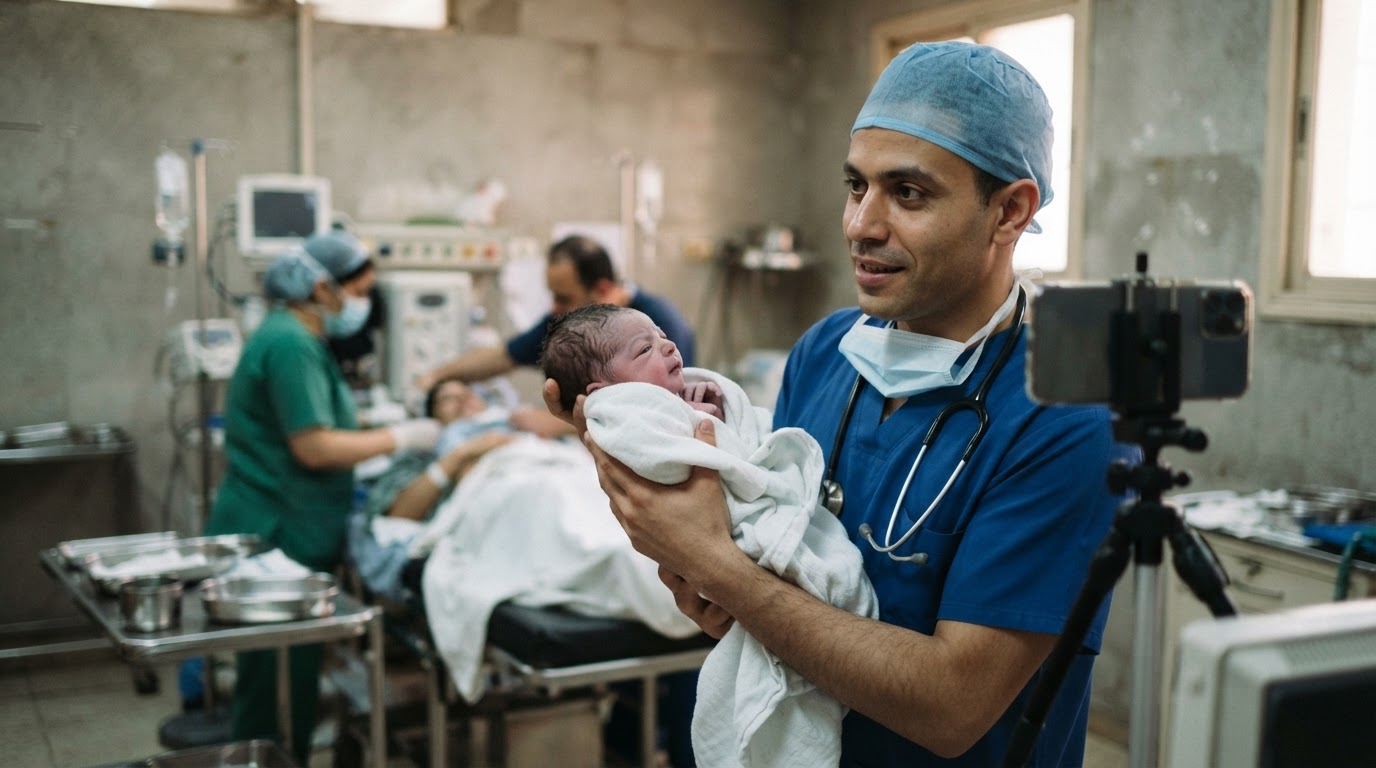
A medical practitioner in Cairo pointed a camera toward an operating table and broadcast an infant whose umbilical cord remained uncut. The clip travelled rapidly across feeds in Bangkok and international platforms, drawing audiences eager to applaud the child for resting with crossed arms during delivery. Dr Islam Edleh, a neonatologist who maintains an audience numbering in the millions, uploaded the footage himself. Viewers treated the posture as an amusing domestic spectacle, making light remarks about an infant ready for early retirement before taking a single breath outside the clinic.
Digital feeds reward novelty above clinical detachment. When medical staff capture private procedures to feed algorithmic platforms, standard boundaries between professional care and broadcast entertainment dissolve. Delivery rooms exist to manage acute physical stress, monitor vital functions, and protect vulnerable patients from contamination or complications. When practitioners position recording devices above sterile fields, the operational priority shifts toward capturing personality traits that viewers can share across chat groups. A child resting during suctioning ceases to be a clinical subject under evaluation; the patient becomes a creator asset designed to gather digital engagement.
Medical Care Under the Lens
Clinical authority once derived legitimacy from privacy and rigorous protocol. That standing now competes with the economics of online attention, where individual practitioners build personal brands across private networks. When a specialist like Dr Edleh presents an unbothered posture as public entertainment, online crowds mistake an involuntary reflex for emotional composure. Audiences want reassurance that entering the world can feel painless and simple, even when childbirth remains physically taxing, expensive, and unpredictable for mothers and infants alike.
The newborn resting on a sterile cloth is not displaying composure; the posture merely reflects an uncoordinated reflex prior to separation from the placenta.
Viewing these broadcasts carries a clear emotional appeal for urban families who scroll through social media during work commutes. Everyday household routines often feel strained by monthly bills, clinic fees, and relentless workplace obligations. Watching an untroubled baby in Egypt offers brief comedic relief from persistent domestic anxieties. Online commentary treats the infant as an enviable figure who avoids the exhaustion of daily labour before his life even begins. Commuters consume the image as a temporary escape from their own financial and domestic pressures.
The Appetite for Easy Reassurance
Defenders of such media argue that these clips humanise institutional medicine. By showing calm infants and cheerful practitioners, hospitals might reduce the intense dread that expectant parents frequently experience before entering delivery suites. A lighthearted video shared by a registered doctor can demystify surgical environments, presenting neonatal procedures as routine, safe, and gentle rather than traumatic.
Yet this reassurance comes at a distinct cost to patient dignity. A newly born infant cannot consent to becoming an international talking point across social feeds. The child cannot choose whether his earliest seconds outside the womb belong in medical archives or on an algorithmic recommendation engine designed to harvest advertising revenue. When clinicians turn deliveries into viral content, they ask audiences to treat clinical care as an open-access performance, bypassing fundamental expectations of patient confidentiality.
Medical practitioners who build digital followings inevitably face incentives to keep producing compelling visual material. The danger is not that a laid-back delivery pose causes immediate physical injury, but that the camera lens gradually alters professional decorum inside the room. As more medical specialists test whether clinical moments can generate digital praise, the fundamental quiet of healthcare recedes. What began as a brief curiosity from a clinic in Cairo ultimately confirms how thoroughly online entertainment has invaded the most vulnerable thresholds of private life.
Sources
Newsletter
Pacific Daily
A curated briefing from Thailand, Asia-Pacific and the world.