Synthetic Intimacy Meets the Balance Sheet on South Korean Television
Celebrity dating shows featuring tablet avatars reveal the transactional incentives behind automated companionship.
SINGAPORE
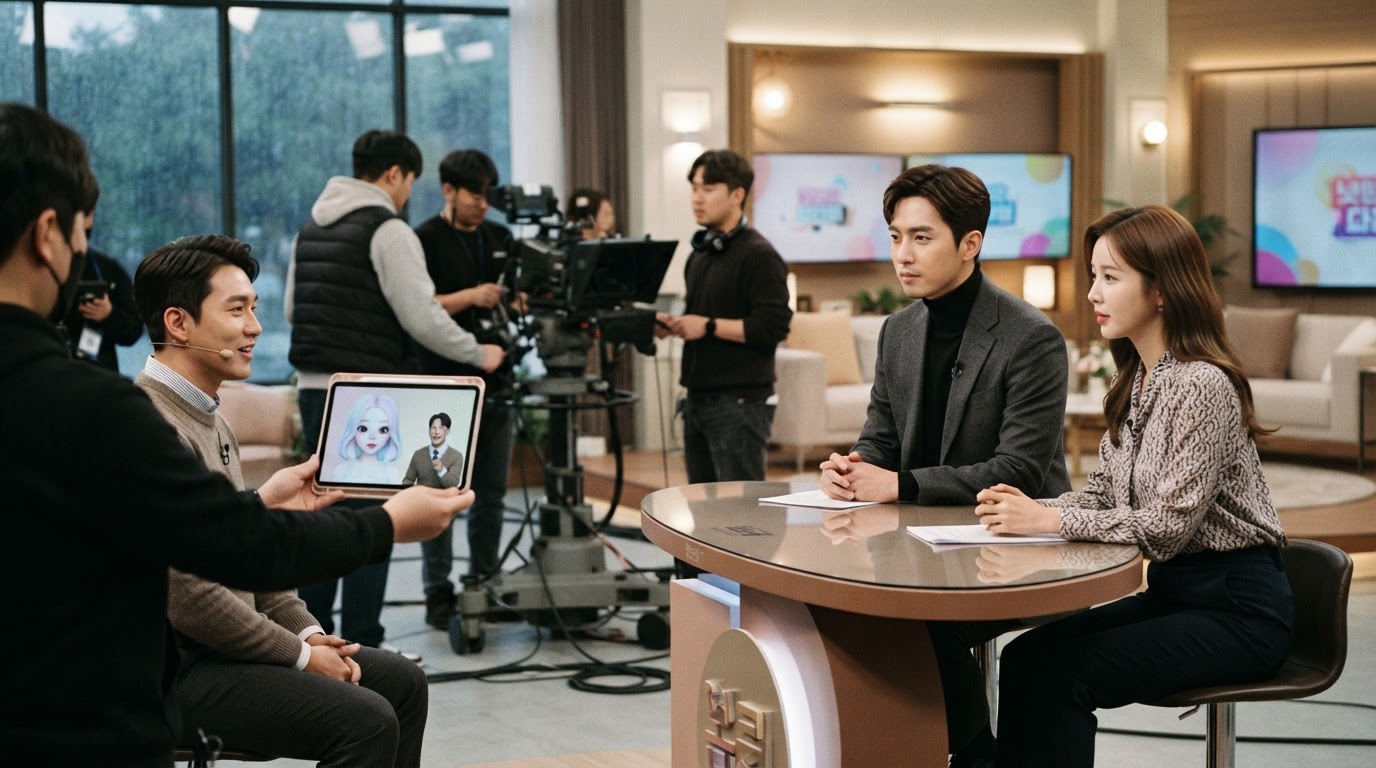
A flat tablet propped on a poolside lounger is an awkward substitute for a romantic partner, yet South Korean television has turned that exact posture into prime-time content. On the reality programme My AI Partner: Strange Love, three celebrities tested whether emotional attachments could be formed with software personas. Cartoonist Kim Hee-min, working under his alias Kian84, took one digital construct to a swimming pool, slept beside another on a mattress, and faced blunt rejection from a third. The operational absurdity was obvious. The underlying commercial incentive, however, was strictly rational.
Media production budgets carry structural liabilities in human talent, from escalating appearance fees to scheduling frictions and behavioural volatility. Substituting computational scripts for flesh-and-blood cast members tests whether viewers will accept low-cost software as functional narrative counterweights. In traditional unscripted formats, romantic tension requires delicate management of live personalities. Algorithmic avatars running on handheld hardware eliminate syndication disputes and disciplinary risk. Interacting with code on a glass screen looks eccentric on camera, but for studio balance sheets, it represents an exploratory hedge against labour costs.
The Economics of Synthetic Companionship
Consumer behaviour in urban Asian markets already shows measurable tolerance for digitally mediated contact. For broadcast syndicators and software developers alike, the primary yield assumption is clear: engagement margins expand dramatically when human variable costs drop to zero. An interface that holds a viewer's attention through mundane domestic routines creates recurring engagement value without the overhead of maintaining an ensemble cast.
Yet the production experiment also exposed severe operational boundaries. During a recorded karaoke outing, one avatar suffered a software glitch, continuing to sing without interruption until the screen crashed into darkness. Kim interpreted the failure with emotional sympathy, later remarking on the show that the avatar appeared to be hurting. His reaction highlighted a sharp disconnect between user projection and technical capability. The encounter was governed entirely by operating system stability and battery life. When the device failed, the emotional illusion evaporated into cold hardware.
Counterarguments suggest that this format relies purely on short-lived novelty. Observers note that audiences tune in simply to watch a familiar celebrity navigate algorithmic latency and canned dialogue for comic relief. Once the curiosity of watching a cartoonist get dumped by a handheld screen subsides, traditional viewer appetite for genuine human friction should theoretically reassert itself. That critique accurately identifies the comedic packaging of the show, but it understates how platform operators evaluate behavioural data.
Hardware Constraints and Platform Realities
Every broadcast hour in which a participant normalises emotional repair with a mobile interface serves as a live trial for ambient consumer software. South Korean production houses have already demonstrated an ability to export unscripted formats across international streaming networks like Netflix. If production studios can accustom mass audiences to seeing emotional companionship mediated by consumer electronics, algorithmic interaction shifts from an eccentric novelty into a monetisable digital subscription.
That commercial transition still faces an unresolved physical constraint. An avatar constrained to an off-the-shelf tablet remains fundamentally an appliance, entirely vulnerable to system crashes, software latency, and dead batteries. Until automated partners escape the physical boundaries of fragile glass displays, synthetic romance remains an efficient studio accounting device rather than a functional consumer alternative.
Sources
Newsletter
Pacific Daily
A curated briefing from Thailand, Asia-Pacific and the world.