Domestic Crockery and the Ledger of Unreckoned Commerce
Tony Albert gathers two thousand items of decorative kitsch at the MCA, shifting everyday domestic commodities into an institutional inventory.
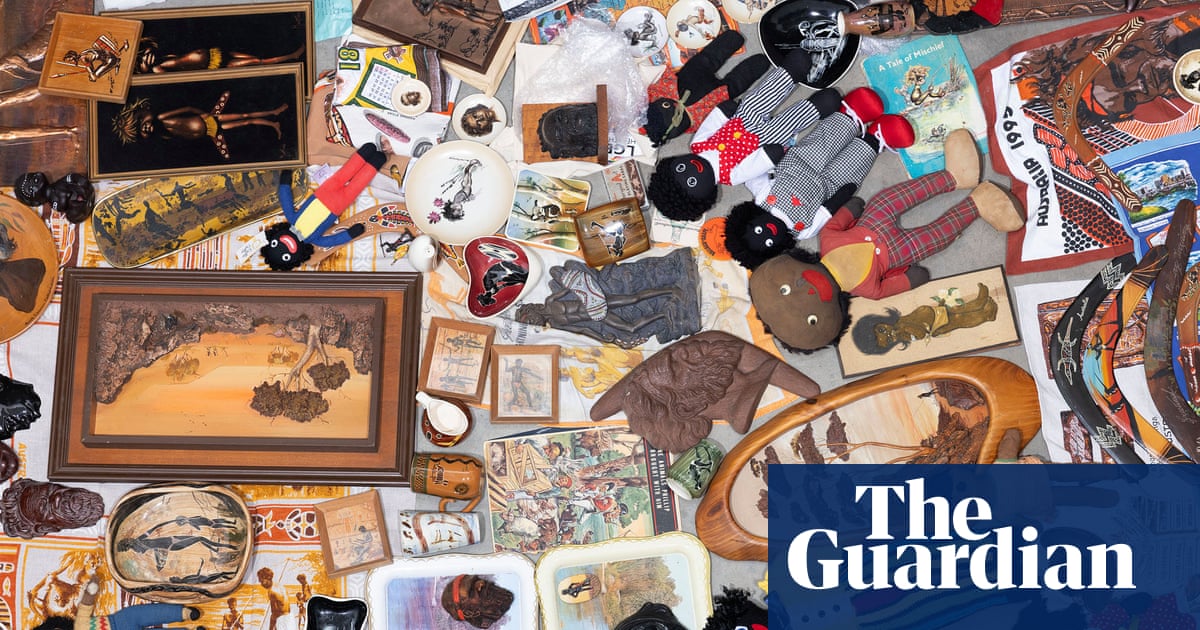
Everyday crockery carries political economies long after leaving the manufacturing kiln. While domestic dinner tables routinely obscure where production margins originated, the objects themselves retain the ledger of their fabrication. At the Museum of Contemporary Art, known as the MCA, Indigenous artist Tony Albert assembled more than 2,000 donated artefacts that spent decades functioning as household utility. Tea towels, ashtrays, crockery and clothing depicting Aboriginal people entered private residences across Australia as casual decorative merchandise. By issuing a public call-out five months prior, Albert prompted donors to surrender mass-produced items once integrated into daily routines.
The material record indicates how domestic dining spaces absorbed racial caricature under the guise of ordinary household goods. Plates and saucers perform practical domestic duties. They carry food while quietly reinforcing an economic model predicated on uncredited imagery. When industrial manufacturers stamped caricatures onto cheap glazed ceramics, operating margins stayed entirely with commercial distributors and retail owners. Indigenous communities received neither licensing royalties nor governance over the circulation of their identities. That separation between cultural origin and retail margin defines the entire commodity category of Aboriginalia.
The Economics of Tableware
Transferring decorative dinnerware from private pantries into a contemporary gallery forces an audit of historical retail consumption. Donor Carolyn Ienna acknowledged surrendering a painted picture of an Aboriginal man with a spear after not knowing the definition of Aboriginalia prior to the donation. Her public account indicates how thoroughly commercial distribution divorced decorative objects from ethical scrutiny during previous manufacturing cycles. Suburban purchasers acquired glazed crockery without interrogating who cast the clay or what social toll accompanied the retail transaction.
Institutional acquisition changes an object's utility without erasing its industrial provenance. Within the exhibition Not a Souvenir, items that once caught cigarette ash or dried washed cutlery sit stripped of functional domestic purpose. They operate as concrete physical records of settler consumption. The sheer volume of matching production runs suggests that these ceramics were not incidental craft experiments, but standardized inventory engineered for commercial turnover.
Repositories and Lingering Inventories
Gathering more than 2,000 items creates an evident operational challenge regarding long-term custody. A primary counterargument suggests that archiving commercial slurs inside institutional galleries risks preserving degraded novelties that communities might prefer to see destroyed. Surrendering them to museum storage guarantees physical survival. Conversely, the public donation process serves as a practical quarantine that prevents these commodities from circulating back into secondary antique stalls or resale markets.
The transition from private pantry to gallery vitrine strips domestic objects of utility, exposing the commercial machinery behind them.
Reclassifying utilitarian household goods as museum artefacts alters their financial circulation, but it leaves underlying production asymmetries unresolved. Removing racist crockery from domestic cupboards does not generate capital for contemporary Indigenous makers. It does not rebalance retail supply chains. The domestic kitchen remains exposed to extractive merchandising whenever commercial manufacturers replicate traditional patterns without community ownership.
Albert demonstrated that mundane dining tools sustained racial tropes across generations through ordinary retail channels. Whether retaining these 2,000 items inside institutional vaults genuinely neutralizes their residual social authority remains an open institutional challenge across the Pacific.
Sources
Newsletter
Pacific Daily
A curated briefing from Thailand, Asia-Pacific and the world.