Domestic Spaces as Cultural Archives in Singapore
A Bedok Reservoir HDB flat offers more than interior design trends; it reflects a broader engagement with local artistic production.
SINGAPORE
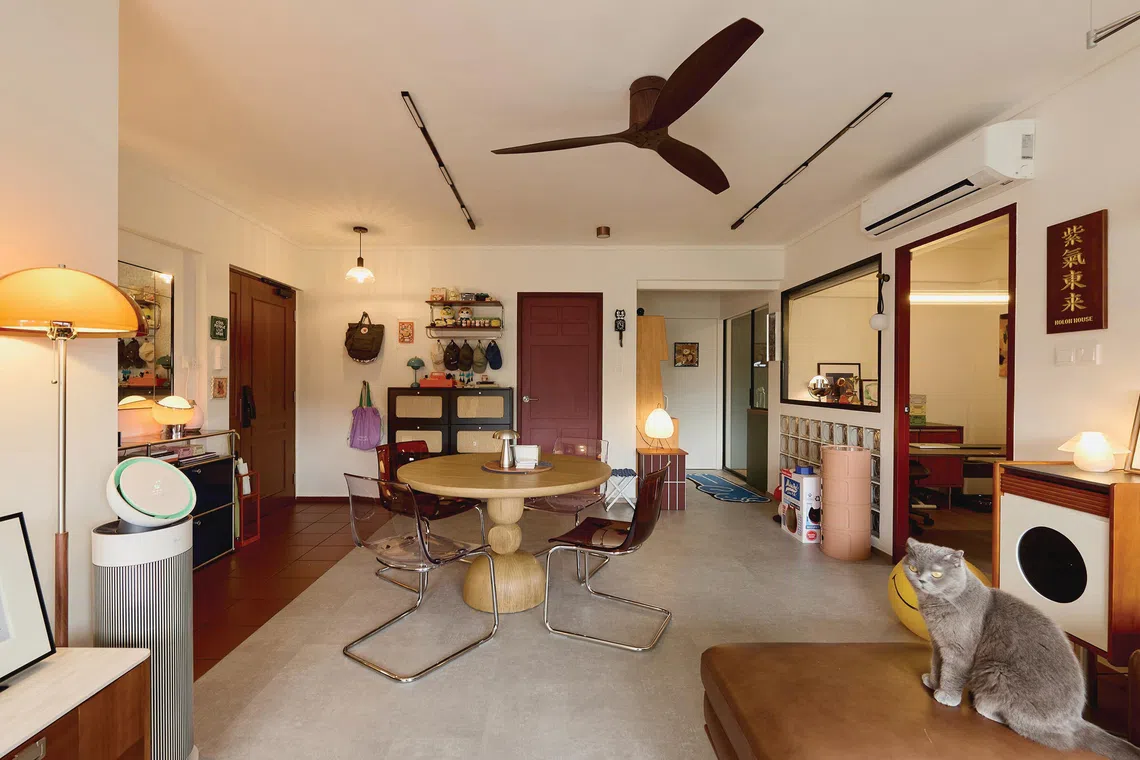
The interior of a Bedok Reservoir Road HDB flat, recently highlighted by The Straits Times Life, presents a particular domestic landscape. It belongs to content creator Samantha Loh and her husband, featuring an array of art, ceramics, and knick-knacks collected since their move. The initial aspiration for a mid-century modern aesthetic reportedly evolved into a retro eclecticism as Loh began collecting colorful art and decor. She describes the collected items as "home-grown," focusing on works by local women artists and interactions with what she terms "like-minded creators."
This particular dwelling, with its stated emphasis on local artistic production, reflects a notable pattern. It suggests a movement beyond passive consumption of mass-produced decor towards a more deliberate curation of domestic spaces. The commitment to "home-grown" art and the engagement with local creators, as described by Loh, indicates a preference for artifacts that carry a specific cultural provenance over generic, internationally sourced items. Her pivot to content creation after a 12-year career in design and marketing could be interpreted as a reorientation of professional focus towards these interests.
Yet, the presentation of such interiors often frames them primarily through the lens of individual taste or aspirational lifestyle. The question then becomes whether the publicized aesthetic choices signify a widespread cultural shift or remain a distinctive, niche interest. While the reporting by The Straits Times Life captures the visual distinctiveness of the flat, it largely attributes the aesthetic to the owners’ "passion for local art." This attribution, while accurate to the owners' stated intentions, does not fully clarify the extent to which such practices are indicative of broader trends within Singaporean or Asia-Pacific domestic culture. The Asia Pacific Triennial, for instance, frequently showcases "an enormous explosion of colour and reassuring optimism" in contemporary art, which aligns with the visual vocabulary of the Bedok flat, but its mainstream appeal within everyday home curation remains a subject for observation.
The focus on “home-grown” art signals a deliberate choice against homogenised global trends.
Indeed, the concept of a "retro" aesthetic itself, whether in Singapore or elsewhere, carries a certain nostalgia, often for periods perceived as culturally distinct or less globalised. This selective retrieval of past forms, combined with an explicit endorsement of local creative output, offers a counter-narrative to the prevailing currents of global design and consumption. It transforms a living space into a specific cultural archive, where each object is not merely decorative but also a statement of cultural allegiance. The challenge is in discerning whether this visible commitment to local production is becoming a foundational element of domestic identity for a wider demographic, or if it remains an aesthetic choice within specific cultural circles.
Sources
Newsletter
Pacific Daily
A curated briefing from Thailand, Asia-Pacific and the world.