Malaysia's Electric Road Trip: A Cultural Barometer Beyond Range Anxiety
The Straits Times’ 2,100km journey highlights an enduring Asian tension: practicalities versus national ambition.
SINGAPORE
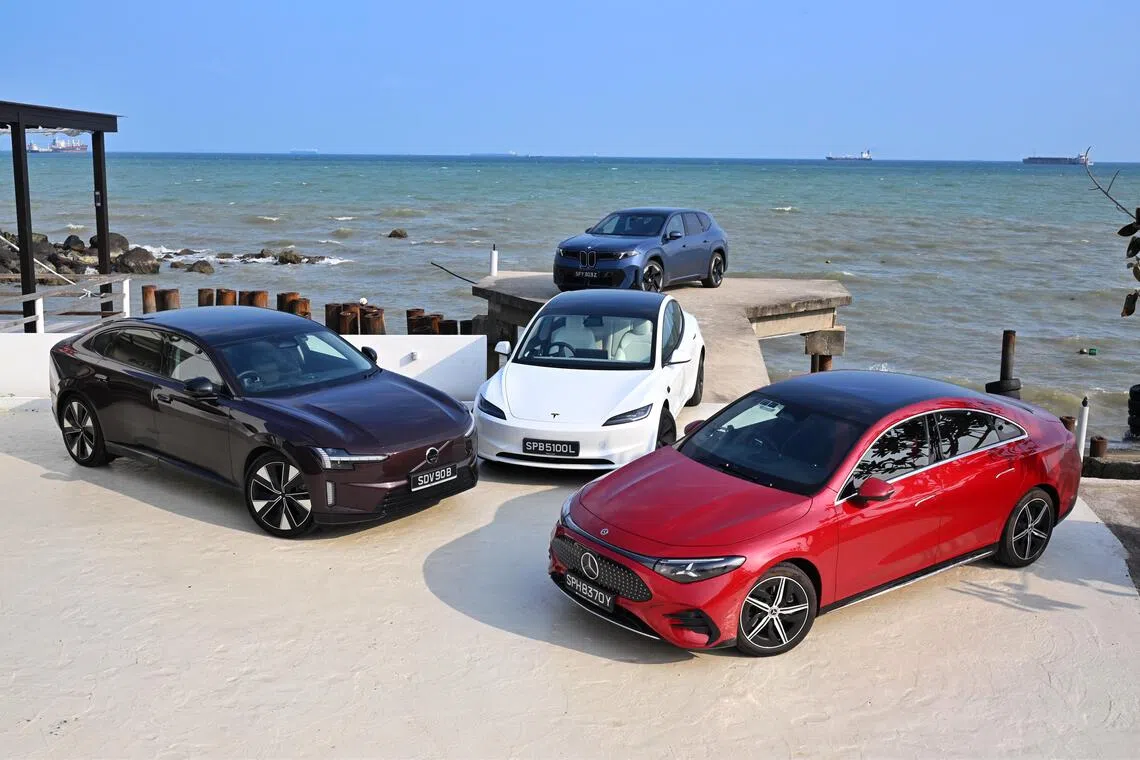
The image of four electric vehicles, specifically a Volvo ES90, a Tesla Model 3 Long Range RWD, a Mercedes-Benz CLA 250+, and a BMW iX3 50 xDrive, lined up at a disused jetty outside a café in Pengerang, Malaysia, offers a precise observation of a cultural pattern. This scene, captured during the final leg of a 2,100km road trip reported by The Straits Times Life on September 18, 2026, speaks to an evolving narrative in the Asia-Pacific region concerning technological adoption and its intersection with existing infrastructure and public perception. The expedition itself, framed as a "Charge of the electric brigade," concluded a series on traversing Malaysia in electric cars, following an earlier 1,500km journey in 2022 that included an MG 5 Exclusive, a Polestar 2 Long Range Single Motor, and an Audi e-tron S Sportback.
At the heart of such endeavors lies a persistent cultural signal: the assessment of "range anxiety" for electric vehicles. The Straits Times Life noted, "No one talks about the range of a combustion-engined car because refuelling stations are commonplace and refuelling takes mere minutes. But for electric cars, range, alas, is still a consideration. Especially on a road trip." This statement, appearing in a publication known for lifestyle reporting, reveals a deeper, more widespread belief system. It is not merely about the technical specifications of a battery, but about a public habit of mind that contrasts the established convenience of fossil fuels with the perceived logistical hurdles of new energy. The very act of documenting a 2,100km journey with multiple premium electric models underscores that for a segment of the Asian consumer base, the transition is both an aspiration and a challenge to be conquered, rather than an unproblematic shift.
This tension between aspiration and practicality often manifests in how technological progress is interpreted across the region. While Singaporean media outlets document these long-distance electric drives, potentially signaling a readiness for broader EV adoption, the underlying narrative frequently circles back to infrastructure availability and charging times. The emphasis remains on the "consideration" of range, rather than its transcendence. This focus arguably reflects a consumer base that values reliability and established routines over the early adoption of potentially disruptive technologies, unless those disruptions are entirely frictionless. The ongoing discourse around electric vehicles in this context is not just about environmental policy or automotive innovation; it is a barometer of how deeply ingrained convenience and predictability are in daily life and travel habits.
For a nation like Thailand, with its extensive road networks and reliance on tourism and cross-border trade, the Malaysian experience offers a pertinent point of reference. The public’s reception of such long-distance EV journeys, as depicted in media, can shape future infrastructure investments and government incentives. If the prevailing sentiment continues to emphasize range as a hurdle, rather than a manageable variable, it suggests a cultural leaning towards cautious integration rather than rapid transformation. The fact that the report itself is framed as a narrative of overcoming a challenge—"Charge of the electric brigade"—reinforces the idea that electric long-haul travel is still an expedition, not yet an everyday norm. This is the unresolved tension: the drive to embrace new technologies while simultaneously grappling with the comfort and expectation of what has long been familiar. The cultural observer notes that such media portrayals, intended to highlight progress, inadvertently reveal the persistent cultural barriers to a complete paradigm shift.
Sources
Newsletter
Pacific Daily
A curated briefing from Thailand, Asia-Pacific and the world.