The Allure of the 'Too Much': Whimsymaxxing and Cultural Contradictions
A rising trend among Gen Z, known as 'whimsymaxxing,' prioritizes individual joy and personal adornment, subtly challenging cultural expectations of productivity and understated aesthetics.
SINGAPORE
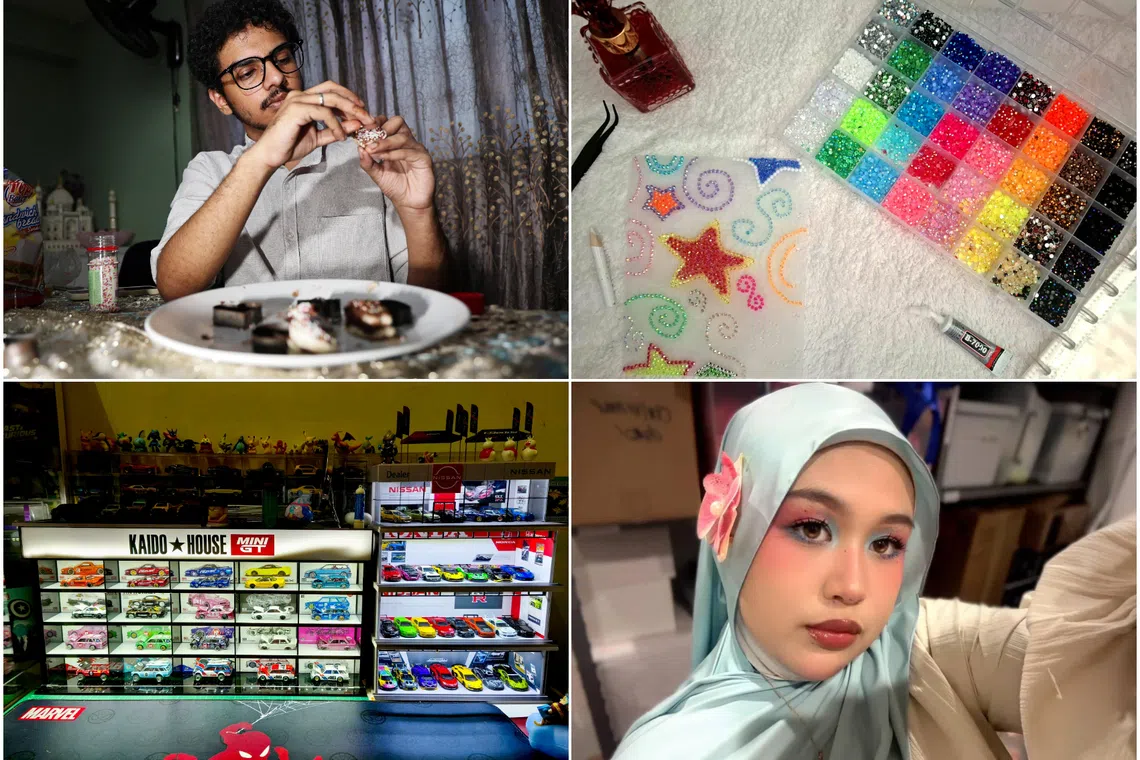
The reported emergence of 'whimsymaxxing' — a trend among Gen Z individuals involving bedazzling, food, decor, and make-up — suggests a curious turn in how personal expression manifests. The Straits Times Life, on October 1, 2026, described it as a way young people add playful, colourful, and nostalgic touches to everyday life, seeking joy and personal expression. This practice, often detached from the pursuit of social media attention, offers a form of emotional comfort.
In cultures that frequently champion efficiency, external validation, and the diligent pursuit of success, the deliberate act of adorning a mundane object or personal space with excessive, colourful detail appears as a quiet, yet distinct, counterpoint. The trend has been noted as a departure from minimalist aesthetics. For many in the Asia-Pacific region, where societal expectations often lean towards conformity or practical application, such an emphasis on purely whimsical, non-utilitarian aesthetics is noteworthy. It is not merely about decorating; it is about finding value in the 'doing too much' – a direct contrast to the ingrained ethos of streamlined living and understated elegance that has prevailed in certain cultural narratives.
This trend, while seemingly superficial, offers a glimpse into evolving generational priorities. It indicates a potential redefinition of what constitutes 'meaningful' activity, moving away from purely productive endeavors towards those that offer intrinsic, often ephemeral, personal satisfaction. This could be interpreted as a response to the pervasive 'hustle culture' or the constant digital scrutiny that defines much of modern youth experience. By engaging in acts of whimsymaxxing, individuals might be reclaiming a sense of agency over their immediate surroundings and emotional states, prioritizing internal amusement over external approval.
However, it remains an open question whether whimsymaxxing is a sustained shift in cultural behaviour or a transient aesthetic phenomenon. The trend’s emphasis on individual joy and expression, as reported by The Straits Times Life, could be seen as an indulgence in societies where collective well-being often takes precedence. The very act of 'doing a little too much' could also be perceived as trivial in environments where resourcefulness and moderation are valued. Nevertheless, its very existence, regardless of its longevity, signals a generation experimenting with different modes of finding meaning and asserting identity in a complex world.
What this phenomenon reveals is less about the objects themselves and more about the internal landscape of a generation navigating significant cultural and economic pressures. It suggests that even in highly structured societies, there is a persistent human desire for spontaneous, joyous, and sometimes even extravagant, self-expression.
Sources
Newsletter
Pacific Daily
A curated briefing from Thailand, Asia-Pacific and the world.