The Digital Gambit: When Authenticity Meets Algorithms
Family hawker businesses, once bastions of tradition, now navigate the unpredictable currents of social media, raising questions about what truly defines their value.
SINGAPORE
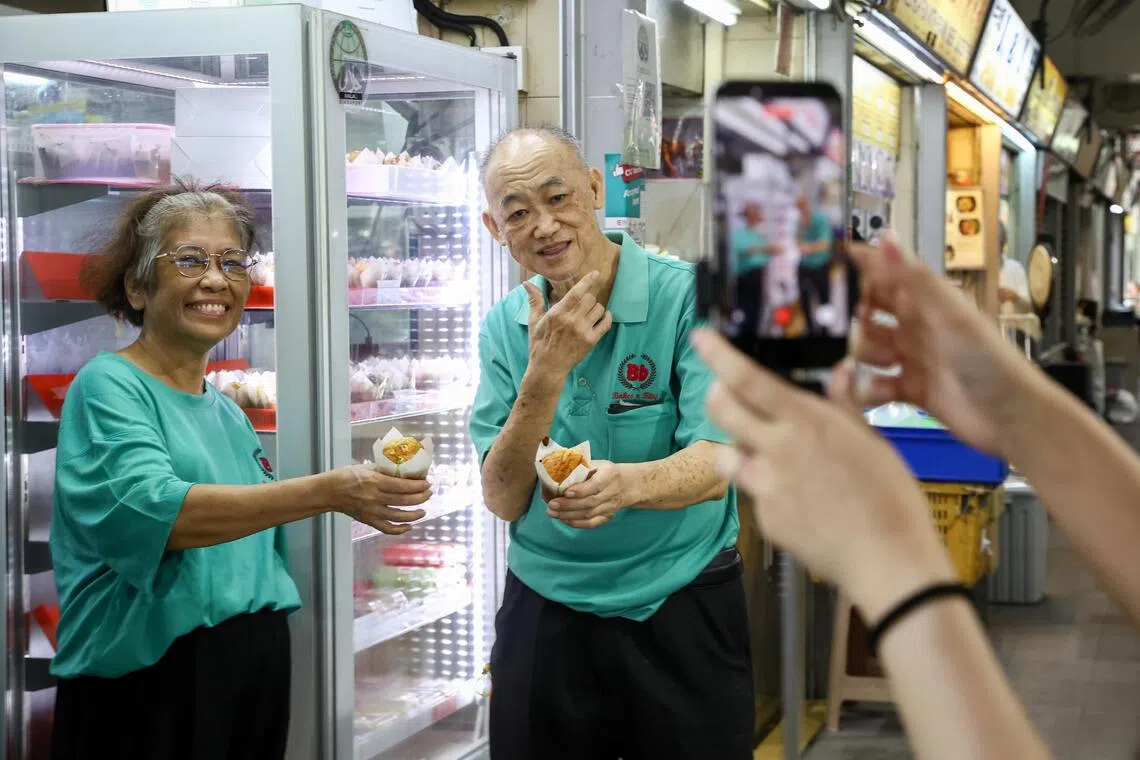
The image of an elderly hawker couple seeking renewed fortunes through TikTok skits presents a distinct tension. On one side, it embodies the adaptive spirit of small, family-run food and beverage businesses in Singapore, a sector often seen as a cultural touchstone. On the other, it highlights an increasing reliance on digital platforms whose algorithms may not always align with the intrinsic values these establishments represent.
Family businesses, as noted by The Straits Times Life on September 19, 2026, increasingly employ social media to share narratives, offer recipes, and engage with clientele. This digital embrace is framed as a method to preserve heritage and access new demographics, with live selling and storytelling credited for boosting visibility and attracting younger and international customers. Yet, this push toward digital engagement introduces a subtle, yet significant, shift in how authenticity is perceived and marketed.
Consider the operational reality: balancing online popularity with physical capacity is a practical constraint. The Straits Times Life also noted the need for businesses to adapt to AI-driven marketing tools while retaining a human touch. This suggests a potential for algorithmic influence to subtly reshape not just marketing, but the very presentation of cultural experience. An “authentic” online persona might become a performance crafted for engagement metrics, rather than an organic expression of the business’s core.
The underlying argument often overlooked is not merely whether social media can save these businesses, but what price their essence pays in the process. The narrative of an elderly couple turning to TikTok for survival frames their struggle as one of modern adaptation. However, it also implies a pressure to conform to digital trends, potentially diluting the very heritage they seek to preserve. The question becomes whether the digital medium serves the tradition, or if the tradition is reconfigured to serve the medium.
While social media platforms like TikTok boast significant user bases across the Asia-Pacific region, as Statista reported in March 2023, their operating environments are far from stable. Geopolitical currents, such as the reported TikTok deal progress between former President Trump and President Xi in September 2025, or Australia's under-16 social media ban in November 2024, indicate a volatile landscape. Relying on such platforms for core business viability introduces an external fragility, beyond the control of any hawker stall.
The tension remains: is this digital embrace a genuine evolution of tradition, or a Faustian bargain where cultural integrity is subtly bartered for algorithmic visibility? The answer is not yet clear, as the pursuit of digital relevance continues to reshape the very fabric of local commerce and cultural transmission. The digital stage offers a wider audience, but it also dictates the terms of the performance.
Sources
Newsletter
Pacific Daily
A curated briefing from Thailand, Asia-Pacific and the world.