Commercial Real Estate Leans on Heritage Displays to Justify Year-End Footfall
Retail operators in Thailand are treating historical nostalgia as an operational asset, yet the costs of temporary festive spectacles must ultimately convert into sustained tenant revenue.
SINGAPORE
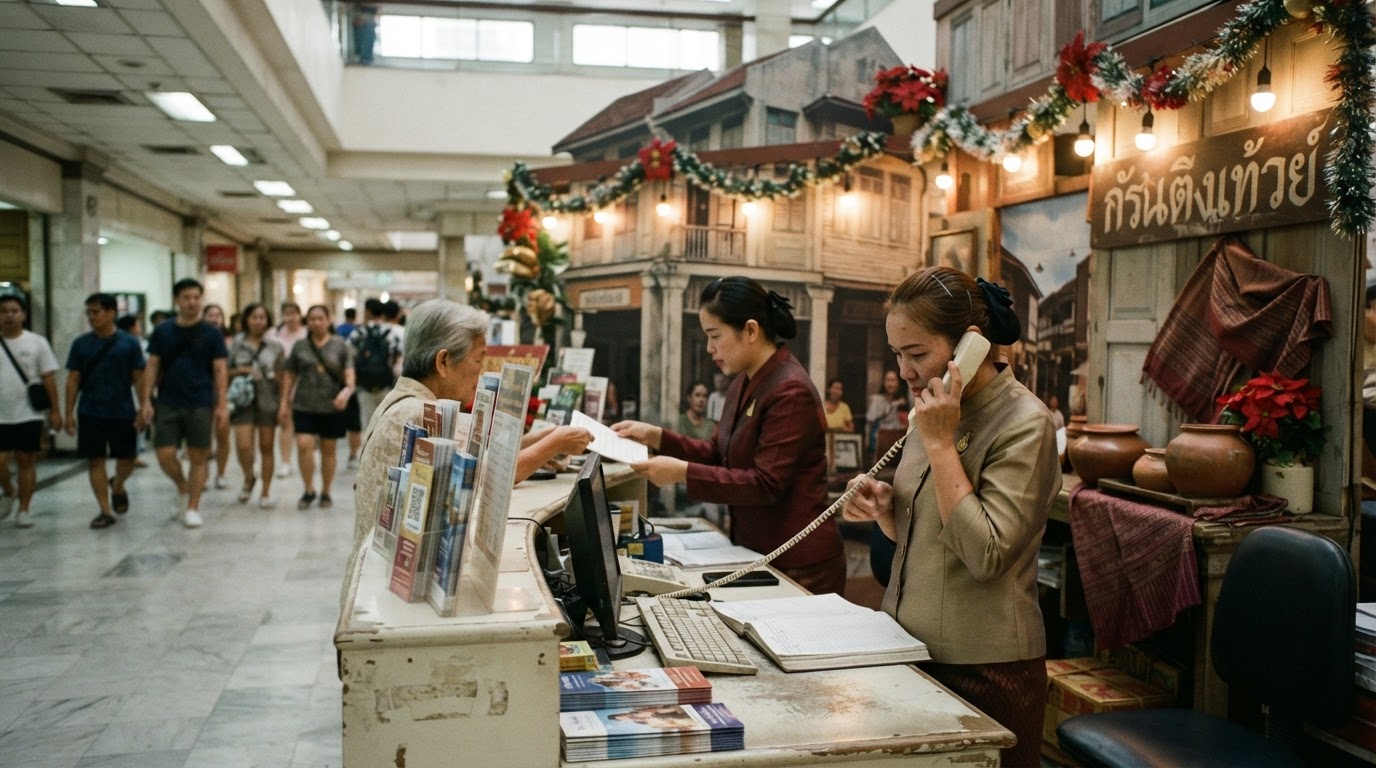
Footfall is a vanity metric; tenant revenue pays the lease. In commercial hospitality and prime retail developments across Thailand, the year-end balance sheet regularly absorbs substantial capital allocations for seasonal marketing displays. According to a promotional announcement carried by Thailand Business News, developer LANDMARK introduced its holiday presentation, titled Christmas at The Gloucester Hotel, explicitly structured around bringing Central's heritage to life this holiday season. The commercial posture is unmistakable: anchor a retail complex with reconstructed historical glamour to entice leisure foot traffic during peak fourth-quarter trading.
Whether that foot traffic translates into retail transactions is a different matter. When property managers resurrect the name of the Gloucester Hotel, the immediate commercial intent is clear enough. The installation creates a branded, photographic environment designed to lengthen consumer dwell time across surrounding dining concessions and luxury storefronts. Prolonged visits generally support food and beverage receipts during dense holiday cycles. What remains unproven in such public spectacles is the actual conversion rate at the cash register.
The Cost of Nostalgia
Nostalgia carries high overhead.
Staging period-accurate hospitality environments requires significant fabrication outlays, operational coordination, and square footage that would otherwise generate direct commercial returns. For leasing tenants, heavy atrium congestion presents a double-edged reality. Swarms of sightseers taking photographs can obstruct storefront visibility and deter high-intent shoppers, driving up staffing demands without delivering corresponding average check sizes.
From an asset management perspective, developers clearly infer that heritage iconography shields properties against commodification. Metropolitan retail hubs in Thailand face intense competition from neighboring developments offering nearly identical luxury labels and dining franchises. Reviving historical lineage offers a temporary marketing moat. Corporate landlords therefore treat architectural tributes less as acts of civic preservation than as customer acquisition tools. If the crowds treat the installation solely as a visual backdrop, that acquisition strategy fails.
Shifting Retail Economics
Developer skepticism is mounting quietly across the sector. Aggressive holiday campaigns across primary urban corridors have conditioned urban shoppers to expect elaborate installations each December. As baseline production costs escalate simply to preserve baseline foot traffic, marginal economic yields inevitably compress.
Holiday spectacles do not service commercial debt on their own. For property executives behind Christmas at The Gloucester Hotel, the decisive balance sheet figure is not opening-day pedestrian counts, but the final net sales figures posted by leasing partners when the decorations come down.
Sources
Newsletter
Pacific Daily
A curated briefing from Thailand, Asia-Pacific and the world.