Vancouver Scrutiny on Interim Green Spaces Exposes the Limits of Tax-Driven Civic Amenities
Municipal scrutiny of pop-up gardens and dog runs on stalled development sites highlights how interim urban concessions frequently subsidise land banking rather than genuine public space.
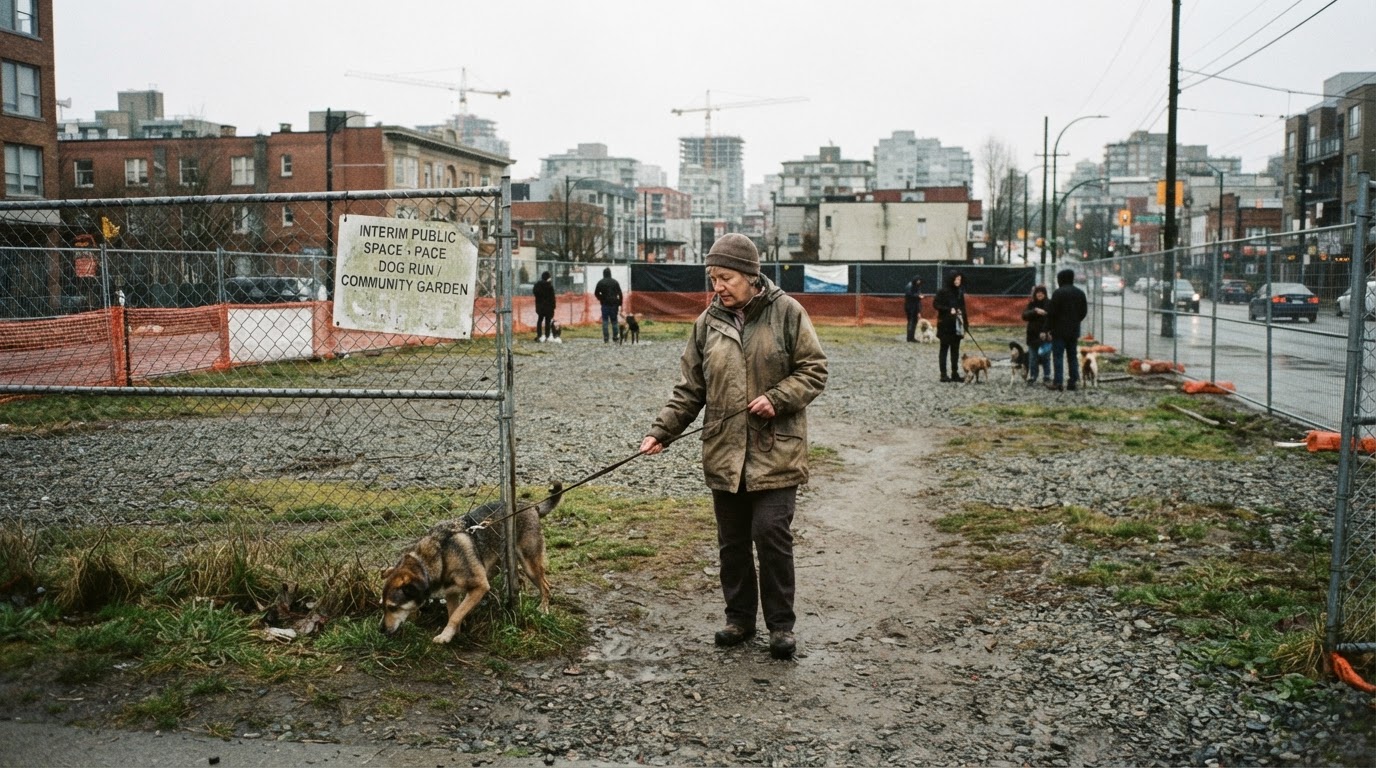
Municipal land policy routinely collides with the financial incentives of real estate developers, but few mechanisms illustrate that friction as starkly as the interim park. In Vancouver, authorities are reviewing tax-saving arrangements that allow property owners to install community gardens and dog parks on vacant development parcels. The reporting from Urbanized and Daily Hive points to an administrative reassessment of an old development bargain. Landowners convert inactive plots into temporary amenities, secure reduced property tax assessments, and quietly await more profitable market conditions to build.
Supporters of interim activation argue that an accessible lawn or raised planter bed offers immediate communal value while complex planning approvals crawl forward. An open parcel hosting neighbourhood dogs generates higher immediate utility than a fenced dirt lot blighted by neglect. Developers absorb maintenance obligations, manage public access, and activate street frontage that would otherwise remain dormant. Under this view, preferential tax relief functions as an equitable trade, offsetting private holding costs in exchange for temporary public enjoyment.
The Mechanics of Temporary Use
Financial incentives tell an alternate story about who truly captures value from these temporary interventions. Real estate developers make site decisions based on land holding costs, carrying charges, and entitlement timelines. Property taxes constitute a primary recurring expense during the planning phase. When city tax structures treat an active dog run or community plot as a lower-liability category, the fiscal concession effectively reduces the cost of holding undeveloped land off the market. Rather than motivating rapid delivery of housing or commercial space, the tax reduction provides capital relief that makes waiting economically painless.
This structure establishes an awkward contradiction for urban regulators across Pacific Rim gateway cities. Municipalities face profound housing shortages and strained public coffers, yet their own tax ordinances provide shelter for stalled building sites. Land banking gains an aesthetic buffer of timber garden boxes and chain-link fences. When public scrutiny catches up with these arrangements, cities must confront whether the community benefits delivered justify the public revenue surrendered.
Reassessing Municipal Concessions
Ending or tightening these tax classifications introduces administrative friction for local governments. Removing preferential tax treatment could simply lead developers to fence off empty parcels entirely, trading a community dog park for an unkempt patch of gravel. City councils cannot mandate that private owners fund neighbourhood amenities out of pure civic goodwill without compensatory incentives. If the tax break vanishes, the green space often vanishes alongside it.
The Vancouver review signals that public patience with cosmetic urbanism is narrowing. Temporary recreation cannot remain an acceptable surrogate for comprehensive planning and timely construction. When interim concessions function primarily as corporate balance-sheet preservation, municipalities are subsidising delay under the veneer of ecological charity. Urban policy must establish whether temporary green buffers advance genuine community welfare or merely reward financial patience at municipal expense.
Sources
Newsletter
Pacific Daily
A curated briefing from Thailand, Asia-Pacific and the world.