When Industrial Heavyweights Share Fences With Dense Neighbourhoods
An explosion at Bangchak Corp’s Phra Khanong refinery exposes the recurring human risk when hazardous production operates inside expanding residential corridors.
SINGAPORE
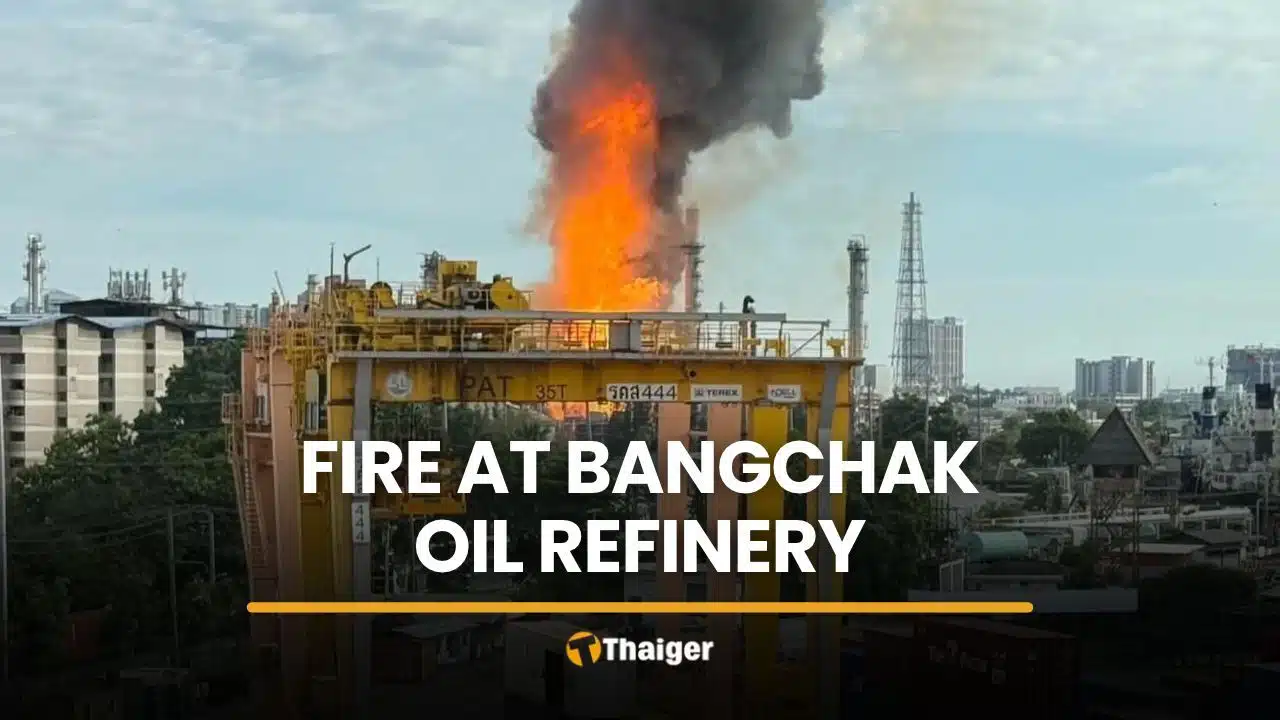
Heavy industry meets dense residential settlement abruptly along Sukhumvit Soi 62. On Thursday afternoon, that physical proximity turned into an acute emergency. An explosion tore through the Bangchak Corp oil refinery in the Phra Khanong district of Bangkok, unleashing a blaze that sent thick black smoke into the sky. Seven people were injured, with four in critical condition, according to medical data reported by the Erawan Emergency Medical Centre. City authorities urged residents in adjacent areas to evacuate immediately. To arrest further danger, Bangchak Corp shut down all production units across the refinery complex.
Emergency crews brought the fire under control relatively quickly. Yet prompt containment does not erase the structural hazard such proximity creates. Decades ago, industrial installations occupied rural or peripheral land; today, condominium towers, schools and elevated rail lines press directly against refinery walls. When mechanical systems fail inside a hydrocarbon facility, the immediate physical toll lands squarely on neighbours who share the boundary fence.
The Cost of Tight Perimeters
Corporate ledgers can absorb temporary operational stoppages through capital reserves and planned downtime. Bangchak Corp responded by halting refinery units as emergency teams secured the site. For nearby residents and operational staff, however, the damage is immediate and tangible. Hospital tallies confirm that four individuals remain critically injured, while families living along the perimeter were forced into the street under orders to flee on minutes of notice.
Refining operators often emphasize that metropolitan plants run under strict automated shutdown protocols, reducing long-distance transit risks by keeping fuel close to urban retail pipelines. That logistical logic is genuine. Nevertheless, the incident indicates that automated fail-safes function primarily to limit damage only after a catastrophic breach occurs. Containment protocols extinguish flames. They cannot prevent the shockwave of an industrial detonation metres away from domestic living rooms.
Urban Encroachment and Accountability
This pattern reflects an unresolved spatial tension across fast-growing Asian capitals. As cities expand, planning bodies frequently permit residential developers to construct high-density dwellings alongside heavy hazardous infrastructure, betting on low incident probabilities to avoid enforcing costly buffer corridors.
Thursday's blast exposes the limits of that gamble. When alarms sound and black plumes rise over apartment blocks, the premise that hazardous processing and dense urban communities can coexist without wide physical barriers proves untenable. Regulatory agencies must confront the reality of chemical manufacturing within residential limits, because the human price of unchecked proximity continues to fall on those who sleep beside the perimeter.
Sources
Newsletter
Pacific Daily
A curated briefing from Thailand, Asia-Pacific and the world.