Bangkok's Transit Divide Reflects Uneven Development
The utility of the BTS and MRT systems depends on a resident’s daily routes, highlighting disparities in urban planning and access.
BANGKOK
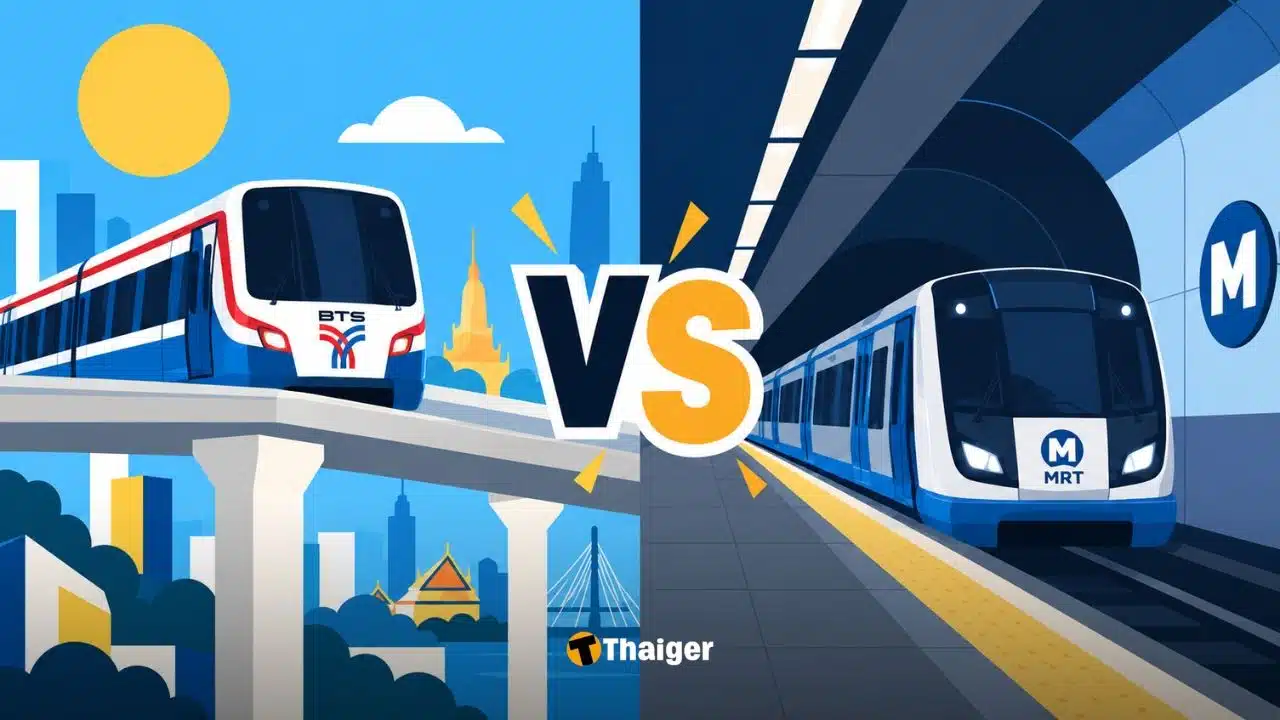
Bangkok's expansive transit systems, the BTS Skytrain and MRT subway, are often presented as comprehensive solutions for urban mobility. However, their utility is not uniform across the city. The Thaiger reported on September 22, 2026, that most residents will eventually use both systems, but the more useful option depends on where an individual lives, works, and the parts of the city they frequent. This observation points to a deeper issue of urban development and the allocation of public infrastructure.
For those whose daily lives center around Sukhumvit, Siam, and Silom, the BTS is generally more convenient. The Green Line, for instance, spans areas from Mo Chit to Phaya Thai and Siam, continuing along Sukhumvit. Conversely, residents and workers in areas such as Rama 9, Ratchada, Chinatown, and the Old Town find the MRT offers stronger coverage. This suggests that while Bangkok possesses two major rapid transit networks, their benefits are distributed unevenly, creating distinct spheres of convenience rather than a fully integrated, accessible network for all.
The focus on specific areas for each system means that mobility is not universally improved. A commuter residing in an MRT-dominant zone but working in a BTS-dominant area faces a daily calculation of transfers, time, and cost. While individual choice dictates the 'better fit' for 'usual routes,' the underlying reality is that certain urban geographies are better served than others. This compartmentalization of transit convenience places an additional burden on those whose necessary movements span these divides, often translating into longer commute times or increased reliance on less efficient alternatives.
Consider the implications beyond daily commutes. If the city's economic and social opportunities concentrate in BTS-serviced areas, those reliant on the MRT may face indirect disadvantages in access to jobs, services, or leisure. The city's growth, therefore, appears to follow the lines of its infrastructure, but not always in a way that prioritizes equitable access. This is a common pattern in rapidly developing urban centers, where infrastructure projects, though beneficial overall, often cement existing economic and social hierarchies rather than dismantling them. The ongoing challenge for Bangkok is not merely to expand these networks, but to ensure that future expansion addresses these imbalances, fostering a genuinely interconnected city where the cost of daily movement is not disproportionately borne by specific segments of the population. Without a more holistic approach, the transit system, despite its reach, risks reinforcing an uneven urban landscape.
Sources
Newsletter
Pacific Daily
A curated briefing from Thailand, Asia-Pacific and the world.