Small Packets and Severe Penalties in the Cross-Border Drug Trade
An arrest in Haryana shows how precarious overseas informal earnings turn catastrophic under strict narcotics statutes
SINGAPORE
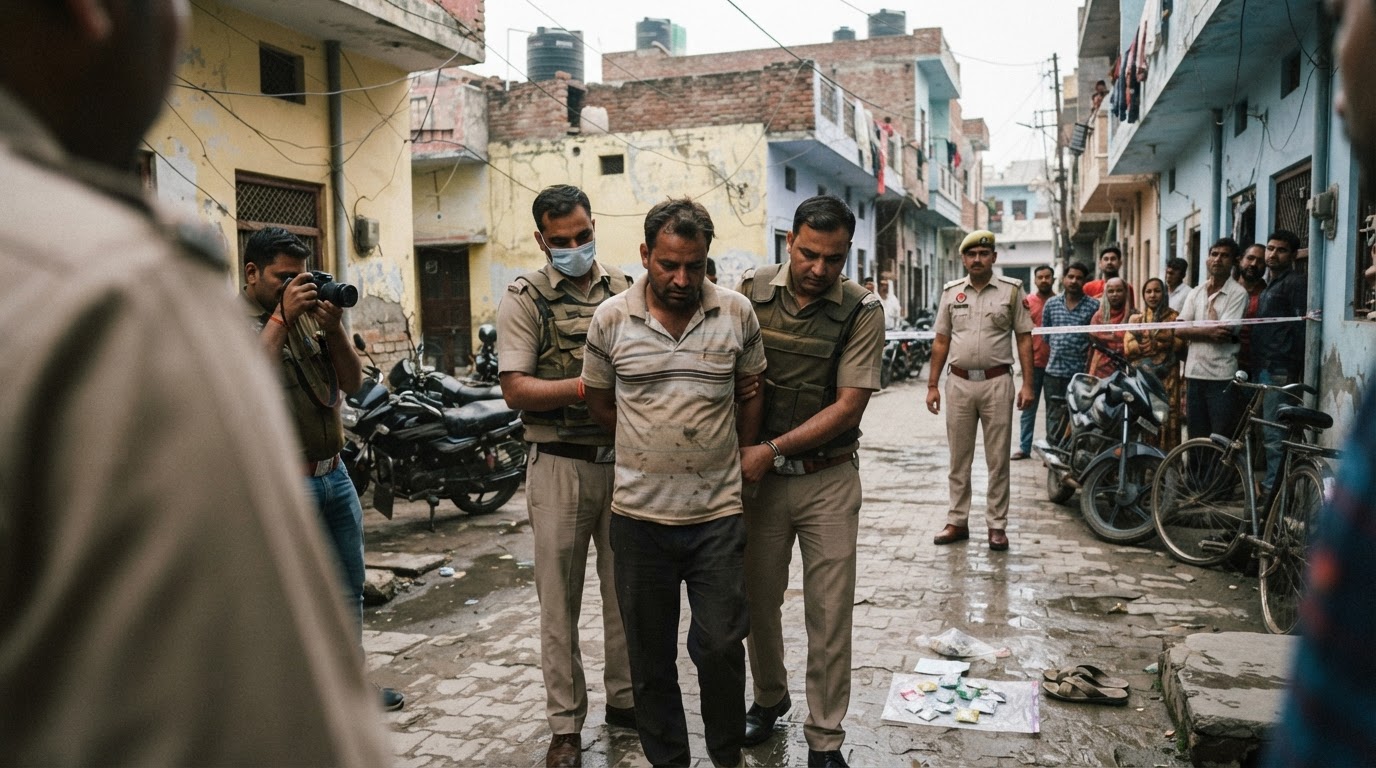
Fourteen point eight grammes is roughly the weight of three standard plastic teaspoons. When officers from the Haryana State Narcotics Control Bureau weighed a clear plastic packet found behind a television set in Gurugram, that modest physical mass triggered some of the harshest criminal liabilities in Indian jurisprudence. The raid on a residential property in Block C of Sushant Lok resulted in the arrest of a Thai national accused of selling suspected MDMA. Sushant Lok Police Station registered the case on October 18 under Section 22(C) of India’s Narcotic Drugs and Psychotropic Substances Act, a provision reserved for commercial quantities that carries severe mandatory penalties.
For migrant workers navigating foreign markets without formal institutional support, small-scale transactions often present themselves as immediate answers to pressing household liabilities. High living costs in suburban commercial hubs near Delhi collide with limited legal avenues for overseas wage earners. The temptation to handle compact, high-margin contraband frequently looks like a manageable shortcut to balance a strained domestic balance sheet. What appears on an individual ledger as a short-term cash cushion, however, carries an asymmetric legal liability that entirely wipes out the economic premise of migration.
The High Arithmetic of Commercial Weight
Indian narcotics enforcement establishes sharp statutory cliffs based entirely on gross weight. The seized material weighed 14.8 grammes including its packaging, a technical detail that carries immense procedural weight during legal proceedings. Forensic examination has yet to confirm the precise chemical identity of the seized powder, leaving open questions about the eventual evidentiary strength of the prosecution. Yet the threshold between lower-tier possession and a commercial charge under Section 22(C) determines whether an accused person faces years of pretrial detention without bail.
The boundary between personal sustenance and statutory ruin abroad often hinges on the inclusion of plastic wrapping.
Foreign nationals charged under these statutes face legal costs that dwarf any prospective revenue from illicit suburban retail. Defence representation, translation services, local living expenses during protracted trials, and family travel rapidly accumulate into insurmountable household debt back home. Relatives who initially depended on foreign remittances find themselves liquidating ancestral land or entering unregulated credit markets just to fund basic courtroom representation. The economic pipeline reverses overnight, draining vulnerable families rather than supporting them.
Legal Exposure and Overseas Precarity
Defenders of stringent drug enforcement argue that zero-tolerance statutes are essential to curb synthetic substance distribution in fast-growing commuter hubs like Gurugram. From an administrative perspective, police agencies rely on uncompromising statutory classifications to deter cross-border syndicates from exploiting porous urban rental neighbourhoods. Without strict statutory minimums, enforcement agencies contend that transnational networks would systematically employ foreign intermediaries to move party drugs through suburban enclaves.
That institutional logic, however, regularly conflates low-tier actors with the orchestrators who capture the real trade margins. The person caught holding 14.8 grammes behind a rented room's display screen absorbs the entire penal shock, while supply coordinators remain insulated from local police raids. Similar systemic vulnerabilities appear across other transnational grey zones, such as the regional cyber operations that cost victims up to USD 114000000000. In both arenas, frontline operators bear direct physical capture while the commercial architecture operates at a distance.
Forensic results from the laboratory will ultimately dictate whether the Sushant Lok case sustains its severe commercial classification or collapses into lesser charges. Regardless of that scientific outcome, the structural pattern remains unchanged. Transnational informal micro-commerce provides an illusion of solvency to foreign workers operating on thin financial margins, only to deliver absolute financial and personal insolvency the moment domestic enforcement arrives.
Sources
Newsletter
Pacific Daily
A curated briefing from Thailand, Asia-Pacific and the world.