Commercial Pressure and the Fragility of Gallery Walls
A dispute at Delfi Orchard reveals the precarious balance commercial spaces maintain between real estate discipline and cultural continuity
SINGAPORE
Commercial art galleries exist through an unspoken compact with physical real estate. Works of painting and sculpture require clean plaster, calibrated lighting, and long stretches of neutral perimeter to command serious attention. Yet the physical rooms that house them remain commercial retail leases subject to collection schedules, landlord prerogatives, and sudden locks. When that fragile arrangement fractures, the institutional illusion of permanence dissolves overnight.
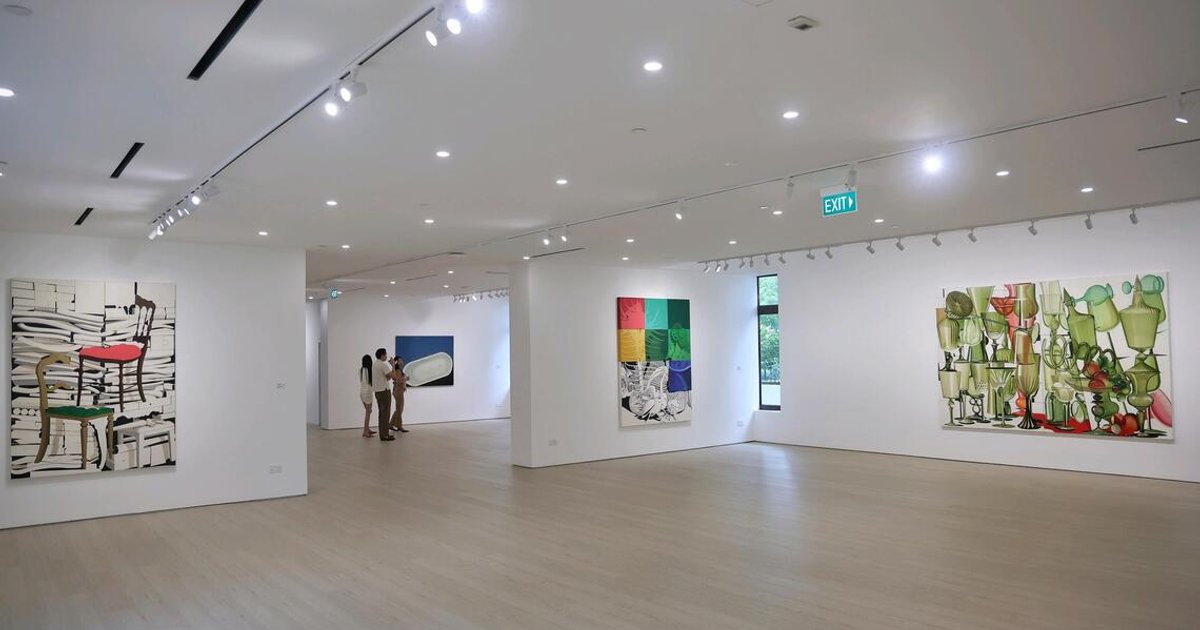
The friction surfaced directly at Delfi Orchard when Tang Contemporary Art resumed operations on October 17. The gallery reopened its Singapore space nine days after the landlord locked the premises following a dispute over alleged unpaid rent. For the reopening, the gallery presented Dyestuff: Between Visibility and Reality, a solo exhibition by Chinese artist Leng Guangmin scheduled to run till Nov 7. Gallery representatives maintained that the temporary shutdown served normal exhibition change preparations. That explanation stood in stark contrast to the physical lockout enforced just over a week earlier.
The Retail Footprint
Commercial art spaces inside shopping complexes have expanded steadily across Asian cities since 2013, seeking foot traffic and visibility among affluent consumers. Delfi Orchard represents that precise urban convergence, placing contemporary visual work alongside consumer service establishments. In these commercial complexes, art galleries operate under the exact legal and financial obligations governing ordinary retail tenants. They face standard tenancy stipulations, commercial security deposits, and inflexible calendar deadlines. A boutique selling garments or homewares understands that unpaid overhead triggers swift repossession. Commercial galleries, by contrast, frequently trade on cultural prestige, assuming that public programming softens the immediate edge of tenancy enforcement.
That assumption proves fragile whenever economic conditions tighten. Landlords running commercial real estate portfolios answer to immediate yield pressures rather than curatorial timelines. A padlock placed on an exhibition door strips away the rarefied aura of an international gallery network, reducing the enterprise to an overdue account on a property ledger. When Tang Contemporary Art resumed installation work to unveil Leng Guangmin’s pieces, it sought to project normalcy. Yet the preceding dispute lingered in the air, demonstrating how thin the partition is between elite cultural curation and retail eviction.
Visibility and Reality
Curatorial operations across the Asia-Pacific face mounting challenges as urban commercial rents remain high. Galleries representing contemporary artists from China and across the region require dependable footprints to connect collectors with new studio work. These spaces provide the critical infrastructure that allows contemporary practice to travel across borders. Without dependable leaseholds, that circulation falters, stranding artists whose public visibility depends on gallery stability.
The temporary shutdown served normal exhibition change preparations, according to the gallery.
Defenders of the sector might note that friction between commercial tenants and property owners resolves routinely through renegotiation. In that reading, a nine-day interruption is merely standard commercial negotiation conducted under sharp leverage. The prompt reopening for Dyestuff: Between Visibility and Reality could be viewed as evidence of institutional resilience, proving that commercial galleries can weather property friction and return to their public schedule.
Yet that interpretation overlooks the deeper pattern at work in Asian commercial centers. When contemporary art relies entirely on high-cost retail properties, the landlord inevitably holds the final say over cultural access. The title of the exhibition at Delfi Orchard accidentally captures this structural condition. Commercial art survives between the visible dignity of its aesthetic display and the unrelenting reality of rent enforcement. When retail demands take absolute precedence, the physical space for artistic expression becomes contingent, temporary, and subject to the turn of an external lock.
Sources
Newsletter
Pacific Daily
A curated briefing from Thailand, Asia-Pacific and the world.