Burbank Terminal’s Redesign Signals Shifting Priorities in Travel Gateways
The new $1.3-billion facility in Burbank reflects a focus on passenger experience over sheer scale, a trend with implications for Asia-Pacific air travel.
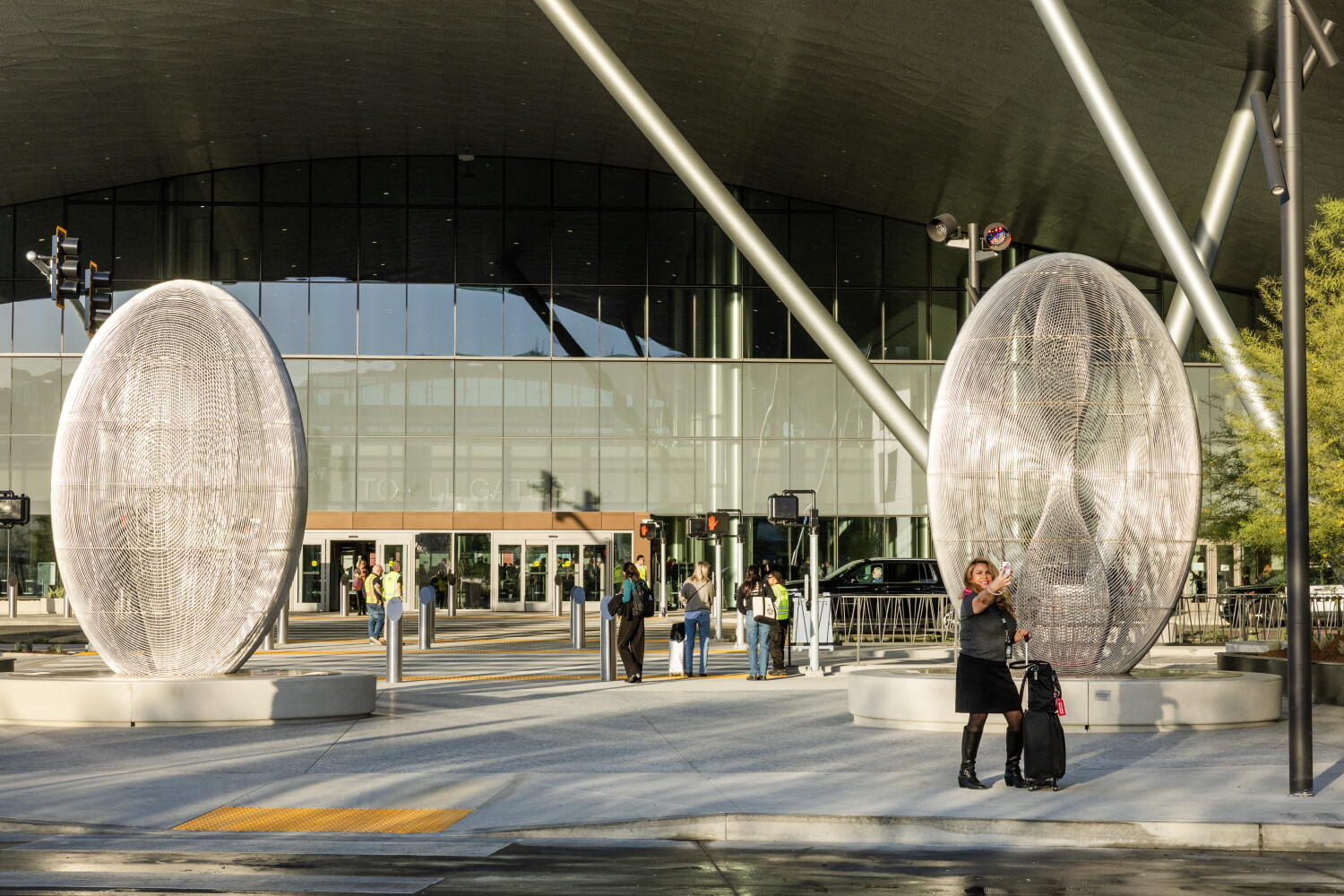
The Hollywood Burbank Airport's new terminal, a $1.3-billion project, opened on Tuesday, replacing a facility whose Spanish Colonial Revival style dated to 1930. Travelers arriving this week found themselves in a modern space featuring high ceilings, contemporary art, terrazzo floors, and landscaping filled with succulents. This redesign at a regional air travel hub offers a case study in how existing infrastructure adapts to evolving traveler expectations.
The project, which spanned 33 months of construction, represents a substantial investment in an established aviation site. It moves away from the snugness of the previous terminal, aiming for a sleeker profile. The reported observations suggest a deliberate attempt to blend functional improvements with a refined aesthetic experience for passengers. This approach contrasts with the prevailing trend of simply expanding capacity, instead focusing on the quality of the immediate travel environment.
The transformation of Burbank’s terminal arrives as the broader Pacific Rim region navigates its own complex relationship with air travel and infrastructure development. While the specific context of a new terminal in Burbank might appear geographically distant from Bangkok or Jakarta, the underlying principles of airport design and passenger comfort resonate widely. The choice to prioritize an improved ambiance, rather than overwhelming size, suggests a recognition that the journey itself is part of the destination’s appeal.
Indeed, Tanya Radke observed that the new facility "reminds me a lot of the Kansas City airport," an attributed claim that highlights a potential homogenization of contemporary airport design. This observation brings to the fore a tension: whether to cultivate unique regional character or adopt a universally appealing, efficient modern aesthetic. For destinations across Asia-Pacific, where airports often serve as critical first impressions, this balance is constantly re-evaluated. The challenge remains to integrate local identity within the demands of global travel standards.
Consideration of climate patterns also influences infrastructure. The Pacific Coast faces its own weather challenges, with major hurricane Polo intensifying off Mexico’s coast in September 2026, and Tropical Storm Boris making landfall earlier that year in June. While these events are not directly linked to Burbank’s design choices, they underscore the need for resilient and functional travel infrastructure, wherever it is located.
Ultimately, the refurbished Burbank terminal offers a case study in how existing infrastructure can be re-imagined. It reveals a specific choice: to invest in precision and aesthetic quality within an established footprint, rather than pursuing exponential growth. For travelers, the immediate experience of high ceilings and curated art replaces the older, more compact setting. The implications for regional travel hubs across the Pacific, including those in Thailand, lie in how they will similarly balance growth, local distinctiveness, and the evolving expectations of global passengers.
Sources
Newsletter
Pacific Daily
A curated briefing from Thailand, Asia-Pacific and the world.