A Shifting Landscape: Costa Rica's Mosquito-Borne Challenge Echoes Across Distant Shores
The recent chikungunya outbreak in San José, though geographically distant, signals a subtle but significant cultural shift that resonates far beyond its borders, touching coastal regions across the Pacific.
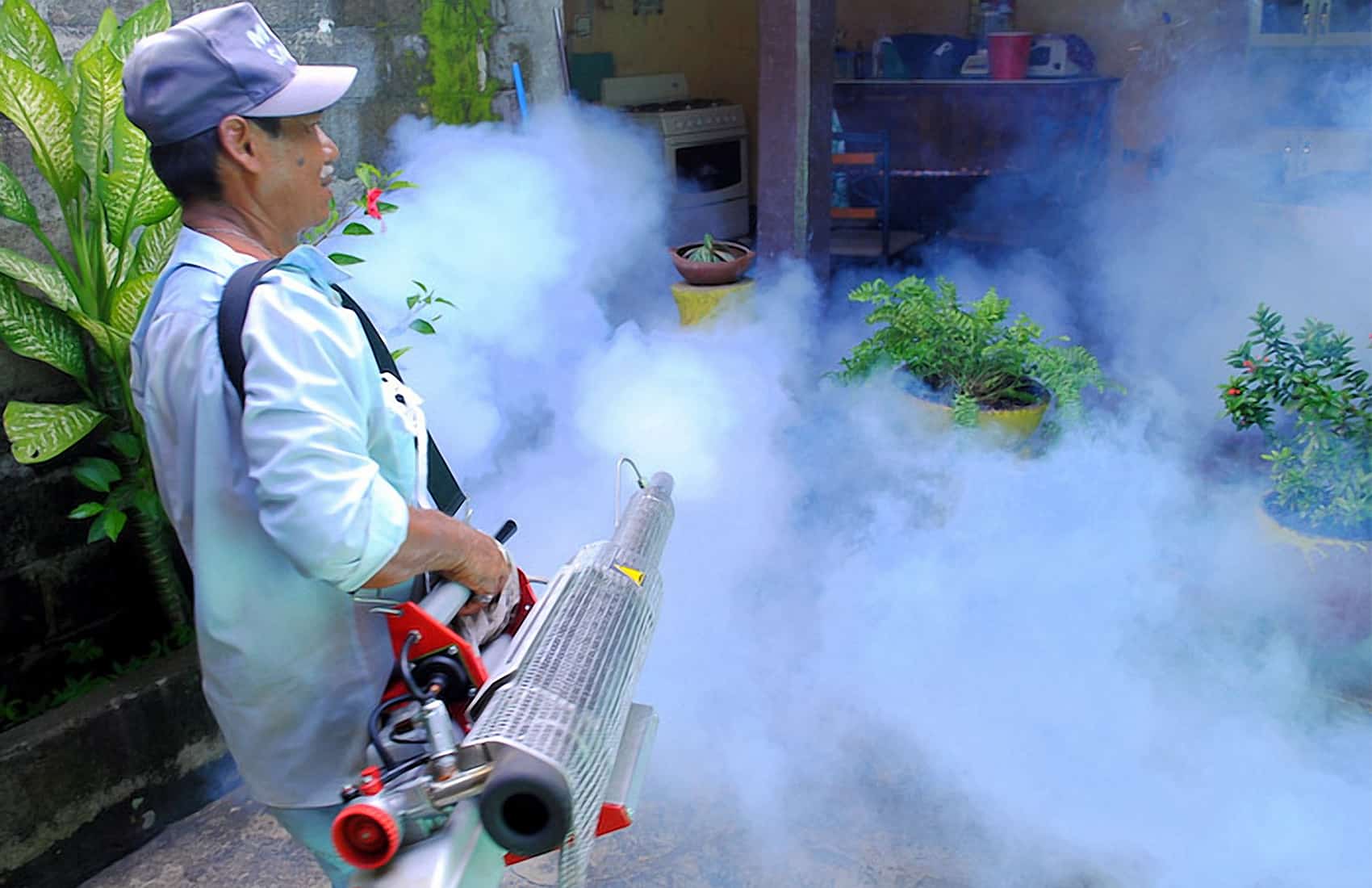
A specific, verifiable scene opens the inquiry: in the urban center of Pavas, San José, a new chikungunya outbreak has been reported. This detail emerges from a broader report published by The Tico Times on September 18, 2026, which states that Costa Rica has seen 300 confirmed and probable cases of chikungunya that year. Of these, 197 have been confirmed through laboratory testing, with another 103 classified as probable while testing proceeds. This numerical clarity anchors a larger observation about how a habit, in this case, the spread of a mosquito-borne illness, changes and who notices it first.
Traditionally, the narratives around such outbreaks might focus on public health responses or immediate economic impact. However, the cultural implications for places like Thailand and other Asia-Pacific coastal regions often go unexamined. The reported cases in Costa Rica, a nation often associated with its natural beauty and rich biodiversity, hint at a transformation in how even established patterns of life and travel are being subtly reshaped. The presence of these cases, and particularly a new outbreak in an urban area like Pavas, suggests an evolving challenge in regions globally that rely on warm climates and human movement.
The Tico Times’ report, while focused on Costa Rica, unintentionally sketches a pattern that holds relevance for diverse coastlines, from the Caribbean to the Pacific. The Financial Times noted in May 2024 the existence of the Camino de Costa Rica, a route spanning from the Caribbean to the Pacific, indicating the fluidity of movement within the country. This internal connectivity, alongside the global nature of travel, makes any localized health event a potential precursor for changes far afield. The challenge for cultural observers, then, is to discern how these biological shifts begin to alter the perception and reality of tropical and subtropical living.
Consider the coastal regions of the Asia-Pacific, many of which share similar climatic conditions and rely on tourism and agriculture. An earthquake off Costa Rica's Pacific coast in October 2024, reported by Reuters, caused no damages, yet it underscores the inherent vulnerabilities of such geographies. The chikungunya outbreak, while not a seismic event, represents another form of environmental stress that can ripple through societies. It raises questions about how communities adapt their daily lives, from open-air markets to outdoor social gatherings, in the face of persistent health concerns. The idea that a mosquito-borne disease is now making its presence strongly felt in an urban center like Pavas suggests a new layer of complexity for city planning and resident behavior in warm climates.
While Costa Rica's situation might seem geographically contained, the underlying mechanisms – mosquito proliferation in urban environments, human movement, and the biological reality of disease transmission – are universal. The shift is not dramatic but incremental: a quiet re-evaluation of what ‘tropical living’ entails. It's not about an immediate crisis in Thailand, but a recognition that the vulnerabilities exposed in one part of the world are often a mirrored image of potential shifts elsewhere. The changing habit isn't just about the mosquito; it's about how societies begin to recalibrate their everyday rhythms in response to such persistent natural phenomena. The observation of 300 cases, confirmed and probable, in a single year, begins to rewrite the implicit cultural contract with the natural world, even in places far removed from San José.
Sources
Newsletter
Pacific Daily
A curated briefing from Thailand, Asia-Pacific and the world.