The Silent Unravelling: A Network Outage's Greater Cost in the Pacific
Australia's recent telecommunications disruption signals an overlooked fragility across a region where connection is increasingly a measure of statecraft.
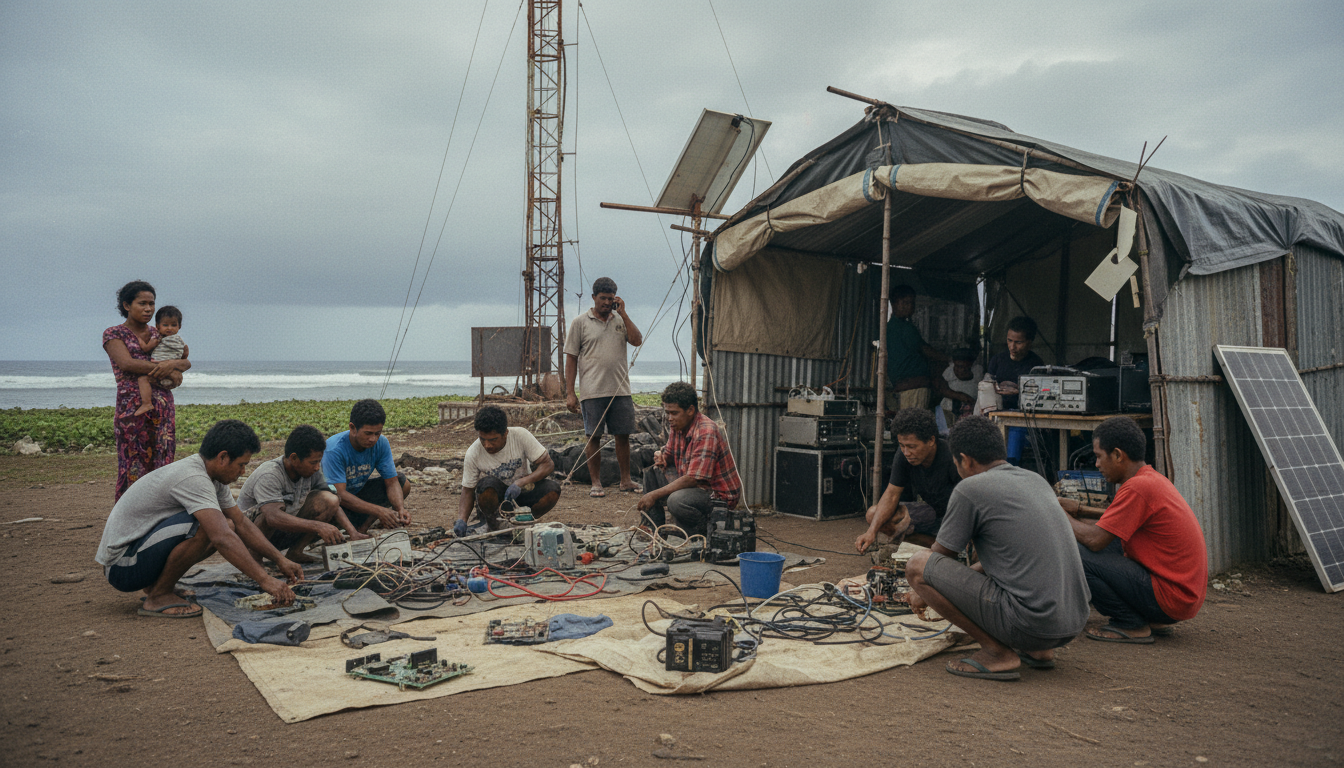
The hum of a functioning network, invisible and assumed, underpins much of modern life. In Australia, that assumption faltered on September 13, 2026. Optus, the nation's second-largest carrier, experienced a 76-minute technical glitch. This disruption, reported by CNA Lifestyle, affected voice calling services in parts of Victoria, South Australia, Tasmania, and the Northern Territory, leading to "intermittent call dropouts," according to Optus. More critically, it impacted some emergency service calls. This follows a previous Optus network issue last year that left hundreds unable to contact police or fire services, as CNA also reported.
The Australian government, in response, pledged to bolster the resilience of its telecommunications networks. This commitment arrives amidst a broader regional context, one often framed by strategic rivalries. The New York Times, in July 2026, described Australia as locked in a “permanent contest” with China in the Pacific, a view echoed by Nikkei Asia in August 2026, which noted a heating up of this rivalry. The sale of an Optus stake, reportedly worth US$1.4 billion, by Singtel is also under discussion, as reported by The Business Times in July 2026.
Yet, for nations like Thailand and others across the Asia-Pacific, the Australian incident offers a stark, qualitative lesson often missed in grand geopolitical pronouncements. It is not merely about submarine cables or 5G towers as abstract infrastructure. It is about the immediate human cost when these systems fail. A community’s ability to call for help, a business's capacity to transact, a family’s reliance on digital communication – these are not trivial concerns. In an age where digital integration defines progress, a network’s stability becomes a fundamental measure of societal robustness. The question then becomes: what does a persistent digital fragility ask of the people who arrive, live, and operate within these interconnected, yet vulnerable, states?
Consider the implications for Thailand. Its strategic position and reliance on digital commerce and tourism mean that similar disruptions could inflict far-reaching consequences. While the Australian outage was relatively brief, its reach into emergency services suggests a deeper systemic vulnerability. For a region grappling with the complexities of digital inclusion and economic development, the promise of connectivity must be matched by an equally robust commitment to its resilience.
One might argue that a 76-minute glitch is an isolated event, a minor inconvenience quickly resolved. Such incidents, however, are rarely isolated in their effect, particularly in tightly interwoven digital economies. They expose fault lines. The Australian government’s swift pledge to bolster network resilience suggests that the incident's actual impact extends beyond a mere technical hiccup, acknowledging a strategic imperative.
The real challenge for the Asia-Pacific, therefore, is not just to expand digital access but to fortify its foundational structures against the predictable and unpredictable disruptions of the 21st century. The Australian experience suggests that the invisible threads of connection, when frayed, can unravel more than just phone calls; they can expose the silent anxieties of an interconnected world. The scene in Sydney, an Optus shop in November 2023, now viewed through the lens of a regional outage, speaks to a broader, essential concern: the silent cost of an unravelling connection, however brief.
Sources
Newsletter
Pacific Daily
A curated briefing from Thailand, Asia-Pacific and the world.