Oceanic Pursuits and Regional Realities: The Pacific's Enduring Constraints
While high-speed sailing captures attention, the core challenges facing Pacific coastlines and the policies governing them remain grounded in physical and geopolitical realities.
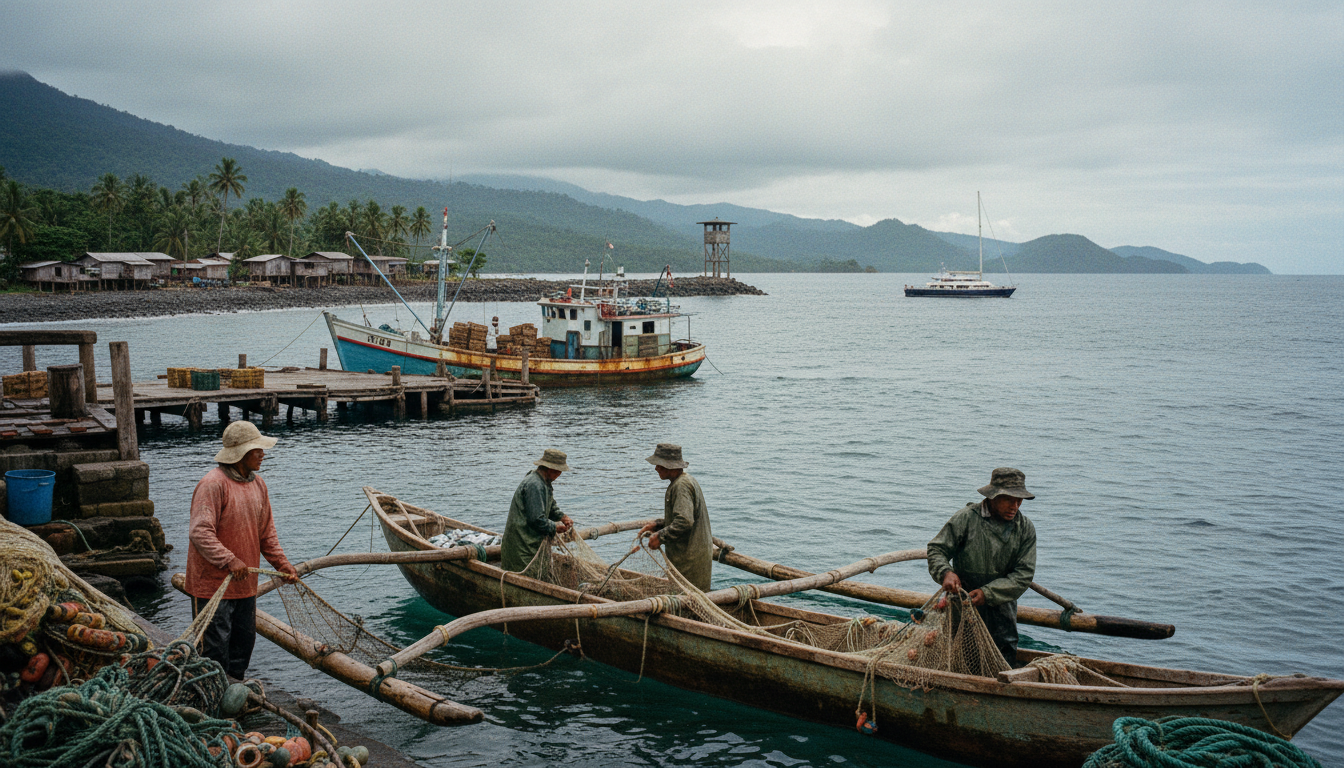
The report of the Ocean Fifty multihull fleet preparing for the Route du Rhum – Destination Guadeloupe, set for 2026-08-27, highlights a specific type of oceanic engagement: high-speed, intensive sport. This event, characterized by its "concentrated, high octane sport requiring full-on continuous commitment," points to the capacity for focused human endeavor on the open sea. Yet, for Thailand and the broader Asia-Pacific region, the implications of such pursuits often diverge from the immediate concerns that shape regional strategy.
The Pacific is not merely a venue for racing; it is a contested space under increasing pressure. Historically, the ocean has been a conduit for trade and migration, but also a frontier for resource extraction and strategic competition. The past decade alone has seen sustained discussions about the ocean's future, from the designation of what was described as the world’s largest protected marine reserve [2] to concerns raised in 2023 about a deep-ocean leak and its potential for seismic events [3]. More recently, in 2025, the BBC reported on the lasting environmental scars from deep-sea mining tests conducted 50 years prior [4], underscoring the long-term consequences of human activity. This historical context reveals a pattern: the Pacific's vastness often permits activities with significant regional and global impacts, where the benefits and burdens are rarely distributed evenly.
For littoral nations like Thailand, and the broader Asia-Pacific, the strategic focus remains anchored to material considerations. Reuters reported in 2026 on a jump in Chinese vessel activity, raising fears for Pacific supply routes [6] — a direct challenge to regional economic stability. Concurrently, the prospect of extreme climate events continues to loom, with questions posed in 2026 regarding preparedness for events similar to the 1877 super El Niño that impacted millions [5]. These are not abstract concerns; they represent direct threats to livelihoods, infrastructure, and national security along countless coastlines.
While the Ocean Fifty fleet represents a pinnacle of marine technology and human skill, its narrative is one of precision and speed, rather than the intricate, often slow-moving policy dilemmas that govern the Pacific. The policy decisions made by inland authorities or distant naval powers often dictate the conditions that coastal communities experience. The Pentagon’s reported attack on a boat in the Pacific in 2026, which killed four individuals [1], serves as a stark reminder of the geopolitical tensions that intersect with the ocean's use, far removed from competitive sailing. The challenge for regional strategists is not in acknowledging the speed of a multihull, but in understanding which coastlines bear the cost of policies drafted far from their shores, and how to navigate a future where economic imperatives, environmental vulnerabilities, and geopolitical rivalries define the Pacific’s trajectory.
Sources
Newsletter
Pacific Daily
A curated briefing from Thailand, Asia-Pacific and the world.