Wind, Not Waves: Mexico's Pacific Shift Offers a Glimpse for Asia
The embrace of wind power along Mexico's coast suggests a deeper pattern than mere policy.
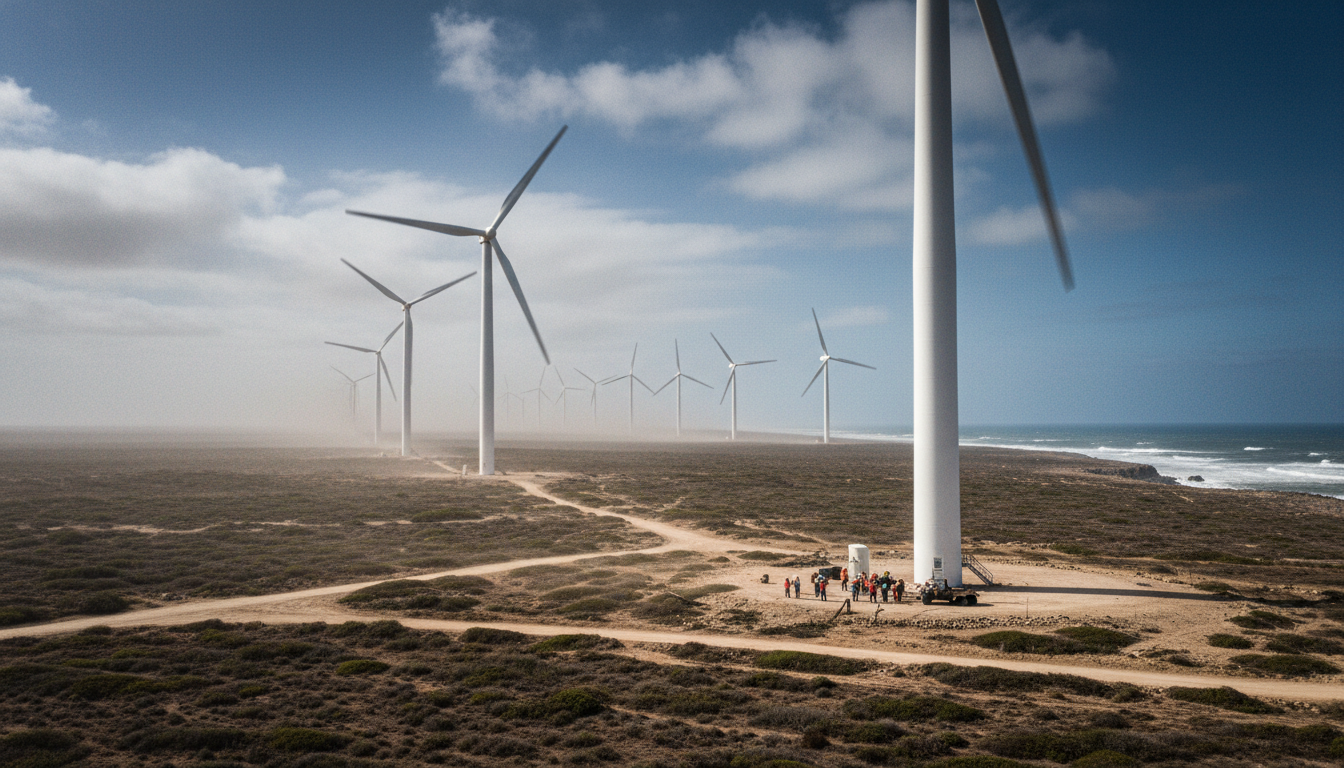
Along Mexico’s Pacific edge, a landscape defined by its encounters with ocean currents and occasional, powerful storms, a new kind of energy is taking hold. This is not the familiar ebb and flow of tides, but the harnessed, persistent force of the wind, positioned by national planners as a central element of the country’s energy future. While the horizon here often conjures images of the fishing fleets and the annual migrations of whales, Mexico’s Energy Ministry (SENER) has reported a different vision: an 80% increase in wind power production by 2030, aiming to reach 15 gigawatts.
This projection, made in September 2026, details a broader energy shift. According to Jorge Islas Samperio, SENER’s Deputy Minister of Planning and Energy Transition, renewable sources are expected to constitute over 74% of new capacity additions, encompassing solar, wind, and hydroelectric power. The country anticipates its overall renewable energy generation to grow from 24.6% in 2025 to more than 38% by 2030. This is not merely an arithmetic adjustment on a spreadsheet; it represents a redirection of infrastructure and investment toward a different kind of regional interaction.
The Pacific region, for Mexico, has long been a place of both resource and vulnerability. Its coastline is susceptible to forces such as Hurricane Orlene, which struck in October 2022 with 80mph winds. Yet, these same powerful atmospheric movements are what wind farms seek to capture. The shift is not without its complexities; while the World Bank Group in 2017 highlighted initiatives like "Switching on Remote Communities through Electricity Access in Mexico," the large-scale deployment of wind infrastructure carries its own set of challenges, from land use to environmental considerations.
For a place like Thailand, situated within the broader Asia-Pacific, Mexico's trajectory offers a compelling, if incomplete, parallel. Both nations share significant coastlines and face the dual pressures of energy demand and environmental adaptation. Thailand, often seen through the lens of its coastal tourism and agricultural exports, also possesses zones with consistent wind patterns. The question for Thailand is not simply whether it can replicate Mexico’s projected gigawatt figures, but how it integrates renewable ambition with its own distinct geography and economic realities. The decision by the United States to open California’s coast to wind farms in October 2021 suggests a wider regional trend of leveraging maritime winds, moving beyond terrestrial sites.
The essential observation here is that the physical environment — the very season of a place, its prevailing winds and its historical reliance on certain resources — ultimately dictates the most practical path forward. Policies may declare targets, but it is the sustained presence of wind, rather than the occasional surge of a fossil fuel market, that offers a more stable foundation. The Mexican government's plan to embrace wind power is not just an economic or environmental strategy; it is an acknowledgement of an enduring natural force. It is a re-evaluation of what a coast provides, moving beyond a place for shipping or leisure to a zone of active energy generation. This quiet redefinition of coastal utility, observed across the Pacific, provides a different lens through which to view Thailand’s own potential, one where the unseen currents of air become as vital as the visible currents of the ocean.
Sources
Newsletter
Pacific Daily
A curated briefing from Thailand, Asia-Pacific and the world.