A Former President, a New Book, and the Weight of Presence
Andrés Manuel López Obrador’s latest offering prompts consideration of enduring political legacies, even as Mexico’s daily rhythms unfold.
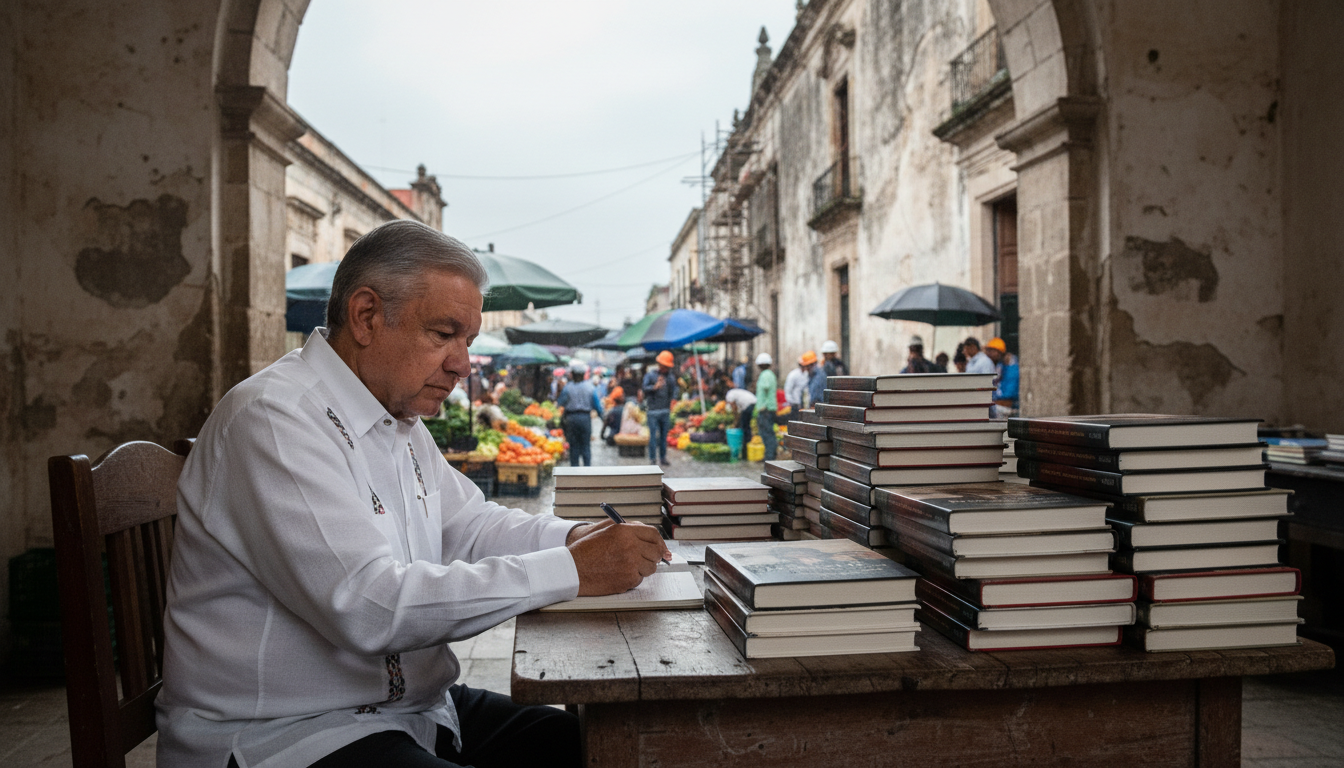
From Palenque, Chiapas, former Mexican President Andrés Manuel López Obrador recently re-entered public discourse with an 80-minute video message. Posted to YouTube and Facebook on October 1, 2026, the address promoted his new book, “Pueblo,” a political history of Mexico. This reappearance, two years after his six-year presidential term concluded in 2024, resonated with the lengthy, meandering press conferences that characterized his time in office.
Such a return to the spotlight, propelled by a new publication, brings into focus the complex role of former leaders within a nation’s continuing narrative. What does a place ask of those who have shaped it, once their formal power has receded? The Guardian, in 2018, described the stark realities faced by some communities, noting that Mexico’s most murderous town grappled with a sentiment that one “can’t fight evil with evil.” This deep-seated civic challenge suggests that while individuals move on, the foundational issues they confronted, or perhaps exacerbated, persist.
López Obrador’s video, filmed at his home, showcased a figure still capable of commanding attention. It also served as a backdrop to the political landscape, where President Claudia Sheinbaum navigates her own path. Sheinbaum, identified as a presidential frontrunner in April 2024, has voiced intentions to focus on renewable energy and water. Reuters reported her supporters cheering when Mexico scored its first goal at the World Cup in 2026, suggesting a leader keen to engage with national passions. Her presidency is not without its trials; a massive 6.5 magnitude earthquake on January 2, 2026, disrupted one of her press conferences, a reminder of the powerful natural forces that shape life in Mexico.
The re-emergence of a popular former president with a new book, two years post-presidency, signals the enduring weight of personality in political transitions. Even as Sheinbaum seeks to define her administration, the shadow of her predecessor remains. This dynamic, where the past continually informs the present, presents an interesting counterpoint to the urgent, tangible events that frequently punctuate life in Mexico. A powerful hurricane was downgraded in September 2026 but remained a significant force off the coast, demanding immediate attention. These environmental realities underscore that while political narratives evolve, the physical environment often imposes its own, often dramatic, terms.
The continued presence of figures like López Obrador, engaging with the public through new mediums and historical interpretations, suggests a political culture where influence is not strictly bound by office. This offers a perspective for countries like Thailand, where former leaders, even those removed from power, often maintain a significant, if informal, presence in public life and political discourse. It asks how societies accommodate, or perhaps contend with, the ongoing contributions of those whose official tenures have concluded, particularly when they offer their own histories of a nation. The question remains: how do nations truly move forward when their past leadership continues to actively narrate the present?
Sources
Newsletter
Pacific Daily
A curated briefing from Thailand, Asia-Pacific and the world.