The Global Sneaker Tread: JD Sports and the Unseen Impact on Asia
A British sportswear retailer expands its footprint, hinting at shifting consumption landscapes far beyond Mexico's borders.
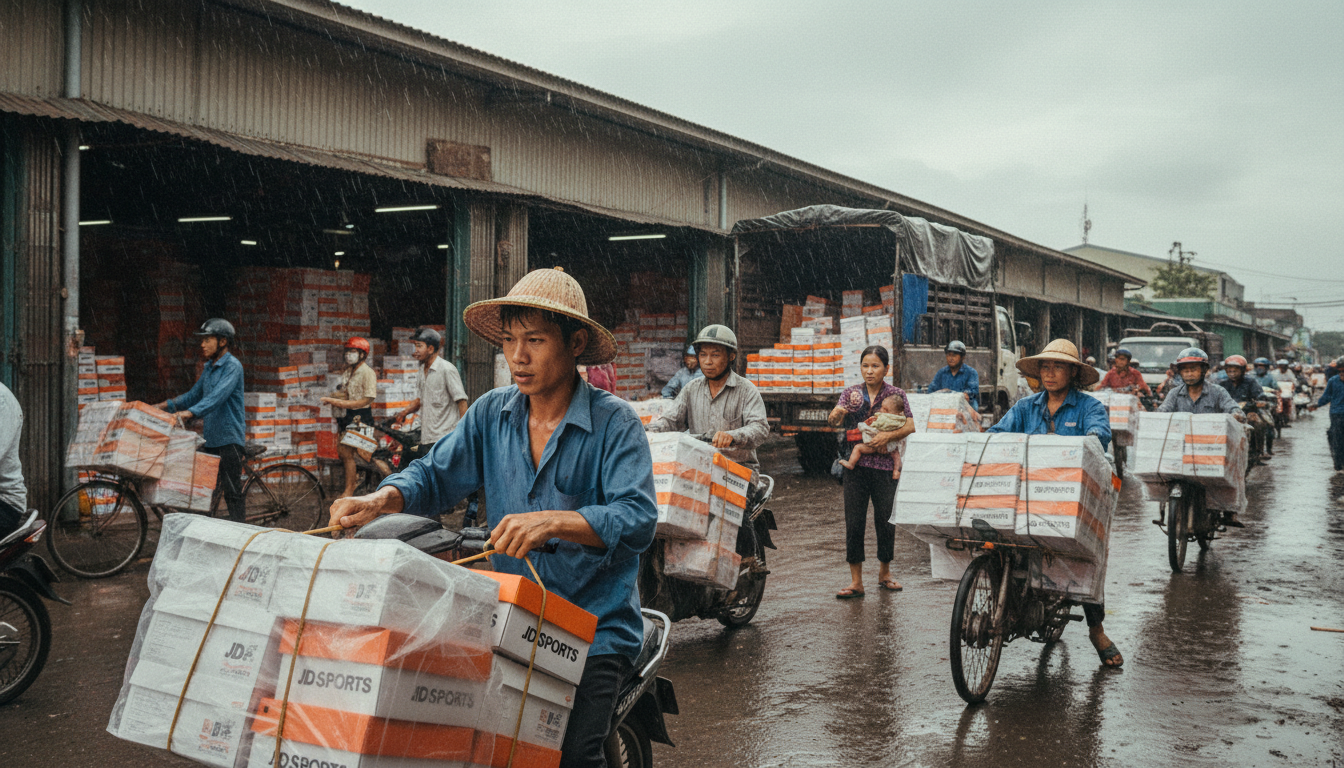
The movement of goods and ideas across continents often begins subtly, a business deal in one corner of the world portending shifts in another. British sportswear retailer JD Sports, known for its multi-brand approach, is set to expand into Mexico in the coming year, a move facilitated by a long-term franchise agreement with Mexican fashion retailer Grupo Axo. This partnership, which sees Grupo Axo operating JD stores and e-commerce, leverages Axo’s “30-year track record of working with brands” in Mexico, as stated by JD Sports CEO Régis Schultz. It’s an expansion predicated on a perceived high demand from Mexico’s “growing young population.”
This is not JD Sports’ first franchise deal; South Africa's TFG Group also partnered with the British brand, bolstering its sportswear business. The company has a history of adapting to market dynamics, with Reuters reporting in 2024 that JD Sports was shrugging off "Nike woes" with its multi-brand strategy. The American market, as evidenced by The Washington Post’s report on an “athleisure war” at the U.S. Open in 2025, sees established players like Nike facing significant competition. For a brand like JD Sports, whose portfolio includes its own brands alongside those of others, entering new territories like Mexico suggests a strategic pursuit of growth in diverse, high-potential markets.
Yet, the focus on Mexico, while locally significant, reveals a broader pattern. The ‘sneakerhead’ culture, once largely concentrated in Western markets and select Asian metropolises, has proven its global elasticity. The notion that a British retailer, through a Mexican partner, aims to tap into a “huge and growing young sneakerhead population” in Latin America, implicitly challenges the traditional gravitational pull of established fashion capitals. It signals a decentralisation of sportswear demand, suggesting that similar, perhaps less visible, consumption booms could be taking hold in other regions.
What does this expansion, far from the Pacific, ask of markets like Thailand and the wider Asia-Pacific? While no specific plans for this region are detailed, the logic is transferable. The British brand’s model relies on identifying and cultivating local demand through strategic partnerships, particularly with established multi-brand retailers. Thailand, with its urban youth culture and increasing disposable income, presents a comparable landscape. The question arises whether this signals an eventual intensification of competition within Thailand’s existing sportswear retail environment, currently served by numerous local and international players.
The global sportswear market is a dynamic arena, marked by collaborations between Western athletes and Asian brands, as reported by the South China Morning Post in 2026. This intricate web of production, distribution, and consumption means that a strategic play in one emerging market can have ripple effects, altering investment priorities and brand strategies elsewhere. JD Sports’ move into Mexico, driven by a faith in local youth demand, represents not just a geographic expansion, but a tacit acknowledgment of the global youth market’s power to shape retail futures. It shifts the gaze from where these brands originate to where they find their most fervent adopters, suggesting that the dynamics of desire, rather than solely production, increasingly dictate global retail landscapes.
Sources
Newsletter
Pacific Daily
A curated briefing from Thailand, Asia-Pacific and the world.