Unregistered Trade Challenges Oversight in Bangkok Districts
Raids in Huai Khwang expose the difficulty in regulating informal commerce, indicating deeper issues for consumer protection and state revenue.
BANGKOK
Police operations in Bangkok’s Huai Khwang district expose persistent gaps in regulatory oversight, where businesses operate outside official channels.
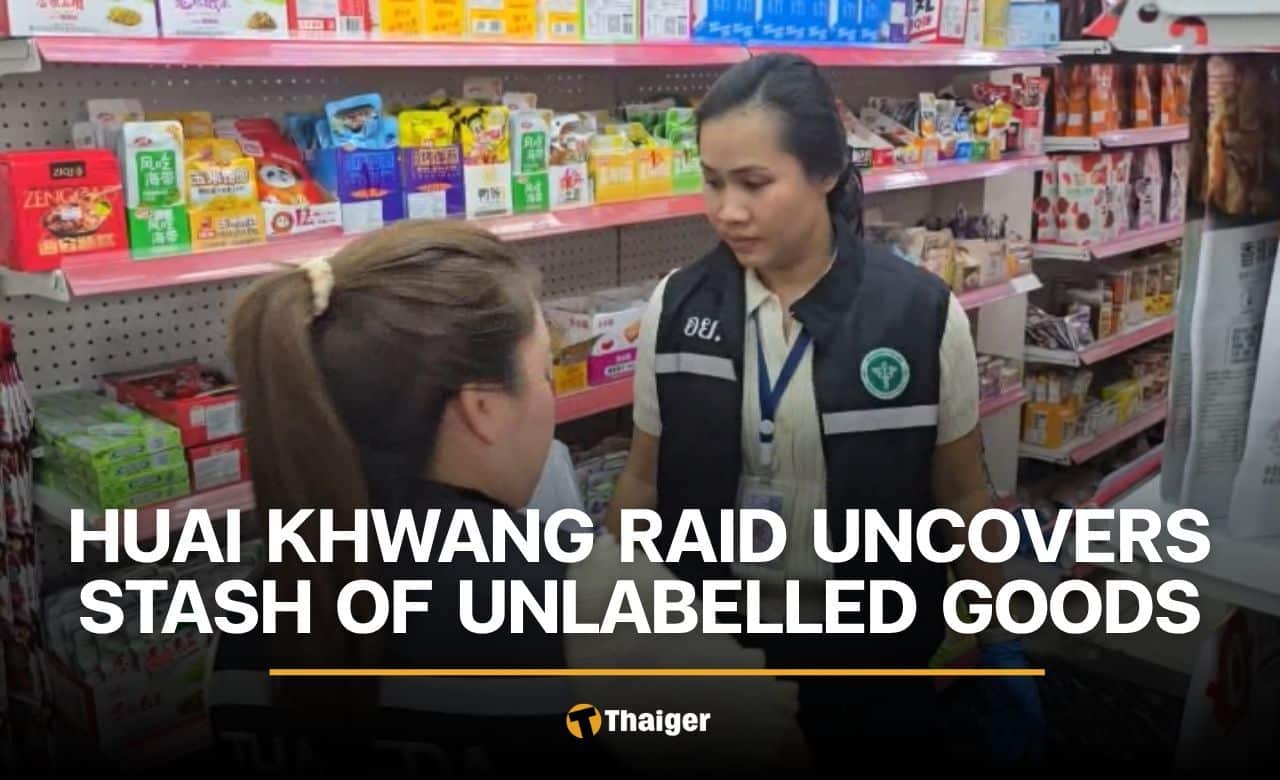
On September 17, law enforcement, supported by the Department of Business Development, the Food and Drug Administration, and the Office of the Consumer Protection Board, seized over 1,000 unlabelled goods from four premises. These included items lacking Thai labels and FDA approval, discovered in a Chinese supermarket opposite Soi Pracharat Bamphen 7. An advertisement for an online gambling site was found hidden behind a counter. One notable finding was a store actively trading despite having told officials it deregistered over a year prior. These actions are part of ongoing efforts to address unregulated commerce in the district.
The presence of unregistered businesses, such as the store found operating after it told officials it deregistered, points to a challenge for state authorities. Such operations evade standard tax collection and regulatory compliance, including health and safety checks. The discovery of goods without necessary labelling or FDA approval directly impacts consumer safety, as the origin and contents of these products remain unverified. The presence of an online gambling advertisement further illustrates engagement in illicit activities within these premises.
Efforts by authorities, such as the Huai Khwang police working with multiple government agencies, demonstrate an understanding of the interconnected nature of these issues. However, the continuation of such enforcement actions suggests that individual raids may not be sufficient to address the underlying informal economic structures that enable persistent non-compliance. The economic incentives for operating outside formal regulation, alongside the potential for lax enforcement or insufficient penalties, allow these businesses to continue.
The challenge is not only about identifying individual rogue operators but confronting a broader system where businesses can exist in a regulatory grey area. The cost is borne by legitimate businesses that adhere to regulations, by consumers who may purchase unsafe products, and by the state through lost revenue. While a police chief has stated there are 'no Chinese cops on Thai streets,' the entanglement of possible Thai ID irregularities with unregistered businesses, as observed in previous cases including the 2022 arrest of a Chinese man with a fake Thai ID, highlights a multifaceted problem. This extends beyond market oversight to questions of identity verification and national security. Addressing these practices requires more than intermittent raids; it demands sustained administrative will to formalize sectors of the economy that currently operate with minimal accountability, a challenge that persists across the region.
Sources
Newsletter
Pacific Daily
A curated briefing from Thailand, Asia-Pacific and the world.