Thai solar surge: imports rise, but consumer savings face complex trade winds
Thailand's jump in solar panel imports aims to ease household budgets, but reliance on a single supplier and global trade shifts pose risks to long-term affordability.
SINGAPORE
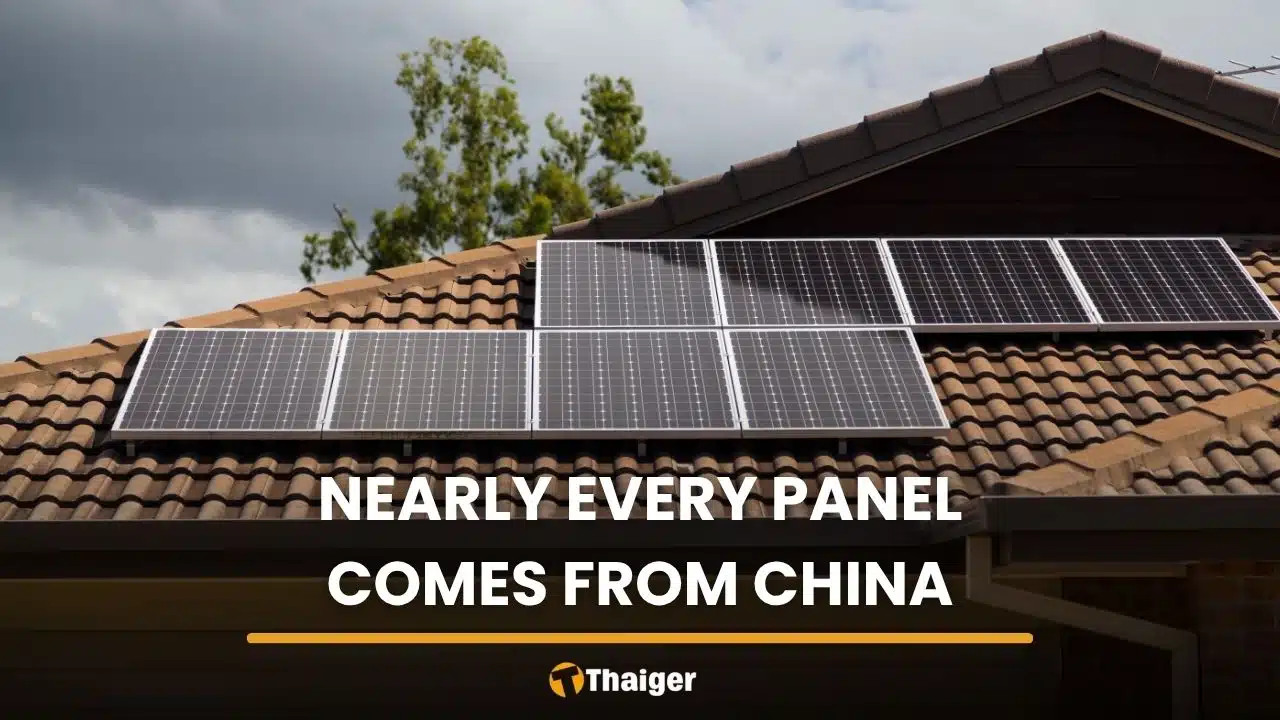
Thailand’s solar panel imports climbed 88.7% year on year during the first seven months of 2026, reaching US$426.7 million, or approximately 14.93 billion baht. This marks a recovery after import values had contracted in both 2024 and 2025. China supplied almost all of these panels, according to figures cited by The Nation from the Ministry of Commerce and Customs Department.
This rise coincides with the Thai government's preparation of a major household solar program. The stated aim is to address higher electricity costs, a concern exacerbated by energy-price pressures linked to the conflict in the Middle East. Households and businesses have been encouraged to consider rooftop systems as a way to reduce longer-term expenses.
The immediate impact is that solar panels are becoming more available in Thailand. The push for renewable energy is a global trend, with the BBC reporting in October 2025 that renewables had surpassed coal as a significant source of electricity globally. For the individual Thai consumer, the idea is clear: install panels, reduce the monthly electricity bill. However, the path from rising imports to guaranteed household savings is complicated by international trade dynamics.
While Thailand is itself a producer and exporter of solar panels, it also navigates a complex global trade landscape. In 2024, a U.S. solar group sought retroactive duties on panel imports from Vietnam and Thailand. Such actions highlight volatility in global solar trade. The fact that China dominates nearly the entire import market for Thailand raises questions about supply chain resilience. The Lowy Institute noted in December 2025 that Southeast Asia was navigating global trade shocks, a context in which heavy reliance on a single supplier can introduce vulnerability.
For the household budget, the promise of lower electricity bills depends on more than just the volume of imports. The cost of installation, grid connection fees, and the long-term stability of government support schemes all contribute to the final financial outcome. If the government’s household solar program does not adequately subsidize these elements, or if future trade disputes lead to increased panel costs, the anticipated savings for a typical monthly budget could diminish. The experience in the Philippines, where high electricity bills combined with the availability of inexpensive panels spurred a surge in solar adoption, suggests that panel price is a key factor in consumer uptake.
Thailand's increasing integration into a globally volatile solar supply chain creates a paradox: to meet domestic demand and support household energy independence, the country relies on external sources that are susceptible to disruption. The real benefit to households will hinge on how effectively the government's program can mitigate these external pressures, ensuring that the perceived cost savings translate into tangible, sustained economic relief for consumers.
Sources
Newsletter
Pacific Daily
A curated briefing from Thailand, Asia-Pacific and the world.