Thai identity system faces structural challenge from long-term foreign infiltration
The case of Zhu Zhishan underscores vulnerabilities in national documentation, shifting control over who resides within borders.
SINGAPORE
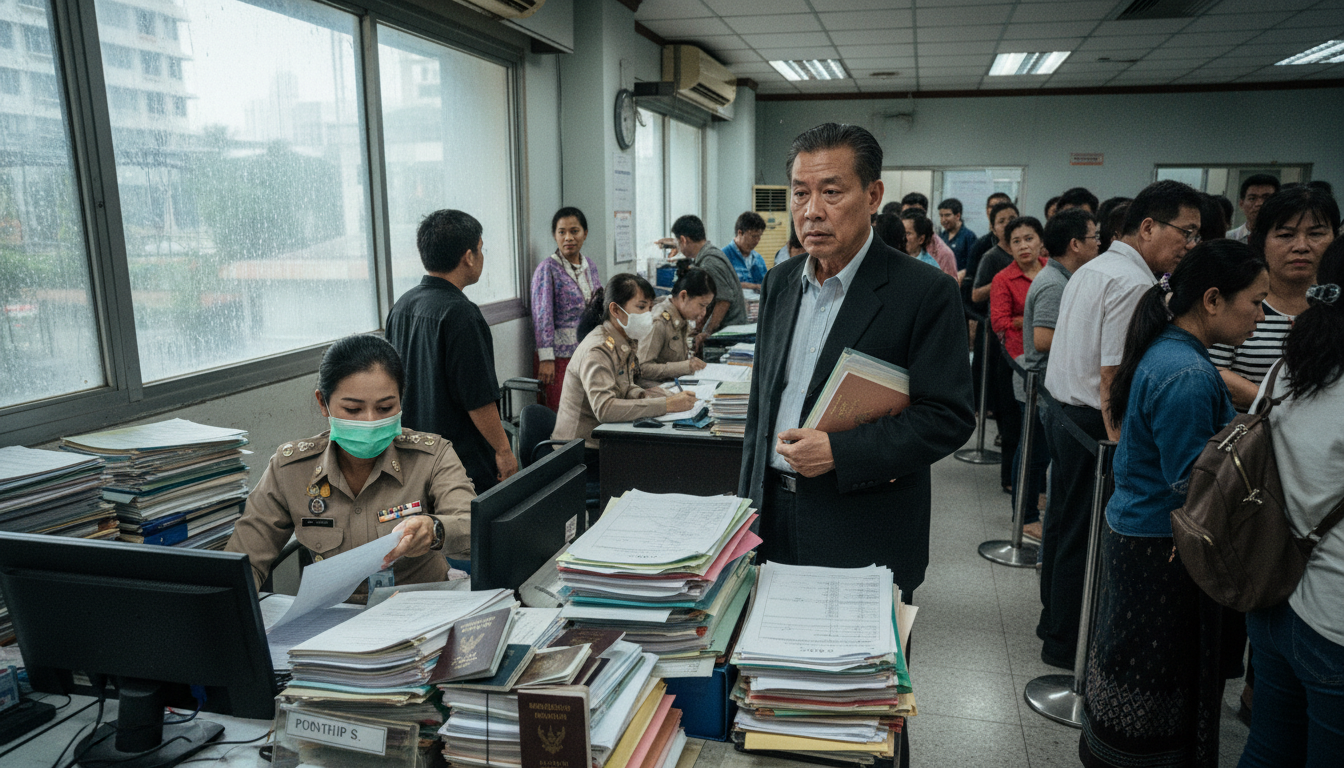
The arrest of Zhu Zhishan, a 67-year-old Chinese national wanted by Interpol since January 9, 1990, in Pattaya on September 13, signals more than an individual apprehension. It reveals a structural vulnerability within Thailand’s national identity system, which has allowed individuals to operate under false pretenses for decades. Police state that Zhu acquired Thai citizenship and built a tourism business in Pattaya, reportedly living under the name Suchat Surachai. This indicates a systematic exploitation of identification processes.
This incident is not isolated. A Khaosod English report in 2025 indicated a crypto scammer was found with a Chinese fugitive in a Pattaya villa. Separately, The Japan Times reported in 2025 that Thailand extradited an alleged Chinese racketeer linked to a Myanmar scam hub. These cases, along with the Zhu Zhishan arrest, demonstrate a pattern: foreign individuals sought for serious crimes abroad have embedded themselves within Thailand, often leveraging fraudulently obtained national identity documents.
For more than 30 years, Zhu Zhishan reportedly operated in Thailand, cultivating a tourism business while wanted for alleged murder in Taizhou, Zhejiang province, China. This duration suggests a significant institutional oversight or, more concerningly, systemic corruption that allowed such deep entrenchment. The ability to acquire Thai citizenship, as officials allege Zhu did, effectively granted him legal protections and operational freedom within the country, fundamentally altering who holds decision-making power over his residency and activities.
Such cases create implications beyond individual criminal apprehension. They erode the integrity of Thailand's national registry, potentially facilitating illicit cross-border activities and complicating international law enforcement efforts. The perceived ease with which foreign fugitives can obtain Thai identity raises questions about the rigor of vetting processes and the accountability mechanisms in place. While Thai authorities are pursuing these individuals, the structural conditions enabling their long-term presence remain a critical, unresolved constraint.
A counterargument might suggest that these arrests demonstrate the effectiveness of current law enforcement efforts, indicating that the system, while imperfect, eventually identifies and neutralizes such threats. However, the elapsed time—in Zhu Zhishan's case, measured in decades—suggests that detection is often delayed, occurring only after extensive damage or when other factors bring individuals to light. The issue is not solely about apprehending offenders, but about preventing the initial, sustained penetration of national systems. Interpol has noted the increasing sophistication of cyberfraud, driven by AI, which suggests the challenge of identity verification will only grow more complex, as reported by the South China Morning Post in 2026.
Therefore, the structural issue is not merely the presence of fugitives, but the enduring vulnerability of the system that permits their sustained operation. The outcome now depends on whether the response moves beyond individual arrests to comprehensive reforms of identity verification and citizenship protocols, thereby reasserting sovereign control over who resides and operates within the nation's borders.
Sources
Newsletter
Pacific Daily
A curated briefing from Thailand, Asia-Pacific and the world.