The Temple's Shadow: Narcotics and Sacred Space in Buriram
An abbot's admission in Thailand raises questions about the changing role and perception of monastic institutions in a region grappling with shifting societal currents.
SINGAPORE
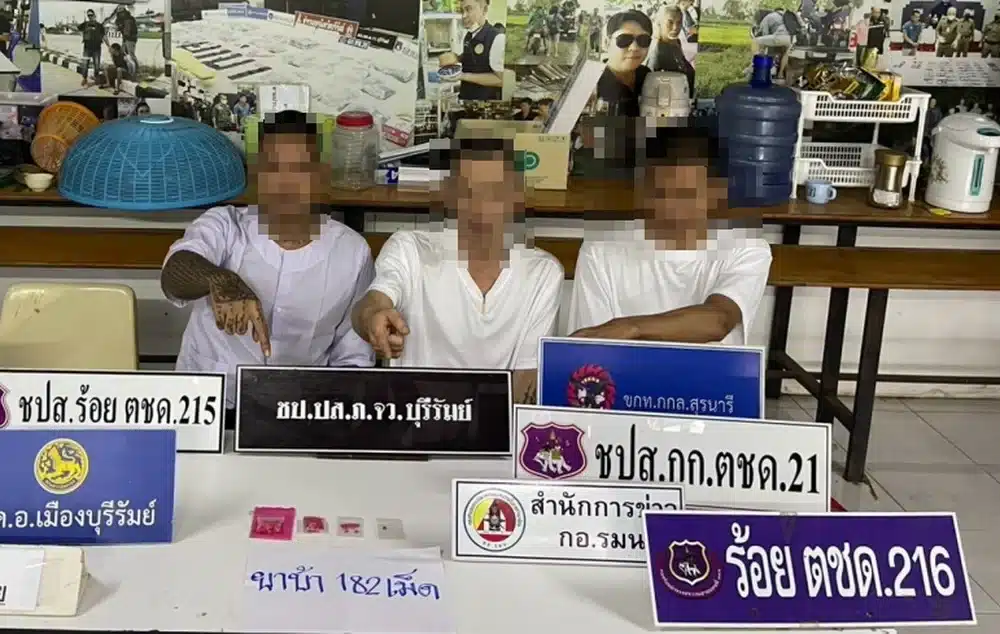
In a quiet corner of Thailand's Buriram province, an incident at Wat Pa Nong Hin has drawn public attention to the unexpected intersection of sacred space and illicit trade. On September 18, four monks were apprehended with 184 methamphetamine pills. Subsequently, the abbot of Wat Pa Nong Hin admitted to sending two of these monks to purchase the drugs. This admission specified that the funds used for these transactions originated from ceremony fees and villagers’ donations to the temple, as reported by The Thaiger.
Historically, the Buddhist temple has served as a central pillar of Thai society, a place for spiritual guidance, community gathering, and moral instruction. Monks, living by strict precepts, traditionally embodied a commitment to detachment and ethical conduct. The act of an abbot directing monks to acquire narcotics, utilizing community contributions for this purpose, represents a significant deviation from these long-held cultural expectations. It suggests a vulnerability within the monastic structure itself, particularly concerning the internal governance and the handling of community trust.
The context of this event is not isolated. The region, including Thailand, has long been a transit point and, increasingly, a consumer market for illicit substances. While the specific details of this case pertain to a single temple in Buriram, the implications extend to a wider perception of religious institutions. When the very sites meant to preserve spiritual and ethical norms become implicated in such activities, it prompts a re-evaluation of what is being preserved within these spaces, and what societal pressures or individual choices are quietly replacing traditional roles.
The police operation, which involved officers following the monks' vehicle for over 40 kilometers before dawn, and included border patrol, soldiers, rangers, and district officials, highlights a sustained effort to counter narcotics. The meticulous tracking and the broad inter-agency involvement suggest that such activities, even when linked to unexpected figures, are not overlooked. Yet, the fact that an abbot would admit to such an act, and that temple donations were explicitly cited as the funding source, points to a normalization or desperation that challenges the established moral framework. The episode reveals a shift in the perceived sanctity of monastic life, where external vices appear to have infiltrated its core. The quiet closing of this chapter in Buriram will likely contribute to broader conversations about the resilience of spiritual heritage against contemporary challenges.
Sources
Newsletter
Pacific Daily
A curated briefing from Thailand, Asia-Pacific and the world.