Informal Power Structures Intervene in Bangkok's Nightlife Economy
A Pinklao host bar incident reveals the fragility of traditional economic leverage when confronted by public social pressure.
BANGKOK
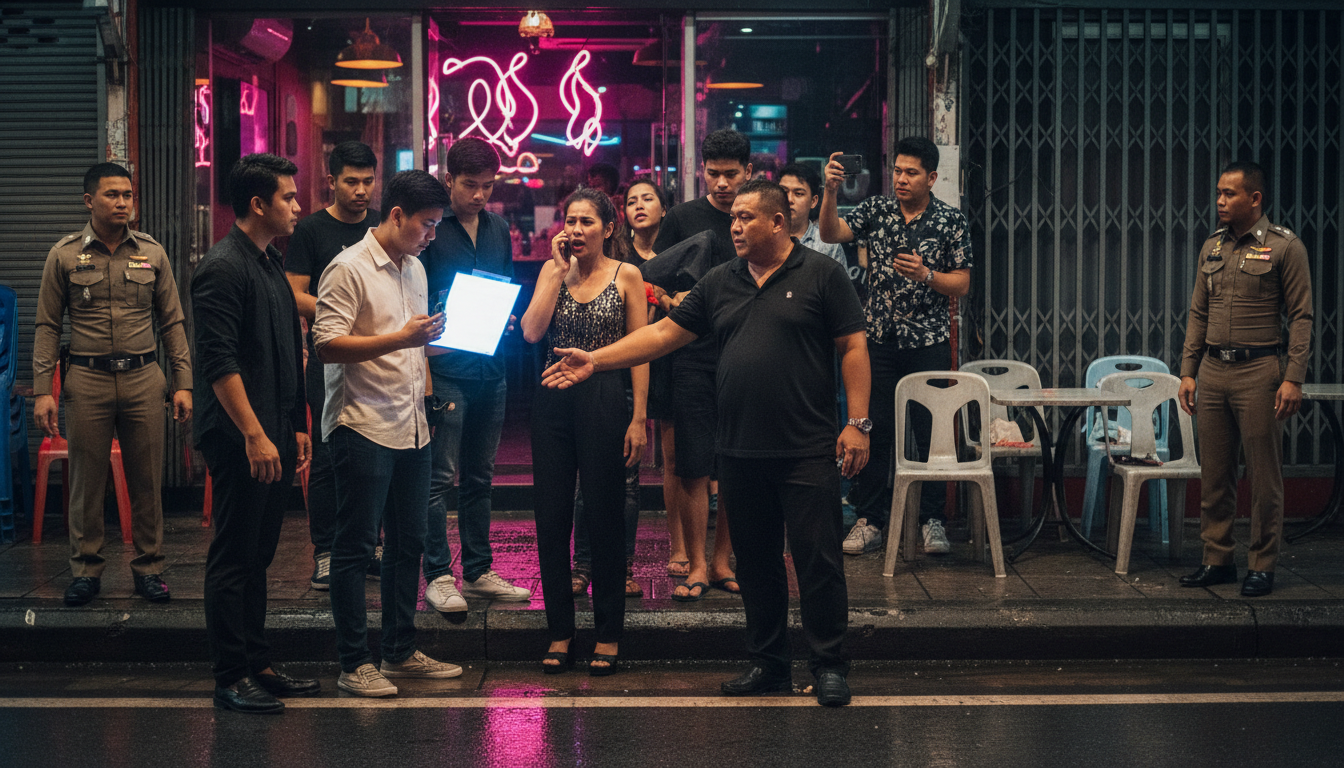
The public shaming of a woman over an unpaid 60,000 baht bill at a Bangkok host bar, culminating in the alleged shaving of her head, signals a shift in decision-making power within certain informal sectors of Thailand’s economy. The incident, reported on August 28, 2026, by The Thaiger, details how a Pinklao host bar reportedly compelled a woman to sign a 3,000 baht hair-sale contract before proceeding with the action. The bar subsequently issued an apology following public criticism, amplified by social activist Chalida Phalamat's TikTok post.
Historically, establishments dealing in high-value, often discretionary, services have maintained leverage over patrons through direct means or informal networks. The expectation was that an unpaid debt, particularly one of this magnitude, would be handled internally, perhaps with a gradual escalation of pressure. The bar's initial reported actions—forcing a contract for a bodily service and then executing it—suggested an assertion of traditional economic dominance. The structural change here is not the debt itself, but the public intervention that followed. Chalida Phalamat, a public figure and social activist, disseminated the information via TikTok, disrupting the internal resolution mechanism. This external scrutiny compelled the bar to retract its stance and apologize.
This sequence implies that the traditional transactional power dynamic, where the service provider holds significant sway over a debtor, is now susceptible to disruption by digital public shaming. The emergence of figures like Chalida Phalamat, leveraging social media platforms, introduces an informal regulatory force. This force, while lacking legal enforcement, possesses the capacity to inflict reputational and economic damage that outweighs the recovery of a 60,000 baht debt. The bar’s apology, rather than indicating a change in internal policy, reflects a forced adaptation to a new external constraint.
A counterargument might suggest this is merely an isolated incident, an extreme reaction to a high-value debt, and not indicative of a systemic shift. Such an argument would point to the unique circumstances of the alleged hair-shaving and the specific public figure involved. However, the speed and magnitude of the bar's capitulation under public pressure, rather than through formal legal channels, suggest otherwise. The structural adjustment is the recognition by businesses operating in semi-regulated spaces that their actions are now subject to immediate and widespread public judgment, with consequences that transcend traditional economic calculations.
The unresolved constraint remains the informal nature of both the transaction and the subsequent intervention. While social media provides a rapid mechanism for accountability, it offers no formal redress or established legal framework. The outcome now depends on whether similar incidents continue to find public champions and whether businesses, particularly those operating at the periphery of formal regulation, internalize this new, digitally mediated form of oversight.
Sources
Newsletter
Pacific Daily
A curated briefing from Thailand, Asia-Pacific and the world.