The Solitary Household Alters Regional Social Infrastructure
Record numbers of older single residents reveal the limits of municipal interventions across the Asia-Pacific.
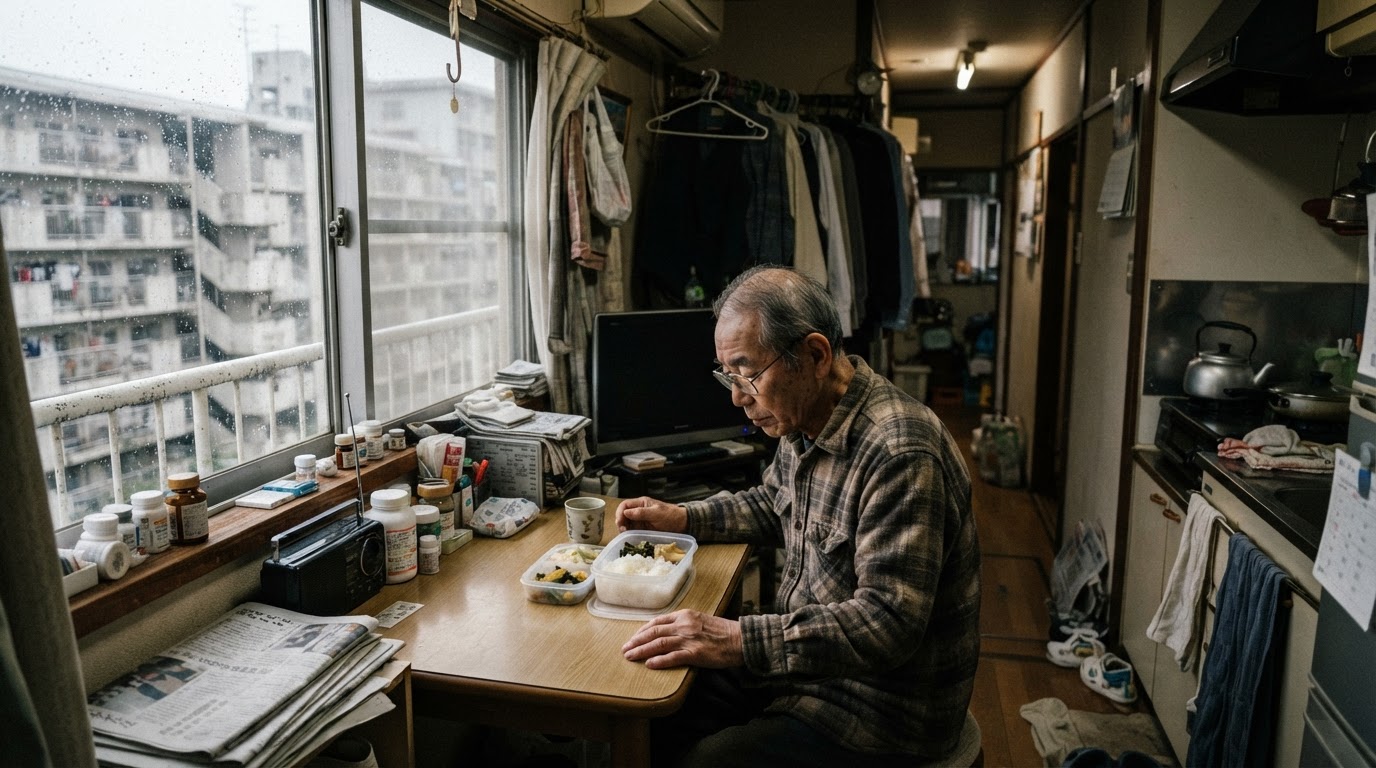
SINGAPORE
Traditional welfare frameworks throughout East and Southeast Asia historically relied on the multigenerational household as an unstated civil buffer. Families absorbed geriatric dependency, physical convalescence, and daily subsistence through unpaid domestic labor, shielding municipal budgets from the primary costs of long-term care. That structural insulation has ceased to function reliably.
Demographic ledgers now register an unprecedented threshold. Single older residents living in isolated domestic units have expanded to historic highs, converting private domestic arrangements into a critical public vulnerability. When demographic transitions dissolve the extended family unit, civil protection architectures face operational demands they were never engineered to sustain.
Subsidised municipal relief programs attempt to arrest this isolation through incremental economic assistance. Initiatives offering domestic aid at USD 4 an hour illustrate the modern civic response, treating acute solitary vulnerability through targeted hourly market subsidies. Yet modest service interventions cannot reproduce the continuous, organic supervision historically provided by cohabitation.
Fiscal Limits of Fragmented Welfare
Administrative capacity across municipal hubs strains under this structural dispersal. Providing care across thousands of atomised addresses multiplies logistics costs, municipal inspections, and emergency response times far beyond the requirements of grouped residential care. Where institutional nursing facilities once concentrated municipal resources, the widespread dispersion of solitary older occupants disperses civic monitoring across vast suburban and metropolitan fabrics.
Fracturing multi-generational domestic units transforms private familial responsibilities into direct liabilities for municipal balance sheets.
Fiscal planners frequently argue that maintaining older individuals within independent private units reduces the capital expenditure needed for dedicated municipal housing. Subsidised home visits appear far cheaper than constructing large-scale public residential facilities. This calculus assumes that occasional visitation can adequately substitute for daily structural oversight.
That fiscal assumption breaks down during severe environmental disruptions or acute health emergencies. Single older residents face elevated mortality during sudden public shocks, where immediate physical assistance determines survival. When isolated occupants cannot alert local services, the theoretical savings of decentralised home living evaporate into emergency hospital surges and heightened municipal mortality.
Structural Adaptation and Urban Realities
Commercial property capital has noticed the vacuum, directing investment toward regional property assets designed to exploit changing living arrangements. Private capital prioritises asset yields rather than universal welfare guarantees. Market solutions naturally filter toward affluent urban cohorts, leaving low-income older residents reliant on strained civic programs.
Public policy across the Asia-Pacific faces an irreconcilable logistical bottleneck. Expanding direct care programs at USD 4 per visit strains civic budgets, while failing to intervene risks acute social breakdown in dense apartment blocks. State ministries cannot reverse the demographic decline that created isolated living in the first place.
Municipal agencies are consequently forced to build synthetic support networks out of fragmented civil registries and sporadic contract workers. These mechanisms function at the margin of a systemic dilemma. The central contradiction between rising solitary elderly occupancy and finite civic intervention capabilities remains fundamentally unresolved.
Sources
Newsletter
Pacific Daily
A curated briefing from Thailand, Asia-Pacific and the world.