Hebron Operation Highlights the Friction Between Election Politics and Strategic Deterrence
Military demolitions ordered ahead of national polling project authority to domestic voters while compounding long-term instability across regional borders.
SINGAPORE
Electoral timetables alter the calculus of military force when domestic security becomes the decisive ballot test. When gunmen killed two soldiers in the Israeli-occupied West Bank, the armed response arrived with calculated speed. Israeli military forces initiated a days-long operation on Friday, Oct 23, 2026, focusing on coordinated searches and building demolitions across Hebron. Prime Minister Benjamin Netanyahu sanctioned the deployment merely days before national elections where public protection dominates civic debate. While governing coalitions routinely emphasize deterrence after fatal incidents, conducting military demolitions during a high-stakes political contest compresses territorial administration and electoral survival into a single exercise.
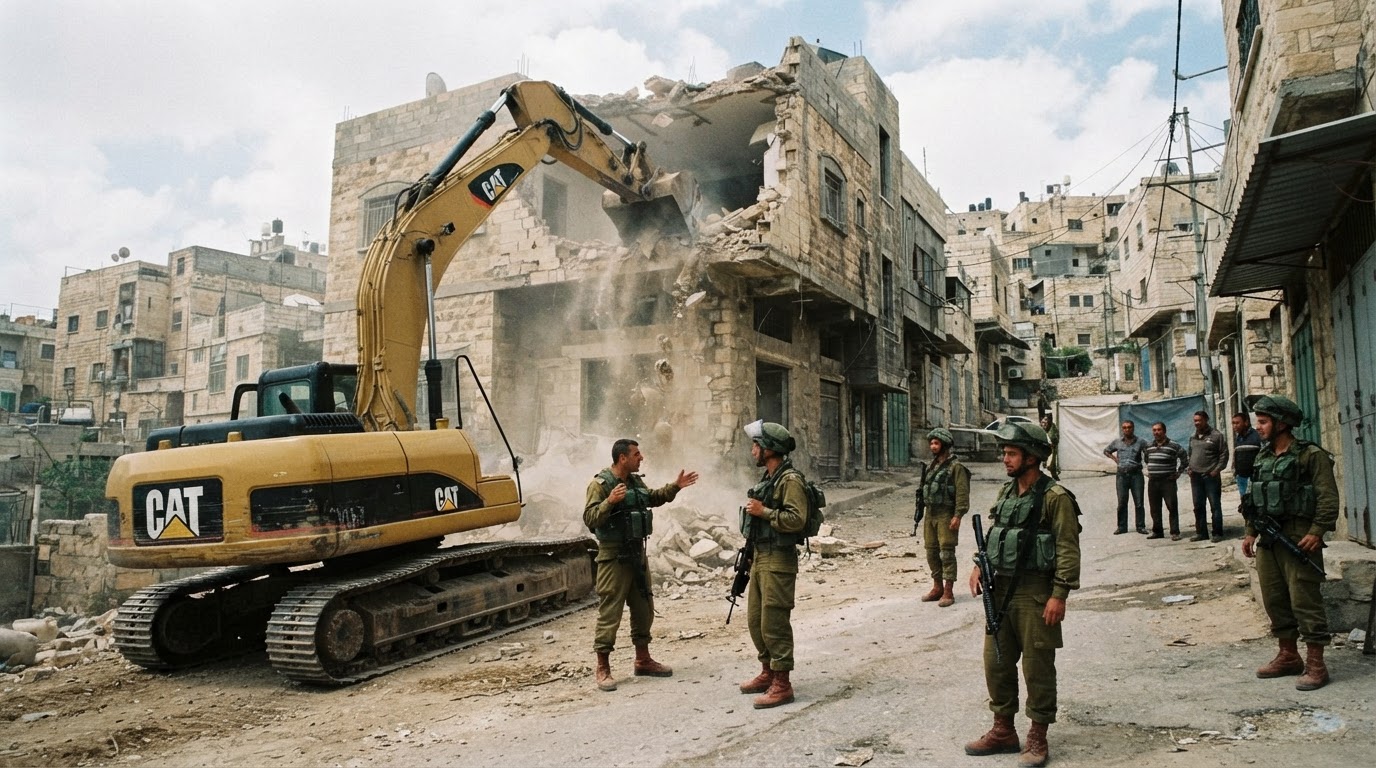
The sequence of events in Hebron demonstrates how tactical retaliation functions under intense public scrutiny. Following the ambush that left two soldiers dead, Israeli machinery dismantled a Palestinian house to assert territorial control. Intelligence units alongside the Shin Bet framed the multi-day mission as a necessary purge of armed cells. Retaliatory demolitions have historically operated as visible instruments of state authority, signaling that hostile actions carry immediate, irreversible costs for suspects and affiliated communities. Applying such measures inside dense urban sectors inevitably heightens communal friction, trading short-term tactical signaling for prolonged territorial instability.
The Friction of Immediate Deterrence
Supporters of the military campaign maintain that swift operational measures are indispensable to maintain basic civil order. According to this reasoning, failing to dismantle active networks or hesitating to punish lethal strikes against armed personnel would invite further violence during an exceptionally vulnerable political window. Contested national elections inevitably punish perceived weakness, compelling incumbent authorities to demonstrate an unyielding capacity to protect state personnel. Security planners argue that aggressive cordon actions disrupt coordinated networks before subsequent attacks can derail administrative procedures or shake voter confidence. Decisive force, in this view, functions as an operational prerequisite for safeguarding the democratic process itself.
That institutional justification, however, overlooks how punitive measures reverberate beyond the operational perimeter. Demolitions exact severe structural damage upon local communities, deepening social alienation rather than extinguishing armed resistance. Levelling residential structures functions in practice as collective punishment, hardening opposition across Palestinian enclaves while failing to neutralize the underlying drivers of insurgent hostility. Military sweeps executed under the pressure of campaign deadlines prioritize tactical visibility over enduring stability, generating immediate demonstrations of resolve that address none of the deep-seated disputes dividing the occupied territories. Short-term political gains at the ballot box frequently translate into long-term defensive liabilities on the ground.
Strategic Repercussions Across Regional Corridors
For observers across the Asia-Pacific, the sudden intensification of hostilities in the West Bank reflects persistent systemic volatility. External economies dependent on stable international shipping lanes and cross-border commercial corridors assess such security escalations through the pragmatic lens of trade continuity and geopolitical stability. Frequent eruptions of kinetic force disrupt diplomatic engagement frameworks, reminding distant capitals that unresolved territorial grievances retain the potential to disrupt global trade patterns. Analysts watching these developments recognize that tactical flare-ups in Hebron carry diplomatic and supply-chain repercussions that extend across external markets. Durable stability cannot be secured when underlying communal conflicts remain subject to sudden tactical militarization.
The convergence of political deadlines and kinetic force reveals the intractable dilemma confronting contemporary security strategy. A governing administration can readily dispatch heavy machinery to project command, but tactical demolitions cannot construct durable institutional stability. By staging multi-day operations across Hebron, armed units address immediate domestic anger while entrenching long-term hostility. The fundamental structural impasse remains entirely unresolved: state measures engineered to manufacture stability ahead of a vote inevitably deepen the political estrangement that guarantees future conflict.
Sources
Newsletter
Pacific Daily
A curated briefing from Thailand, Asia-Pacific and the world.