The Pacific's Unified Nuclear Justice Claim Tests Washington's Regional Calculus
Diplomatic solidarity across island capitals raises the political cost of historical liabilities just as strategic competition intensifies.
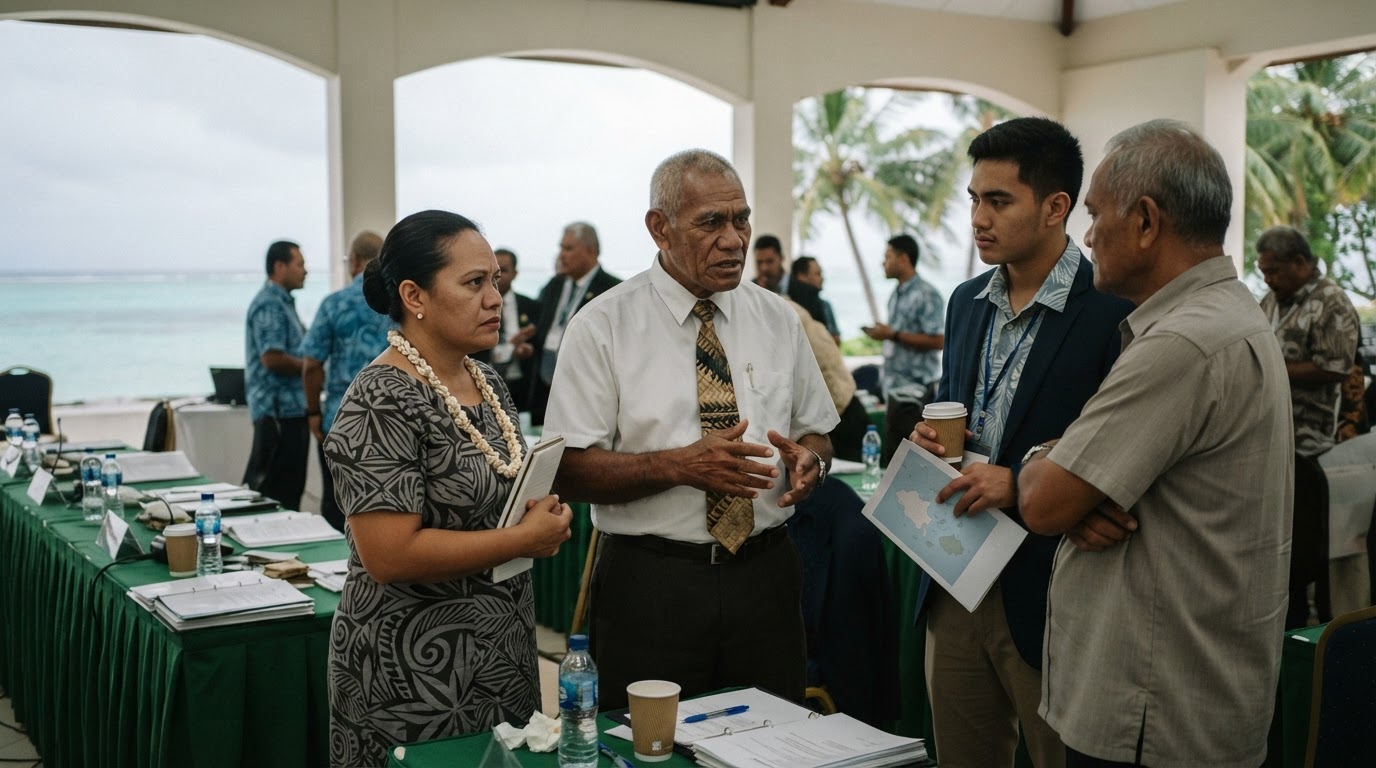
Pacific Island governments have established common diplomatic ground behind the Marshall Islands, converting a decades-long grievance over United States nuclear testing into a coordinated regional negotiation baseline.
This consolidation interrupts an established diplomatic pattern. For decades, historical liabilities arising from American weapons detonations were treated as legacy friction, isolated inside bilateral dialogues and subject to slow institutional attrition. Bilateral isolation allowed major donors to parcel out assistance while capping exposure to formal accountability. Collective diplomatic endorsement by neighbouring island states interrupts that operating formula. When island capitals synchronize their positions on remediation, the diplomatic price of conducting security affairs across the Western Pacific resets upward.
Shifting Strategic Leverage
Regional alignment changes the incentive architecture for Washington. American defence strategy currently requires expanded maritime access, expanded radar basing, and dependable political consent across the island corridors of the Pacific Rim. These operational priorities depend directly on diplomatic goodwill. Historically, sovereign entities negotiating alone held minimal structural leverage against an economic superpower. Multilateral solidarity converts historical restitution from a domestic moral appeal into a formal test of strategic reliability.
Pacific Island leadership understands this revised leverage. If Washington seeks military integration across the sovereign waters of its regional partners, unresolved environmental contamination and human fallout cannot be treated as closed historical files. Unresolved claims regarding past weapons testing now shadow modern security partnerships. The cost of ignoring these liabilities is no longer just bad publicity; it is friction across current geopolitical negotiations where regional cooperation is mandatory.
Unresolved claims regarding past weapons testing now shadow modern security partnerships.
Sceptics argue that joint declarations rarely yield concrete financial disbursements. Washington retains supreme budgetary discretion, and congressional appropriations committees are notoriously resistant to opening uncapped historical liabilities. Furthermore, smaller island nations face urgent, competing priorities, from trade access to sea-level adaptation, which could dilute their focus over protracted bargaining cycles. Under this reading, rhetorical backing costs neighbouring capitals nothing, while securing material compensation remains an uphill bilateral struggle for Majuro alone.
That reading underestimates how maritime diplomacy operates when strategic alternatives exist. Even if congressional funding mechanisms resist immediate revision, the diplomatic precedent has shifted. By refusing to isolate the Marshall Islands, regional leaders establish that strategic access carries a collective sovereign price. Every defence agreement, port visit, and multilateral summit now encounters the unresolved nuclear ledger as an active diplomatic counterweight.
The Unresolved Bilateral Constraint
Broader Asian economies observe these alignments with acute interest. Industrial supply chains, maritime shipping corridors, and fishing treaties across the Pacific Rim depend on institutional stability among these sovereign archipelagos. When Pacific Island states act as a cohesive bloc on sovereignty and historical remediation, external partners must adjust their bilateral dealmaking. Commercial and maritime diplomacy can no longer rely on asymmetric leverage against isolated island treasuries.
The durability of this unified front faces an immediate institutional test. Diplomatic communiqués establish regional cohesion, but legal and fiscal restitution requires hard concessions from American administrative apparatuses. Washington will likely attempt to channel compensatory gestures through standard development aid envelopes rather than admit formal legal accountability. Whether island governments can maintain their disciplined coalition when bilateral aid packages are dangled across separate capitals will determine if moral solidarity translates into binding fiscal settlements.
Sources
Newsletter
Pacific Daily
A curated briefing from Thailand, Asia-Pacific and the world.