The Limits of Diaspora Diplomacy Across the Pacific Rim
By cheering California's gubernatorial race while ignoring Congress, Mexico embraces subnational allies over federal treaties.
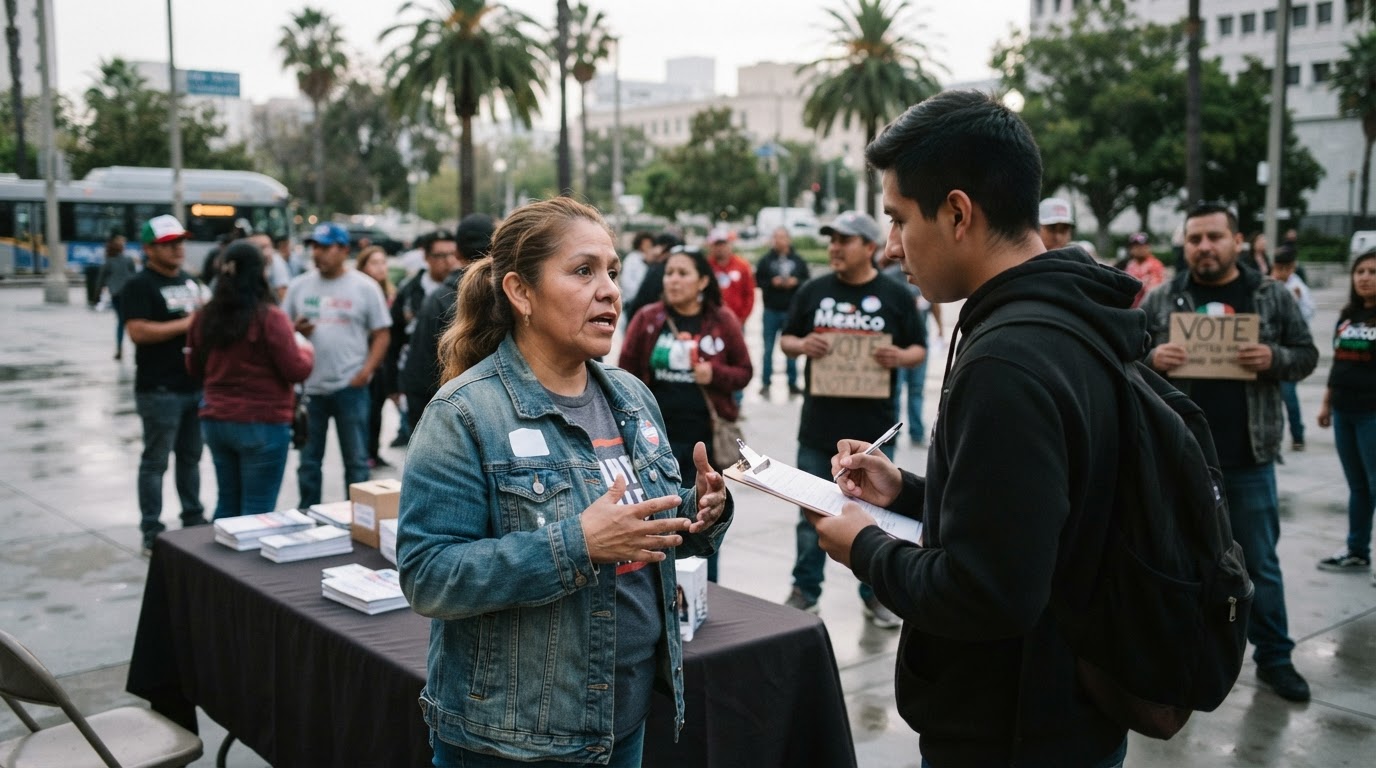
Sovereignty requires strict non-intervention in foreign elections, yet domestic political survival demands visible solidarity with millions living abroad. When President Sheinbaum addressed her Tuesday press conference, she maintained both positions at once. She flatly declined to offer an opinion on the legislative balance of power in Congress, insisting that Mexico will respect whatever outcome emerges from the United States midterm voting. Seconds later, she broke into applause for Xavier Becerra, the Mexican-American Democratic Party contender competing against Republican Steve Hilton for the governorship of California.
Her justification rested entirely on demographic scale. Noting that around 39 million Mexicans and Mexican-Americans reside across the border, Sheinbaum argued that it is very good for such a constituency to achieve direct executive representation. If polls prove accurate and Becerra prevails on Tuesday, he will become California’s first elected Latino governor. The instinct to applaud his ascent reflects an enduring domestic priority, where national leadership seeks visible rapport with diaspora populations abroad. What remains unexamined is the diplomatic trade-off inherent in celebrating subnational identity while washing one's hands of the national legislature.
Subnational Alliances and Federal Realities
By treating the race in California as an exception to standard non-interference, the presidency signals an increasingly common Pacific Rim posture: bypassing federal institutions in favor of regional executive partnerships. California represents the primary economic engine of the western United States, serving as a vital terminus for cross-border commerce, labor migration, and maritime trade. Cultivating an ideological and cultural ally in a state capital provides immediate symbolic dividends for an administration managing complex northern relations.
She noted that around 39 million Mexicans and Mexican-Americans live in the United States and said it is "very good" for them to be politically represented.
Yet this pivot to subnational warmth ignores where binding authority actually resides. Gubernatorial goodwill cannot renegotiate the enforcement mechanisms of the USMCA, nor can a state executive resolve federal water allocations administered along the Rio Grande by the International Boundary and Water Commission. Whether dealing with agricultural runoff, border infrastructure, or industrial supply chains, the structural levers governing bilateral life belong to national executives and legislative chambers.
Governors manage local fallout, but Congress determines trade mandates, budget apportionments, and statutory border controls. An administration that disengages from congressional politics while elevating regional figureheads leaves its primary institutional interests exposed to whatever faction secures federal power.
The Friction Beyond Representation
There is a counterargument that Sheinbaum’s distinction is both prudent and legally sound. Outright commentary on contested congressional seats invites immediate retaliation from whichever party captures the majority, especially if legislative leaders perceive foreign preference as hostile interference. Cheering for a prospective Latino governor, by contrast, can be framed as an expression of cultural pride rather than partisan meddling, celebrating historical representation rather than dictating foreign policy.
That distinction, however, dissolves as soon as bilateral friction moves from demographic symbolism to material dispute. When industrial quotas or regional resource rights clash under the USMCA, subnational leaders face their own local voter pressures, which rarely bend to historical sentiment across the border. Texas and California alike operate within domestic legal confines that answer to federal statutes, regardless of who occupies the governor's mansion.
Applause across an international border offers brief validation to diaspora voters, but it cannot mend the institutional gridlock festering in national capitols. As Pacific Rim nations look toward decentralized corridors of trade and cultural affinity, the fundamental machinery of sovereignty remains anchored to federal treaties and legislative majorities. National leadership may find comfort in a familiar ally leading California, but the unresolved agreements governing water, commerce, and borders still wait on federal halls.
Sources
Newsletter
Pacific Daily
A curated briefing from Thailand, Asia-Pacific and the world.