The Long Echoes of History in South Korean Entertainment
An actress's departure from a popular K-drama series reveals how past national memory continues to shape present cultural narratives and careers.
SINGAPORE
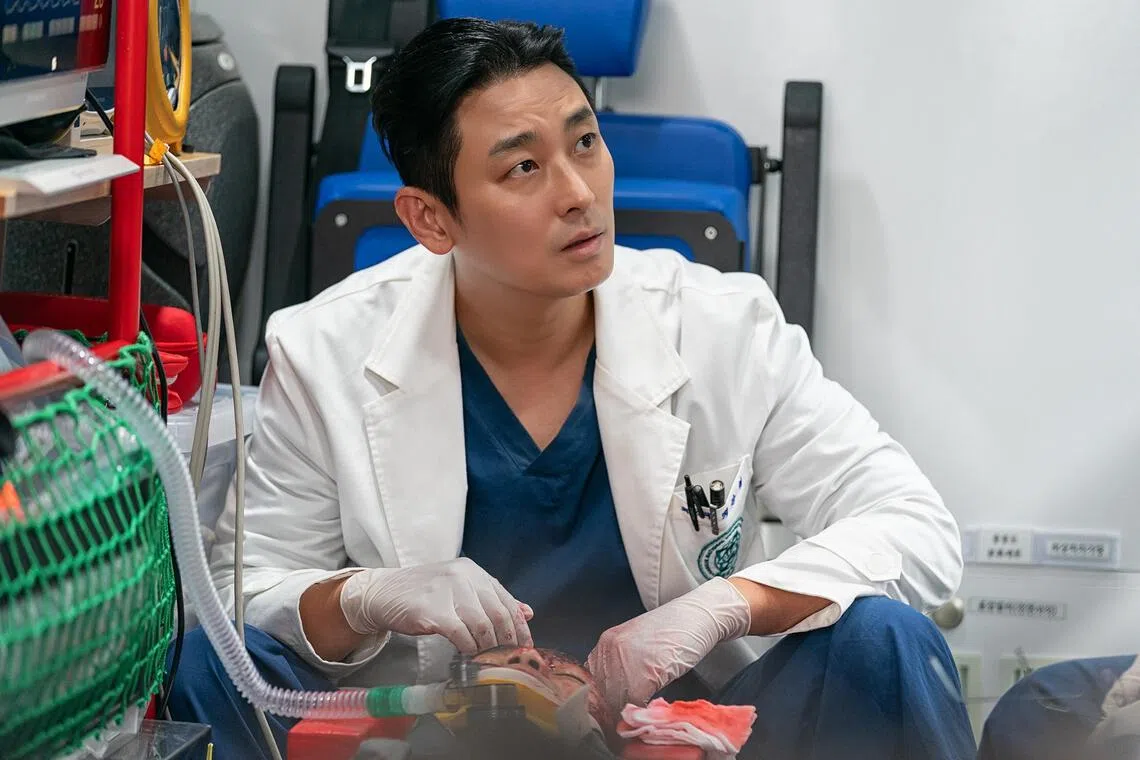
The replacement of Ahn Ha-young by Lovelyz’s Jeong Ye-in in Netflix’s hit K-drama The Trauma Code for its second and third seasons marks a moment of quiet consequence beyond routine casting news. Ahn Ha-young departed the series following public criticism regarding her great-grandfather’s ties to Japan’s colonial rule of Korea. This decision, prompted by public backlash, underscores how historical associations, particularly those linked to the Japanese colonial era, continue to exert significant influence over public perception and professional trajectories in South Korea.
While The Trauma Code, which premiered in January 2025, achieved international success by topping Netflix charts in over 26 countries, its production faces a distinctly local challenge rooted deeply in national memory. The specific nature of the criticism against Ahn Ha-young—her positive statements about her great-grandfather and his historical role—points to a persistent sensitivity around collaboration or perceived alignment with the colonial administration. This sensitivity is not merely an abstract historical concern; it can manifest directly in public discourse, shaping careers and productions.
This episode interrupts the common pattern of K-drama productions navigating issues of creative adaptation or audience reception. Instead, it places the weight of historical legacy directly onto an individual actor and, by extension, the entire production. The replacement of a lead actress due to family history, rather than performance or creative differences, indicates a powerful cultural dynamic at play. For viewers in the Asia-Pacific region and beyond, the narrative surrounding Ahn Ha-young’s departure demonstrates that even globalized cultural products like K-dramas are not immune to the unresolved tensions and moral judgments of a nation’s past.
The response to Ahn Ha-young’s comments suggests that certain historical periods and their associated figures remain highly charged. The public reaction reflects a broader societal expectation for historical consciousness, particularly concerning the colonial period, where historical complicity carries social penalties. What is preserved in such moments is a collective memory. What is quietly replaced is the individual’s path if it is perceived to contradict that memory. The question for South Korean entertainment, and indeed for any cultural industry deeply intertwined with national identity, becomes how to reconcile contemporary global aspirations with the enduring power of historical scrutiny.
This incident highlights how history, far from being a distant subject, actively intervenes in the present, dictating who can embody public roles and what narratives are deemed acceptable. The decision to remove Ahn Ha-young, though driven by commercial considerations to preserve the K-drama’s success, ultimately reinforces the notion that historical alignment, or perceived misalignment, remains a critical factor in public life for many. This episode reflects how the past continues to shape the present, not merely as a background but as an active force.
Sources
Newsletter
Pacific Daily
A curated briefing from Thailand, Asia-Pacific and the world.