Submerged Histories: Beyond Pirate Myth to Climate Reality
Discoveries in Nassau reveal more than just pirate lives; they underscore the fragility of heritage in changing waters.
SINGAPORE
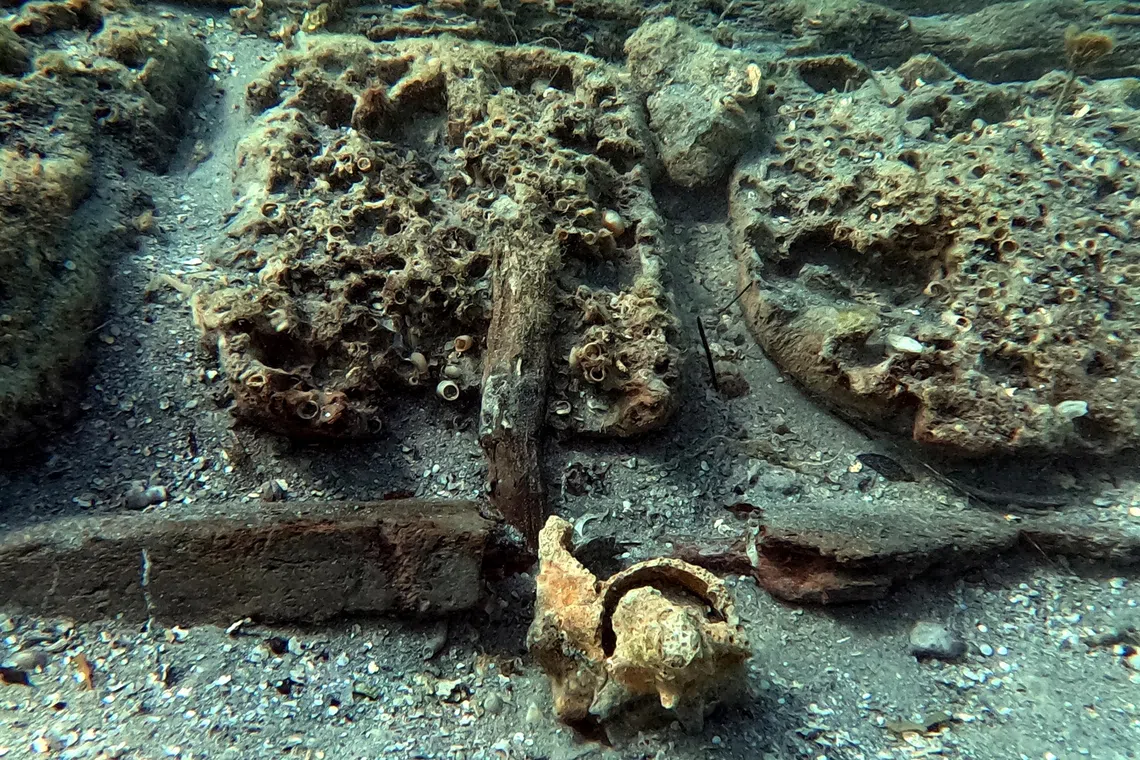
The reported discovery of six 18th-century shipwrecks in Nassau harbour by marine archaeologist Sean Kingsley offers a precise ledger of history. Using local knowledge, old maps, and modern technology, Kingsley’s team has illuminated the lives and strategies of Caribbean pirates, contrasting them with popular myths. The findings, including a burnt hull and musket balls, function as material evidence of a specific human endeavour.
This retrieval of submerged history, however, highlights a critical, often unacknowledged tension: the preservation of such sites against the realities of a changing climate. While the Nassau finds are detailed, focusing on pirate lives, the broader implication for Asia-Pacific maritime heritage cannot be overlooked. Coastal erosion and rising sea levels pose a direct threat to underwater archaeological sites across the region, from the ancient trade routes of the South China Sea to the forgotten ports of island nations.
If the material record of these pirate ships reveals how people adapted to a harsh environment, it also reveals a vulnerability. The act of discovery itself is a race against degradation. Water, in its relentless movement, both preserves and destroys. The very conditions that allowed these shipwrecks to settle and remain for centuries are now in flux, accelerating natural processes of decay and making archaeological recovery increasingly urgent.
Consider the scale of the Asia-Pacific coastline and its rich maritime past. Every year, coastal development and climate-induced changes alter underwater landscapes. Unmapped and unstudied, countless historical sites, not just shipwrecks but submerged settlements and ancient structures, face irreversible loss. The technology and expertise used in Nassau offer a template, but the sheer volume of potentially vulnerable heritage sites in this region demands a more integrated, proactive approach.
The challenge is not merely one of resources, though that is significant. It is also one of political will and public awareness. Without robust regional initiatives to identify, document, and protect these underwater cultural assets, their stories, much like the pirate myths Kingsley corrects, will remain largely unwritten, or worse, lost entirely. The Nassau finds, while geographically distant, serve as a timely reminder: the past, whether pirate or merchant, is only as secure as the waters that hold it.
This episode, then, is less about buccaneers and more about the habit of safeguarding shared histories. The precise observation of a specific past, brought forth from the depths, brings into sharp relief the larger, unresolved constraint of environmental shifts on cultural heritage.
Sources
Newsletter
Pacific Daily
A curated briefing from Thailand, Asia-Pacific and the world.