Ancient Narratives, Modern Resonance: The Bayeux Tapestry's Return and Asia's Historical Echoes
The display of an 11th-century tapestry in London demonstrates how cultural artifacts, whether in Europe or Asia, interpret foundational historical moments and their lasting legacies.
SINGAPORE
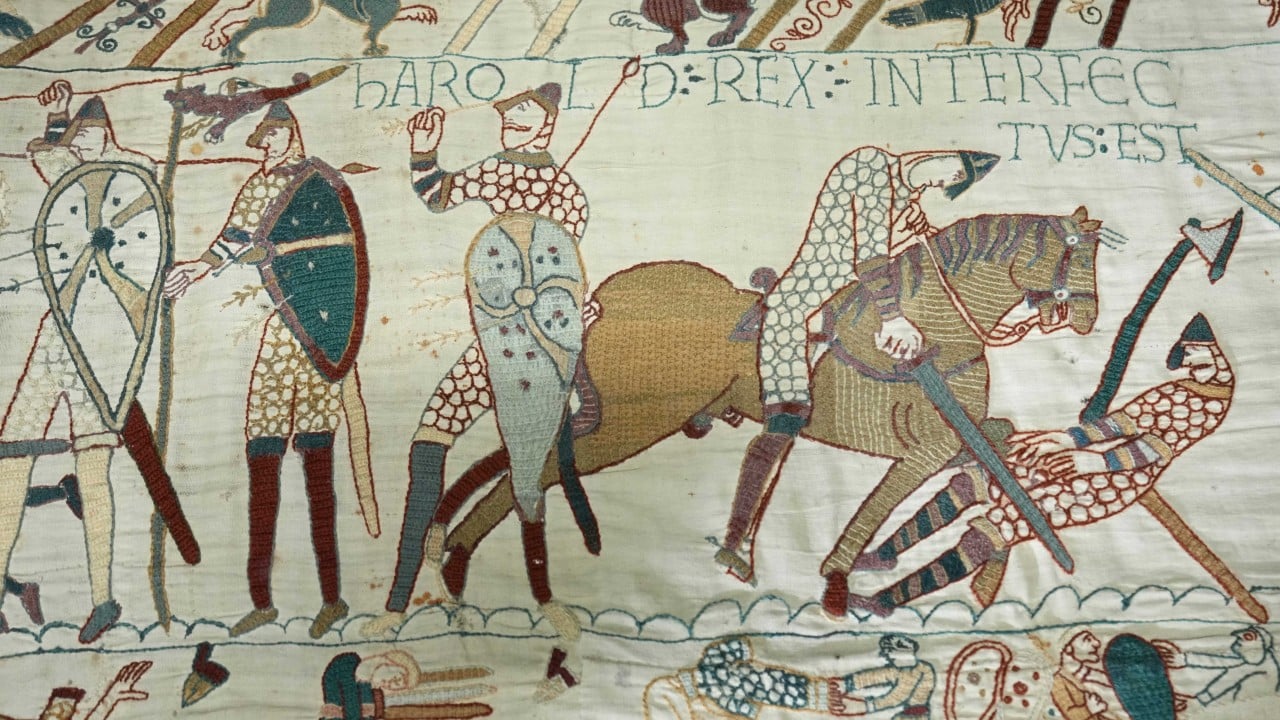
The Bayeux Tapestry, an embroidered panorama depicting the last successful invasion of England, has gone on public display at the British Museum in London this month. This marks its return to British soil for the first time since the 11th century. Tickets for the exhibition have sold out months in advance, and the museum expects 1 million visitors to see the tapestry before its exhibition ends in July 2027. This public engagement with a thousand-year-old depiction of conflict signals a deep societal connection to historical narratives. The BBC reported in August 2026 that schoolchildren across the UK are expected to contribute to ‘finishing’ the tapestry, linking contemporary generations to this ancient visual chronicle.
This event, centered on an artifact that visually recounts a foundational moment of conquest and cultural shift, offers a distinct lens through which to consider historical memory in the Asia-Pacific. While the tapestry’s return is presented as a homecoming, its nature as a chronicle of a successful invasion highlights the complex legacy of such historical events. The BBC noted in March 2026 that an expert believes Victorians misinterpreted the Battle of Hastings, suggesting that even foundational narratives are subject to ongoing re-evaluation and revision over time. Just as the Bayeux Tapestry illustrates a single, pivotal invasion, regions across Asia are shaped by long-standing visual and oral traditions that interpret centuries of power shifts, migrations, and assertions of sovereignty.
For nations across Southeast Asia, including Thailand, where historical narratives are intricately woven into national identity, the British Museum's presentation of the tapestry resonates. Thailand’s own chronicles, for example, often detail invasions and resistance, shaping a collective understanding of national resilience and continuity. These narratives, passed down through generations, function similarly to the tapestry: not merely as records, but as active interpreters of the past, reinforcing certain perspectives and framing contemporary identity.
What the Bayeux Tapestry's display reveals is that cultural artifacts rarely stand alone as neutral historical documents. They are embedded in ongoing conversations about identity, belonging, and the interpretation of conflict. The expectation of 1 million visitors to a single artifact depicting a thousand-year-old invasion is not merely tourism; it is a collective act of remembrance and re-engagement with a specific national origin story. The question for the Asia-Pacific, then, is not whether such narratives exist, but how their continuing power shapes contemporary thought and foreign relations.
The challenge remains in how societies engage with these deep historical layers. Are these narratives opportunities for understanding shared human experiences of conflict and change, or do they risk entrenching outdated grievances? The tapestry's journey back to Britain, and the public's engagement with it, suggests that the past is never truly settled; it is continuously re-evaluated and re-experienced through the objects and stories societies choose to preserve and present.
Sources
Newsletter
Pacific Daily
A curated briefing from Thailand, Asia-Pacific and the world.