Esplanade’s Return to Pre-Pandemic Audiences: A Cultural Mirror for Asia-Pacific
Singapore's arts center offers a glimpse into evolving audience engagement, prompting questions about the region's cultural recovery.
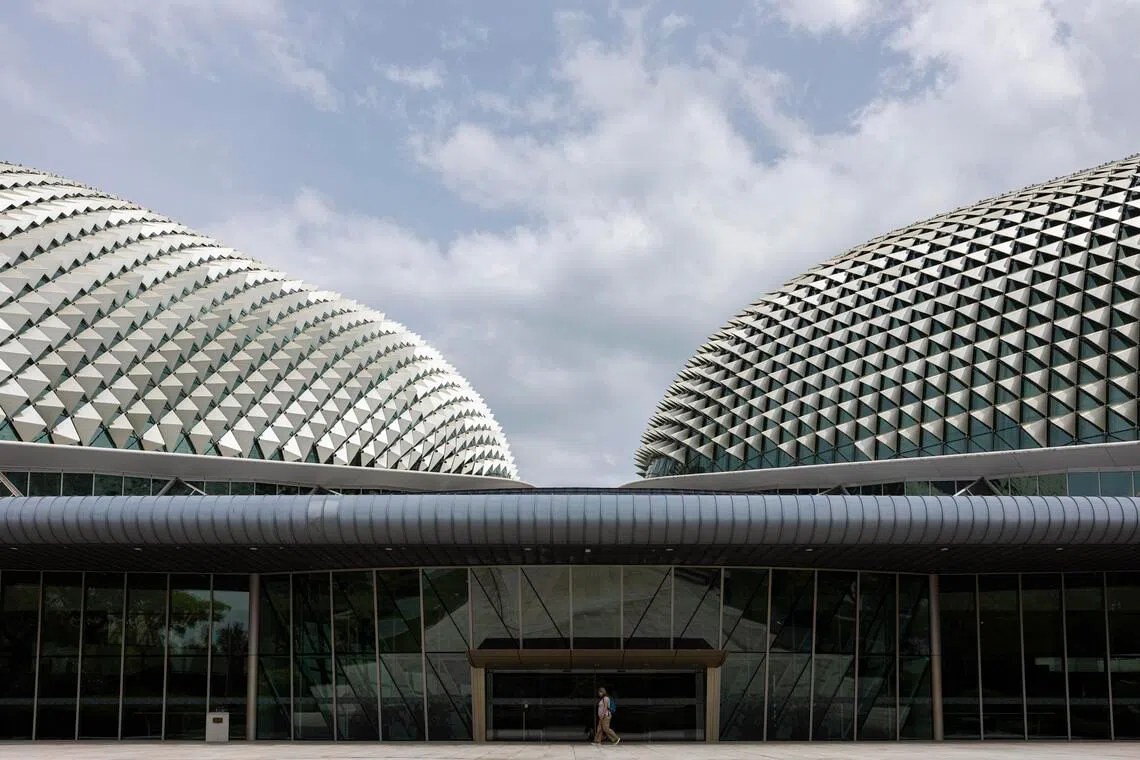
SINGAPORE
The Esplanade’s recent annual report signals a notable shift in cultural consumption. The arts center recorded 1.9 million live attendees in FY25, a figure approaching its pre-pandemic mark of 2 million annual visitors. Concurrently, digital engagement showed a pronounced increase, more than doubling to 4.09 million after a website revamp. This dual growth in physical and virtual attendance, alongside a rise in total revenue to $33.8 million, driven by ticket sales, rentals, sponsorships, and a membership surge to over 166,000, offers a specific pattern of audience return.
Such figures, particularly the near-full return to live attendance, reflect a broader human inclination towards shared experience. The sustained growth in digital engagement, however, suggests a newly embedded habit, a flexibility that many cultural institutions across the Asia-Pacific have explored since 2020. The Esplanade's operating costs were reduced by $2.83 million, and a strategic divestment in ticketing agent Sistic was undertaken. These operational adjustments, alongside the audience metrics, paint a picture of adaptation. The cultural sector, often viewed as slow to embrace technological shifts, appears to be absorbing new modalities of engagement while reinstating older ones.
Yet, a singular data point, however encouraging, cannot unilaterally define a region's trajectory. While the Esplanade’s success in Singapore suggests a resilience in audience demand for live arts, it also prompts a consideration of differing contexts. The economic and geopolitical landscape of Asia-Pacific, as reported by CNBC on various occasions in 2026, has seen periods of market instability, influenced by events ranging from Middle East conflict to leadership meetings. Such external pressures can affect discretionary spending on culture, and it is unclear if the specific conditions that allowed Esplanade to thrive are universally replicable.
The Esplanade's narrative highlights the strategic interplay between digital innovation and traditional physical presence. The question then becomes not merely if audiences are returning, but how. The simultaneous growth in both live and digital audiences suggests that these are not mutually exclusive but potentially complementary avenues for cultural institutions to cultivate. This evolution complicates the simple notion of 'recovery' and instead points to a redefinition of accessibility and participation in the arts. It is a moment where the expectations of a cultural audience are clearly broadening, demanding both the immediacy of live performance and the convenience of digital access. Whether this pattern becomes typical across diverse cultural landscapes in the region, or remains a Singaporean exception, remains a dynamic point of observation.
Sources
Newsletter
Pacific Daily
A curated briefing from Thailand, Asia-Pacific and the world.