The enduring appeal of replication in Asia's cultural landscape
Tokyo's Urushi to Hibi and the commerce of borrowed authenticity.
SINGAPORE
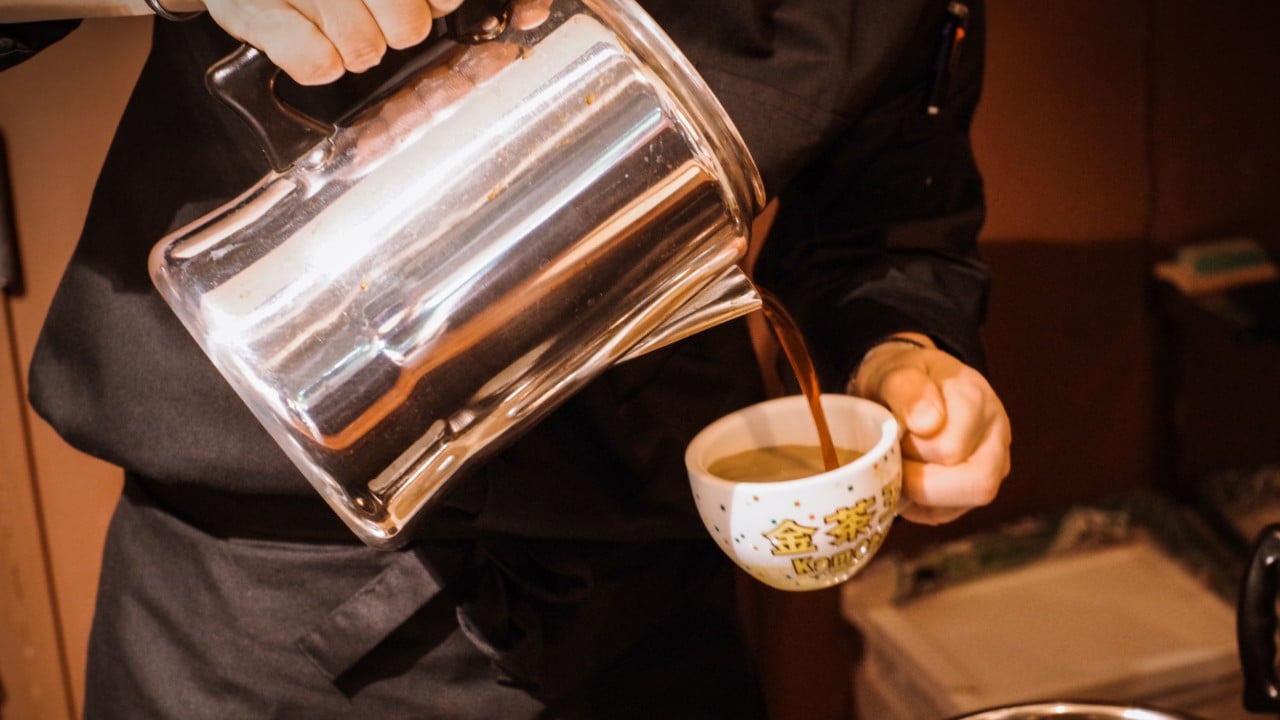
The daily queues outside Urushi to Hibi in Tokyo, an establishment furnished in dark wood, primarily form for Hong Kong-style milk tea. This specific offering, a product of three co-founders – Lei Shengyu, Zhang Qingyue, and Ji Qiuzi – draws customers despite none of the founders being from Hong Kong. Ji Qiuzi is observed preparing the milk tea, demonstrating concentrated effort.
This phenomenon illustrates a particular commercial dynamic in Asia: the successful transplantation and re-presentation of cultural forms. The allure of the milk tea in Tokyo is not necessarily its origin, but its perceived fidelity to a foreign standard, curated by individuals external to that culture. The fact of its popularity, as indicated by customer lines, suggests that cultural authenticity, when presented commercially, can be a construct. The 'Hong Kong-style' designation functions as a brand, divorced from its direct geographical origin in this context.
This pattern is not isolated. Across the Asia-Pacific, cultural signifiers are routinely adopted and re-interpreted, often with commercial success. The consumption is not of a heritage or an 'original' experience, but of a specific, marketable aesthetic and taste profile. It points to a broader trend where the appeal lies less in the unadulterated source and more in the successful re-creation, a sort of 'cover version' of a cultural product. The value is generated in the act of re-interpretation and presentation, rather than strict adherence to provenance.
A common argument against this view suggests that such cultural borrowing is a form of tribute, fostering appreciation for the source culture. It asserts that the act of recreation, even for profit, broadens the cultural conversation and introduces new audiences to traditions they might not otherwise encounter. From this perspective, the Tokyo milk tea shop serves as an ambassador, not an appropriator.
However, the commercial success of Urushi to Hibi, driven by its 'Hong Kong-style' offering, operates independently of such intentions. Its effectiveness is measured by customer volume and repeat business, not by its contribution to cultural discourse or its role in preserving heritage. The central tension lies in the market's indifference to the source of cultural material, provided the replication satisfies the consumer expectation of the 'style'. This creates an economy where the 'style' itself becomes the commodity, highlighting its portability, not its inherent geographical ties. The critical observation is not that this is right or wrong, but that it works, consistently, across diverse markets.
Sources
Newsletter
Pacific Daily
A curated briefing from Thailand, Asia-Pacific and the world.