Echoes in the Empty Hall: Hong Kong's Cultural Disconnect
The sparse attendance at a world-class violin debut exposes a dissonance between proclaimed cultural ambition and actual public engagement.
HONG KONG
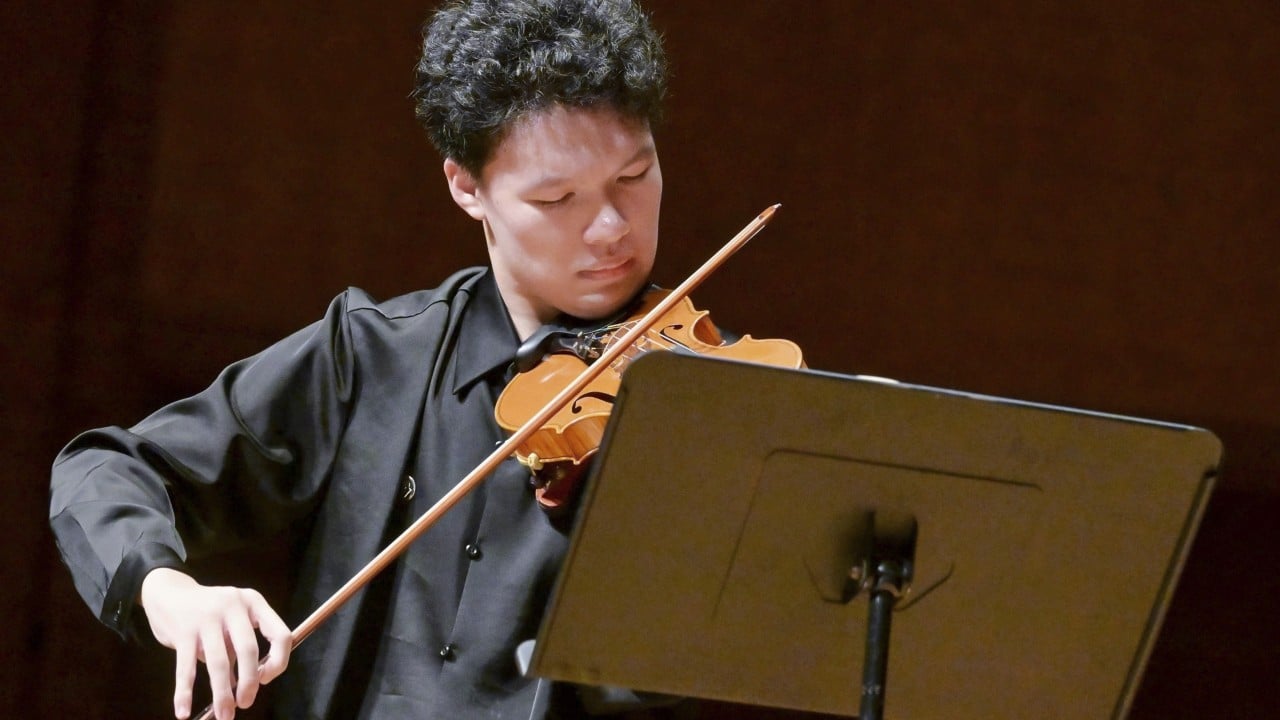
The City Hall Concert Hall, a structure designed to host significant cultural events, recently offered a stark scene. Zhang Aozhe, the 2025 winner of the Premio Paganini International Violin Competition’s top prize, performed his Hong Kong debut. The observation from SCMP Lifestyle reports the hall was approximately half empty. This spatial configuration—a stage prepared for a 'major attraction' yet met with significant vacancies—reveals a tension.
The source material from SCMP Lifestyle attributes this low attendance to either 'summer holidays' or 'insufficient publicity.' These are external factors, deflecting from the intrinsic value or presentation of the event itself. Zhang Aozhe, an 18-year-old virtuoso, performed works by Beethoven, Mozart, and Vivaldi, described as having 'flawless technique.' The technical proficiency is not in dispute. The issue is the interaction, or lack thereof, between this cultivated talent and its intended audience. The physical design of the venue remains constant, yet its function as a conduit for cultural exchange was only partially realized.
This incident prompts a re-evaluation of cultural infrastructure beyond its physical shell. Hong Kong, a regional hub, theoretically offers a significant platform for artists. However, the emptiness observed points to a failure in translation—from artistic merit to public draw. It is not merely a matter of a single concert’s attendance. Instead, it suggests a broader challenge in cultivating an engaged audience for classical music, particularly when significant talent is presented. The building, in this instance, stood as a testament not to a vibrant cultural scene but to the spatial void where one was anticipated.
The broader Asia-Pacific context complicates this. While this event pertains to Hong Kong, regional dynamics are at play. Geopolitical currents, such as 'China’s image in the Asia-Pacific region' as assessed by Pew Research Center, and discussions around 'Australia builds a Pacific alliance system to keep China out' reported by The Economist, illustrate a region intensely focused on strategic positioning. Cultural endeavors, while seemingly distinct, often reflect or are affected by these larger narratives. The specific concert event itself, however, remains unconnected to these broader geopolitical discussions, and no evidence suggests any direct influence.
Ultimately, the City Hall Concert Hall refused to be filled to its capacity by a performance widely acknowledged as deserving a 'higher turnout.' This refusal is not an architectural failing but a systemic one. It raises questions about how a city promotes and integrates its cultural offerings with its populace. The building stands, the music is played, but the intended communion between artist and audience is fractured. The unresolved constraint remains the persistent gap between the potential for cultural spectacle and its actualization in public life.
Sources
Newsletter
Pacific Daily
A curated briefing from Thailand, Asia-Pacific and the world.