The enduring appeal of celebrity endorsement in Asia’s fitness boom
A public health incident at a Beijing fitness race highlights how cultural narratives shape perceptions of physical wellness in the region.
SINGAPORE
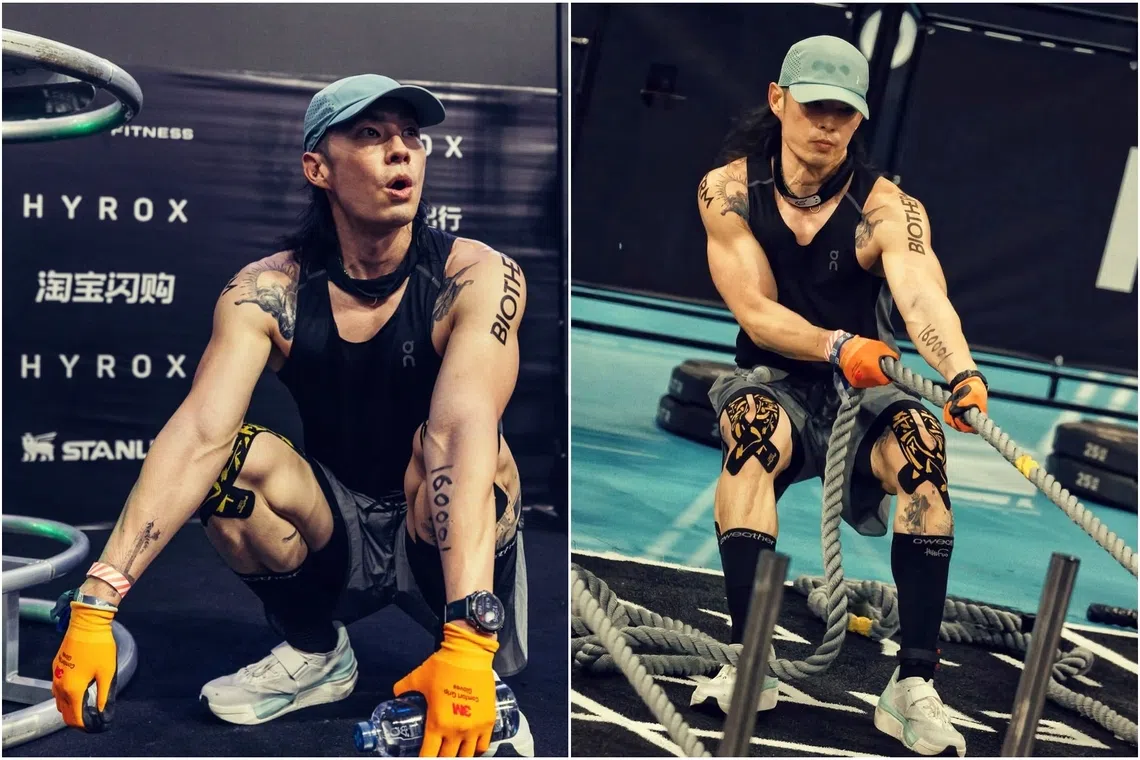
A recent athletic event in Beijing saw Taiwanese-American singer Van Ness Wu complete his first Hyrox challenge, logging a time of 1 hour, 11 minutes, 53 seconds. This achievement, notably made while managing a knee injury and a music tour schedule, occurred just a day after the same event experienced a public health incident involving faecal incontinence, an issue the organizers later addressed with apologies and hygiene measures. Other public figures, including South Korean athlete Hong Beom-seok and Chinese actor Ryan Zheng, also participated.
This incident, and the celebrity participation surrounding it, offers a lens into how popular culture interprets and internalizes new forms of physical challenge. The Hyrox event, a hybrid fitness race, represents a specific current in the broader stream of Asia’s fitness aspirations. The presence of figures like Wu and Hong, who embody both entertainment and athletic prowess, transforms a grueling physical test into a narrative digestible for a wider audience. Their participation, irrespective of individual performance, validates the endeavor itself as a legitimate pursuit for those beyond elite athletes. The incident, while concerning, paradoxically amplifies the visibility of the event, forcing a confrontation with the raw, often unglamorous realities of extreme physical exertion.
Historically, physical perfection has often been aspirational in Asian societies, tied to philosophical concepts of discipline or martial arts. In contemporary Asia-Pacific, this has evolved to include globalized fitness trends, often mediated through celebrity influence. Van Ness Wu, a member of the once-popular F4 boy band, carries a legacy of public recognition that transcends mere athletic achievement. His past, including a 2018 divorce from Singapore socialite Arissa Cheo, and the 2020 F4 reunion, situates him as a figure known for both personal struggles and public comebacks. This cultural positioning allows his engagement in a physically demanding sport to resonate with an audience accustomed to following personal journeys.
Yet, the public response to such events reveals a tension. On one hand, there is an observable admiration for discipline and resilience, epitomized by Wu’s completion of the race despite an injury. On the other hand, the ‘poop-gate’ controversy exposes a societal discomfort with the physical messiness that can accompany such strenuous activities. This juxtaposition suggests that while the audience embraces the ideal of physical excellence, there remains a distance from its less aesthetic manifestations. The impulse to quickly sanitize and apologize, as the organizers did, reflects a desire to maintain the aspirational sheen of these events, even when confronted with their inherent human imperfections. The question remains whether the public’s appetite for aspirational fitness can sustain itself against the realities of extreme exertion, or if the pursuit of these challenges will continue to rely on the curated image presented by celebrities.
Sources
Newsletter
Pacific Daily
A curated briefing from Thailand, Asia-Pacific and the world.