The Commercial Packaging of Civic Science
Science Centre Singapore leans into seasonal spectacles and branded collectibles, revealing how public educational halls now compete for family foot traffic.
SINGAPORE
Public science halls have long functioned on an unspoken premise. Civic authorities fund galleries of static diagrams and physical apparatuses on the assumption that scientific curiosity requires deliberate public cultivation. Inside those echoing concrete pavilions, education was traditionally presented as an intrinsic public service rather than an entertainment product seeking seasonal foot traffic.
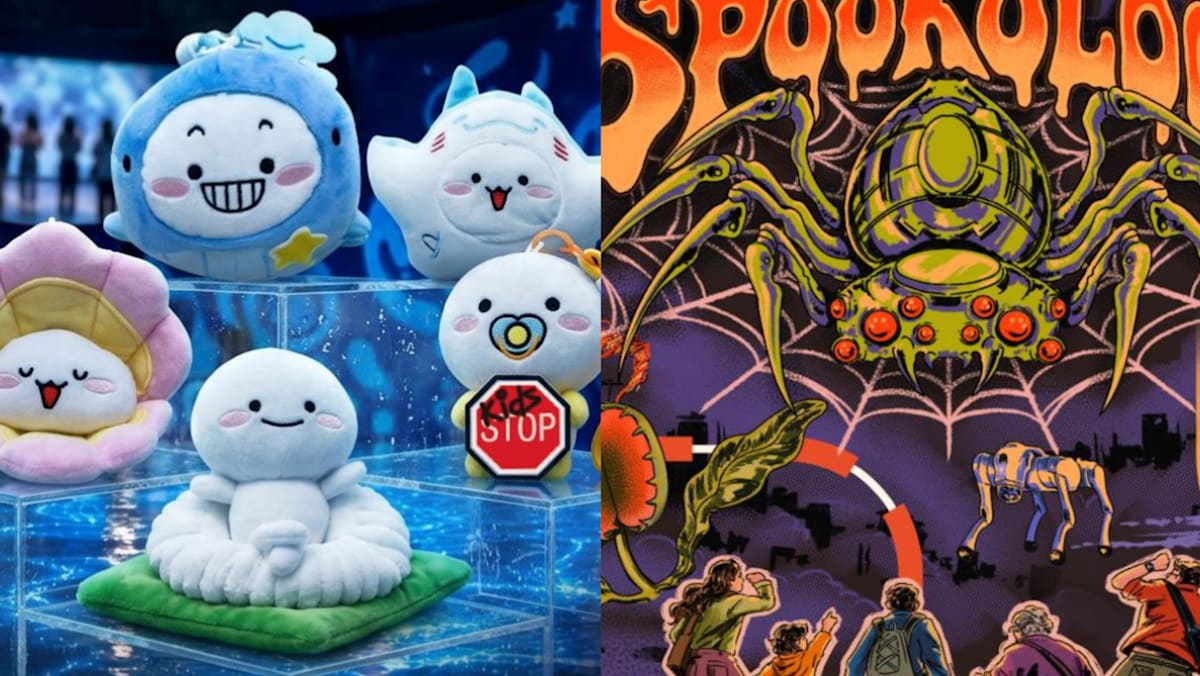
That dynamic visibly shifts when civic institutions begin competing directly in urban leisure markets. Science Centre Singapore programmed three distinct offerings across October and November 2026, pairing Spookology with a Glowing Oceans exhibition and a release of five collectible plushies modelled on the character Quby. The scheduling suggests an administration calibrating its cadence to the retail calendar. Spookology, arranged as a Halloween-themed live mystery game, runs until Nov 1, before the venue pivots immediately toward Glowing Oceans on Nov 3.
The Friction of Consumer Novelty
The placement of Quby plushies inside an institutional science hall illustrates an instructive institutional compromise. For cultural observers tracking municipal infrastructure, such arrangements suggest that scientific pedagogy alone often struggles against competing domestic digital distractions. To draw family foot traffic across physical turnstiles, administrators increasingly appear to layer licensed character merchandise and temporary holiday motifs over permanent educational mandates.
Such programming choices present an obvious tension. Curators would reasonably argue that seasonal attractions and recognisable characters lower barriers to entry, pulling visitors who might otherwise bypass scientific exhibitions altogether. Once inside the perimeter, families drawn by a character-driven collectible or a seasonal mystery game can ostensibly encounter genuine pedagogical displays, generating revenue that helps sustain core operations.
Yet this transactional bargain risks altering what audiences expect from civic spaces. When institutional exhibitions lean heavily into retail merchandise and seasonal theatre, public galleries begin to resemble the commercial recreation hubs that populate contemporary shopping malls. The primary engagement is no longer necessarily framed around foundational scientific principles. Instead, the visit risks adopting consumer consumption patterns driven by temporary novelty and retail deadlines.
Shifting Civic Boundaries
When public halls package curiosity into collectible novelty, the boundary between civic education and recreational commerce begins to dissolve.
The rapid transition from Spookology to Glowing Oceans highlights the operational rhythm required to sustain audience attention. Urban visitors, accustomed to commercial entertainment venues, frequently expect regular turnover. A permanent diorama appears no longer sufficient to ensure repeated visits from local families, prompting civic venues to adopt the rapid changeovers typical of event-driven retail spaces.
This operational shift illustrates a subtle friction between institutional mandates and consumer habits. As municipal venues adopt commercial promotional rhythms, their programming inevitably responds to consumer engagement metrics. Science Centre Singapore maintains its mandate as an educational landmark, but its late-2026 schedule indicates how thoroughly civic venues must now negotiate for attention alongside private entertainment. The unresolved question is how effectively intellectual substance holds its ground alongside plush toys and temporary mystery games once the holiday novelties depart.
Sources
Newsletter
Pacific Daily
A curated briefing from Thailand, Asia-Pacific and the world.