The Quiet Authority of Patrick Stewart and the Dissolution of the Stage Titan
Beyond the planetary franchise apparatus, an English classical actor bridged theatrical discipline and modern spectacle before memory slipped away.
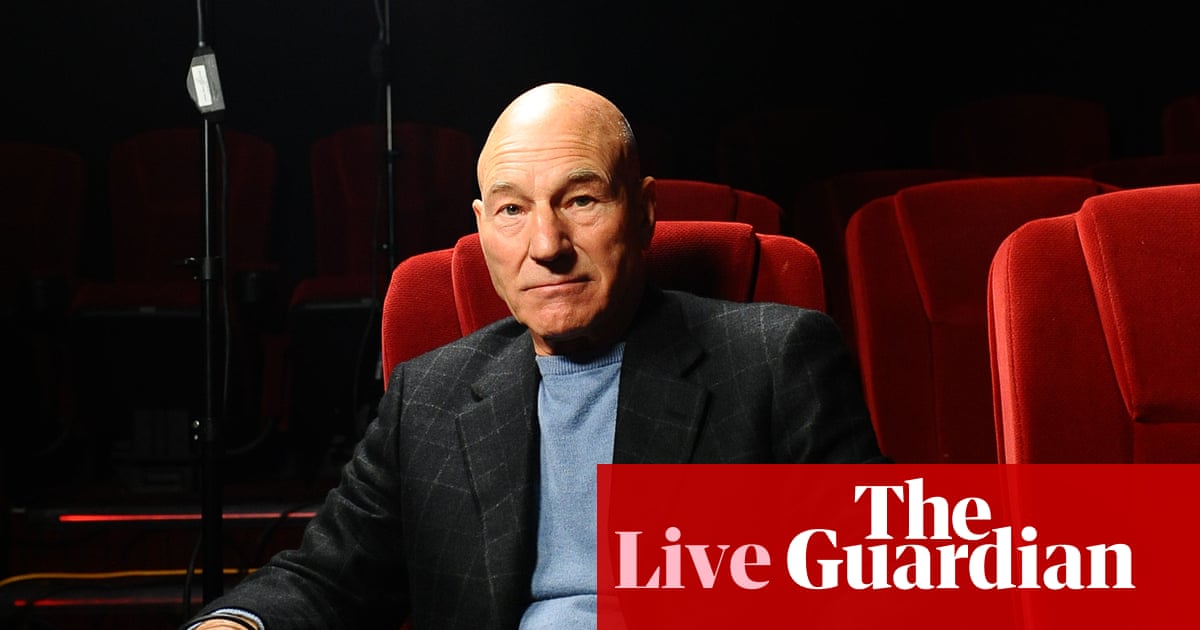
A living room in Los Angeles fell quiet on a Wednesday, framed not by cinematic spectacle or theatrical timber, but by private leave-taking. Patrick Stewart died there at 86, surrounded by live music and prayer with family after confronting Alzheimer’s disease and Lewy body dementia, his longtime spokesperson Kelly Bush Novak told the Hollywood Reporter. Across the Pacific, news feeds immediately responded with the mechanical reflex of modern media. Film studios circulated commemorative stills, while co-stars William Shatner and Hugh Jackman published tributes alongside George Takei to honor an actor who had long anchored global franchise fiction.
Yet the public mourning reveals an instructive cultural contradiction. Most mass audiences knew Stewart through the polished armor of corporate science fiction, specifically Star Trek: The Next Generation and the sprawling X-Men series. These properties thrive on corporate permanence and digital syndication. Stewart, however, came out of a mid-century English classical tradition that treated acting as mortal, physical labor rooted in Shakespeare and the ephemeral cadence of an empty stage.
Classical Weight in Digital Architecture
When Stewart crossed into mainstream screen celebrity, theatrical gravity was not a standard export for cinematic blockbusters. His presence on screen arrived with the trained diction of a working theatrical artisan who had spent decades testing verse against regional hall acoustics. Actor Bryan Batt, who shared the screen with him in the screen adaptation of Paul Rudnick’s Jeffrey, remembered him as an extraordinarily generous collaborator, pointing to an older professional ethic where discipline took precedence over celebrity vanity.
Hollywood did not soften Stewart; rather, the stage veteran imposed classical scansion onto the pulp machinery of comic books and starships. His performance style demanded that mass-market cinema treat interior conflict with intellectual seriousness. By delivering lines about intergalactic diplomacy or genetic mutation with the strict cadence of Jacobean drama, he elevated commercial screenwriting above its structural limitations.
That synthesis altered how cinematic franchises across the Pacific hemisphere understood casting. For generations, screen studios across North America and maritime distribution circuits relied primarily on visual glamour. Stewart proved that austere stage discipline could anchor expansive science-fiction narratives, establishing a blueprint that contemporary studios still attempt to replicate with British stage actors. Audiences accepted the premise of impossible futures because his vocal technique grounded absurd premises in palpable emotional truth.
The Vanishing Craft of Presence
There is, of course, a counter-reading of this legacy. Critics of contemporary cultural consolidation might argue that Stewart’s capitulation to corporate intellectual property diverted one of Britain's finest stage minds into repetitive cinematic sequels. In this view, decades spent reciting technobabble and mutant lore represented a cultural concession to Hollywood commerce, draining energy from living theatrical repertoires.
Still, that assessment ignores how Stewart democratized access to dramatic presence. Viewers watching television sets in Melbourne or Tokyo were not encountering hollow Hollywood merchandising. They were observing an actor trained in classical rhetoric demonstrate how vocal restraint and absolute precision command attention without digital enhancement.
Such craft cannot be synthesized by post-production software or algorithmic franchise extensions. Novak described Stewart’s final passage as marked by peaceful ease, drawing a curtain across a mind that had memorized vast canons of theatrical poetry before illness intervened. The franchises he populated will continue producing sequels and licensed revivals indefinitely, but the human weight that made those universes plausible has permanently left the room.
Sources
Newsletter
Pacific Daily
A curated briefing from Thailand, Asia-Pacific and the world.