The Quiet Erasure of Domestic Labour
Jaclyn Lim’s surreal debut novel reflects how the unmeasured toll of motherhood collides with demographic anxieties.
SINGAPORE
Domestic routine within dense urban quarters has long functioned on labour that remains stubbornly unmeasured. Behind orderly apartment doors, generations of household management were sustained through private endurance, treating a woman’s quiet accommodation of family strain as an ordinary condition rather than an escalating cost. The domestic sphere operated as a private shock absorber for economic acceleration, relying on maternal duty to balance every disruption without formal compensation or acknowledgment.
That unspoken social arrangement is now beginning to show visible fissures.
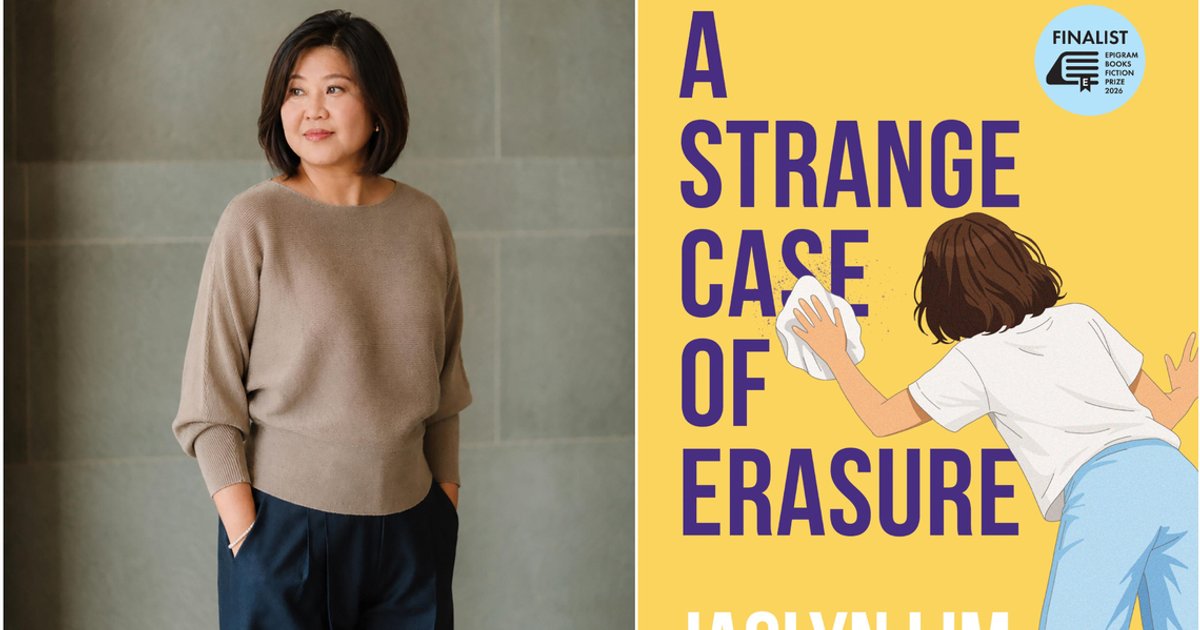
In Jaclyn Lim’s debut novel, A Strange Case Of Erasure, domestic exhaustion ceases to be an invisible psychological weight and turns instead into an overt physical withdrawal. The manuscript, named a finalist for the Epigram Books Fiction Prize 2026, traces the life of Seok Lin, a Singaporean mother who literally vanishes from view whenever acute anxiety overtakes her. What might have functioned as a light domestic fable becomes an inquiry into the uncounted demands of caregiving. Through this surreal conceit, repetitive obligations gradually erase personal agency until the individual body itself ceases to occupy space in the family home.
Vanishing Under Pressure
Pitched as an unsettling depiction of motherhood and care, the narrative unfolds against the social anxieties of modern Singapore, where public discussion regularly fixates on a dwindling total fertility rate. While administrative messaging often frames reproduction around civic continuity and fiscal support, the novel’s focus suggests an underlying tension that policy metrics rarely touch. As Lim’s protagonist illustrates, the daily attrition of family maintenance is not alleviated by financial incentives when the internal toll of domestic responsibility remains entirely unacknowledged. A society that views childbearing through economic indicators risks misunderstanding why individuals pull back from the threshold of family life.
Critical reception in The Straits Times Life observed that the book relies on familiar domestic troubles and occasionally struggles with predictable plotting, noting that characters appear thin across early chapters. Yet the narrative gains clarity and tension toward its conclusion, culminating in a tense family reveal and an extended solo journey to Suzhou. This structural unevenness exposes an inherent creative difficulty: dramatising the deadening repetition of domestic care without allowing the narrative itself to sink into passive monotony. Furthermore, the overseas departure signals that recovery cannot occur within the rooms where the original self dissolved.
The unseen toll of caregiving turns into an overt physical withdrawal, eroding the caregiver until the body itself ceases to occupy the room.
The Costs of Domestic Endurance
What is preserved in this domestic setting is the family’s outward equilibrium; what is quietly replaced is the mother’s independent identity. For decades, traditional expectations positioned maternal self-abnegation as an essential social virtue, ensuring that private domestic sacrifice absorbed the strains of rapid urban development. Contemporary creative work now charts the limits of that assumption. When the burden of daily care is rendered invisible, silence becomes a form of erasure long before any physical disappearance takes hold.
Lim’s central metaphor demonstrates that domestic exhaustion cannot be healed by retreating deeper into the private sphere that produced it. The solo passage to Suzhou indicates that restoration requires a deliberate break from domestic duty, stepping outside the architectural and emotional confines of the home. When a mother must vanish entirely before her stress becomes noticeable to those around her, the collapse belongs to the social contract rather than the individual.
The vanishing mother in an urban flat provides a sharp cultural signal for readers across the region. As civic planners debate fertility numbers and household subsidies, novels of this kind record the unmeasured psychological reality behind those calculations. The quiet withdrawal of Seok Lin suggests that until domestic labour is genuinely acknowledged, the quiet departure of caregivers will continue to haunt the modern household.
Sources
Newsletter
Pacific Daily
A curated briefing from Thailand, Asia-Pacific and the world.